History of Oregon Wine: Why 1979 Changed Everything
Overview
The Oregon wine industry did not begin in 1979, but 1979 is when the rest of the world finally noticed it. A small group of pioneers had been planting vines for more than a decade, yet Oregon’s wines were still viewed as curiosities. That changed when a single Pinot Noir from the Willamette Valley reached the top ten of its category in a blind international tasting in France.
The story is often told as a wine-world Cinderella tale, but it was rooted in stubborn experimentation, careful farming, and a belief that a cool corner of the Pacific Northwest could make fine wine. The breakthrough was not an accident. It was an inflection point.
Oregon Wine Before 1979
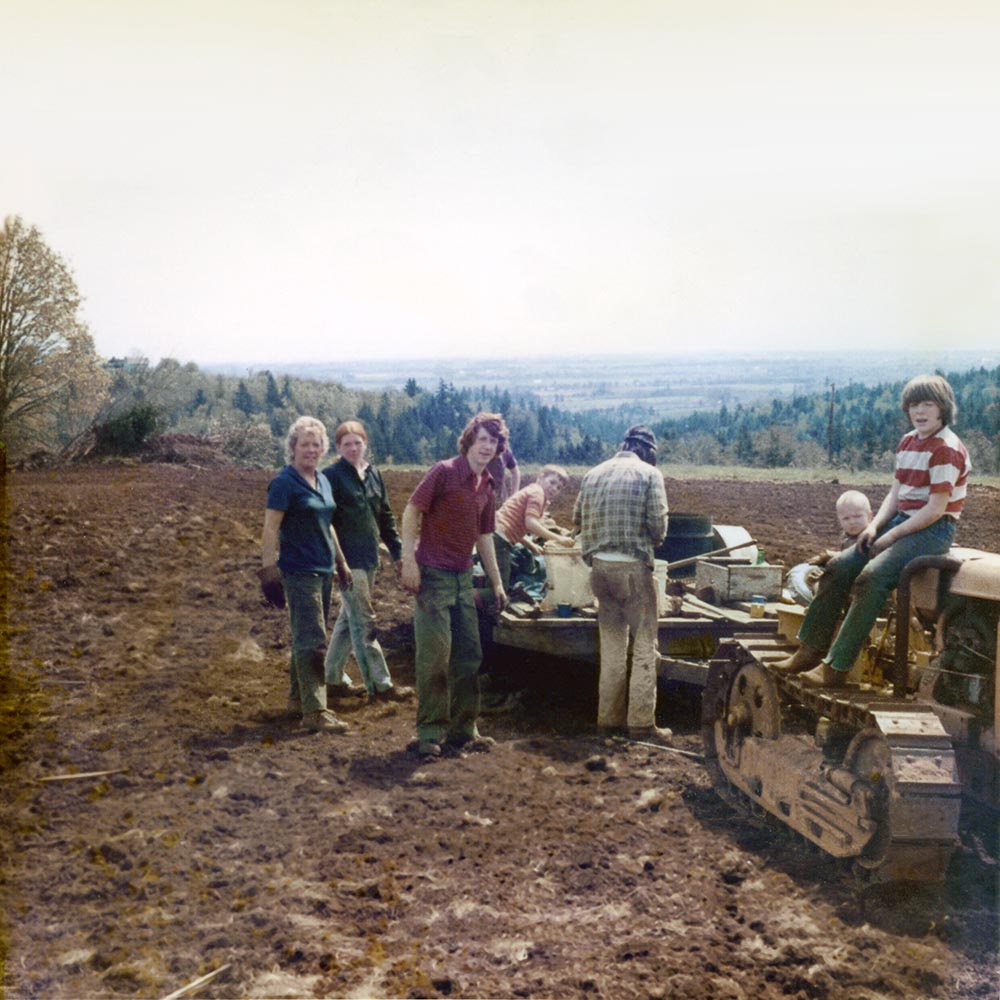
Vineyards existed in southern Oregon by the late 1950s and in the northern Willamette Valley by the mid-1960s. One of the key figures was David Lett, who arrived from the Midwest and planted Pinot Noir in the Dundee Hills under the Eyrie Vineyards label. He was a textbook salesman by trade but a visionary by instinct.
By the late 1970s, a small but committed community of growers and winemakers had already proven that grapes could ripen and that wines could be balanced. The problem was not quality so much as perception. In a wine world dominated by European prestige, Oregon lacked the credibility to convince distributors and consumers that it belonged in the same conversation.
Pinot Noir, in particular, was viewed as a high-risk grape. Its thin skins, sensitivity to climate, and reputation for inconsistency made it a difficult choice for a new region. That risk is exactly why the 1979 results mattered so much: they demonstrated that a notoriously fragile grape could excel in Oregon’s climate.
At the time, the prevailing belief was that fine wine required a French address. Oregon’s pioneers were growing grapes and making wine, but the idea of “fine” Pinot Noir from the Pacific Northwest felt implausible to most of the wine establishment. The 1979 tasting challenged that assumption head-on.
The Paris Tasting Breakthrough
In 1979, Lett entered his 1975 South Block Pinot Noir in an international tasting organized by the influential French magazine Gault-Millau. The tasting was blind, which meant judges could not use reputation to guide their scores. Eyrie was a little-known entrant in the Pinot Noir category.
The result was startling: Eyrie Vineyards’ 1975 South Block Reserve placed in the event’s top ten, putting an Oregon Pinot Noir among highly regarded international wines. The result challenged assumptions about where fine Pinot Noir could be made.
For Lett, the tasting confirmed something he had believed all along: Oregon could produce Pinot Noir that belonged in the same conversation as Burgundy. The only missing ingredient had been proof, and the blind tasting provided it.
The result drew attention because it challenged long-held assumptions about where fine wine could be made. Oregon shifted from a regional experiment to an international question mark, which is exactly what the state needed to gain recognition.
Lett later joked that sending a Pinot Noir from Oregon to France felt like mailing a box of rocks, but the blind tasting removed reputation from the equation. When the wine ranked among the best, it forced the industry to confront the possibility that Pinot Noir could thrive outside its traditional European heartland.
Blind tasting mattered because it stripped away labels and history. In an international lineup, a young Oregon wine earned its place purely on sensory quality. That was a rare and powerful form of validation in the late 1970s wine world.
Why Pinot Noir Fit Oregon
Oregon’s Willamette Valley shares key climatic traits with Burgundy: a cool, long growing season that allows Pinot Noir to ripen slowly while retaining acidity. The grape is notoriously sensitive to heat and over-ripeness, which is why many warmer regions struggle to deliver its trademark balance and nuance. In Oregon, the conditions favored finesse rather than power.
By the late 1970s, a small community of growers had learned to farm Pinot Noir in this environment, experimenting with site selection, canopy management, and harvest timing. The success of Eyrie in France did not create Oregon Pinot Noir; it simply revealed what the region had already been building.
The Rematch and Drouhin's Response
In 1980, Burgundian producer Robert Drouhin organized a rematch in Beaune, comparing the Eyrie wine with wines from Maison Joseph Drouhin’s cellar.
The rematch did not erase Oregon’s achievement. Eyrie Vineyards placed second, just behind a 1959 Joseph Drouhin Chambolle-Musigny. The outcome reinforced the legitimacy of the original tasting and suggested that Oregon’s Pinot Noir was not a fluke.
The most significant consequence came later: Drouhin himself invested in Oregon, establishing Domaine Drouhin Oregon in 1987, only a few miles from Lett’s vineyards. When a major Burgundian house chooses to plant in your backyard, it is the strongest endorsement possible.
Lett learned about the rematch after the fact, which only amplified the impact. A second blind test, conducted without his participation, had again validated the wine. That sequence turned a single surprise result into a pattern, and patterns are what investors and distributors trust.
That decision also changed how outsiders viewed the region. If a respected Burgundian family was willing to commit land and capital to Oregon, it signaled that the state was not just a temporary success story but a long-term terroir with potential.
What Changed in Oregon
The tastings changed everything. Before 1979, Oregon winemakers struggled for distribution and recognition. Afterward, the state gained credibility, attracting attention from distributors, investors, and new winemakers who saw opportunity in a proven cool-climate region.
By the time the 25-year retrospective was written, Oregon had grown to more than 130 wineries and generated roughly $100 million annually for the state economy. The industry had moved from experiment to institution, with Pinot Noir as its flagship.
Just as important, the tastings reshaped Oregon’s self-perception. The region no longer had to imitate California or Europe. It could define itself on its own terms, as a place where Pinot Noir belonged.
The shift was not only commercial but cultural. Lett himself noted that before the French tasting he had to beg for distribution. Afterward, he received calls from distributors and individuals around the world. That change in demand helped pull more talent and investment into the Willamette Valley over the following decade.
A 1979 Portland Snapshot
The wine breakthrough took place amid a broader portrait of Portland in 1979. The year included an ice storm that shut down the airport and left thousands without power, and a solar eclipse that most residents watched on television because the skies were overcast.
Economic anxiety was rising: unemployment climbed, gas prices surged, tourism slowed, and inflation hit double digits. The local Blitz-Weinhard brewery changed hands after more than a century of local ownership, signaling a shift in the city’s industrial landscape.
Cultural and civic moments also defined the year. Powell’s Books grew from a small storefront into a new kind of bookstore model, mixing new and used titles under one roof. The Oregon Dairy Products Commission drew criticism for its advertising practices. Historian E. Kimbark MacColl published an influential book on Portland’s growth, and the Blackfish Gallery opened its doors.
Politics and local lore filled the backdrop. Neil Goldschmidt became U.S. Secretary of Transportation, and Connie McCready eventually succeeded him as mayor. The Lotus Cafe and Card Room was profiled as a gritty downtown institution, while Huber’s celebrated a century in business.
These events framed the era: a city in transition, a region seeking identity, and a wine industry about to step onto the world stage. The wine story did not happen in isolation; it unfolded in a city wrestling with change and opportunity.
Legacy
The story of 1979 remains central to Oregon wine identity. It is the year the industry gained international credibility, and it continues to be a reference point for why Oregon Pinot Noir carries such prestige.
The breakthrough was not a single moment but a culmination of years of patient farming and experimentation. 1979 provided the proof the world needed. Oregon has been building on that proof ever since.
The story remains useful today because it shows how credibility is earned. A blind tasting, a skeptical audience, and a persistent winemaker can change a region’s destiny. Oregon continues to draw on that narrative, not to rest on it, but to explain why Pinot Noir remains at the center of its identity.
In the decades that followed, more winemakers moved to Oregon, new vineyards were planted, and the region built an export reputation. The 1979 story is still told because it captures the moment Oregon stopped asking for permission and started defining itself.