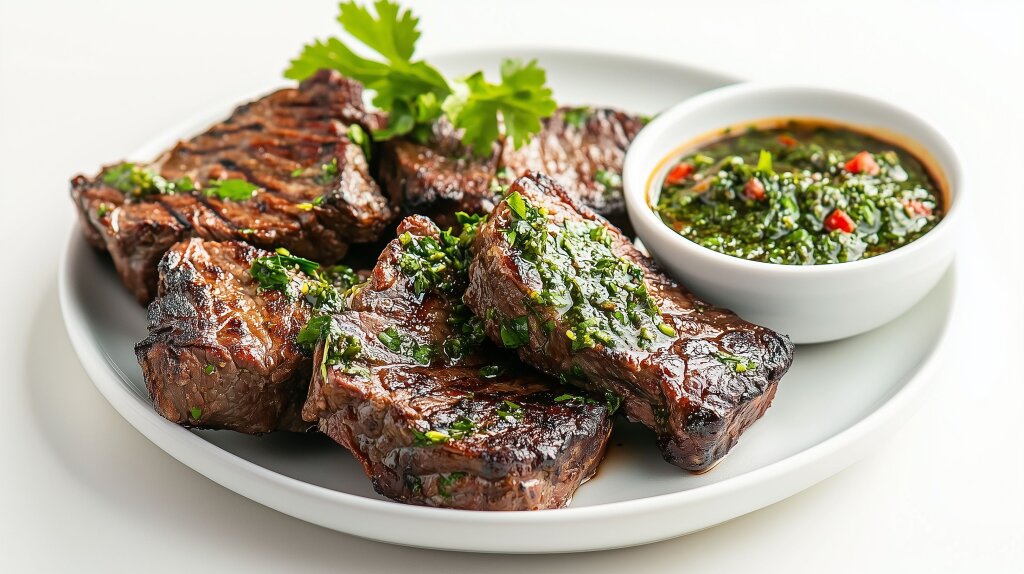
Argentine Chimichurri: A 5-Minute Recipe
Answer first: Argentine chimichurri is a loose, uncooked condiment made here with parsley, garlic, oregano, chile, red-wine vinegar, olive oil, salt, and pepper. Chop it by hand, rest it covered in the refrigerator for at least 10 minutes, and use a clean portion only after the food is cooked.
This page owns the sauce formula. The Argentine steak with chimichurri recipe owns the complete grilled or cast-iron plate, while the asado wine and service guide owns the longer meal sequence.
What makes this an Argentine-style chimichurri
Argentina does not have one legally fixed household formula. Ratios, chile, acidity, herbs, and texture vary by cook. Argentina’s official tourism guide describes the familiar asado condiment with parsley, oregano, garlic, vinegar, ground chile, and oil. That ingredient family anchors this version; it does not make our exact ratio a national rule.
Chimichurri is herb-led. Salsa criolla is vegetable-led, typically built from onion, peppers, tomato, vinegar, and oil. Both can sit on an asado table, but the names do not describe the same sauce.
The ratio and texture
This recipe uses equal measured volumes of chopped parsley and olive oil, with two tablespoons of vinegar for brightness. Garlic, oregano, chile, salt, and pepper season the liquid before the herbs go in. The result should move easily from a spoon while keeping visible herb pieces.
Hand-chopping makes that texture easy to control. A food processor can turn parsley very fine in seconds and may push the mixture toward a paste. Using a knife is a texture choice, not an authenticity test. Stop when the pieces are small enough to spread across a bite of food.
Taste only after the refrigerated rest. Vinegar, salt, garlic, and dried oregano need a few minutes to distribute through the oil and herbs. Add more vinegar one teaspoon at a time; add salt in pinches. A sharp raw taste can soften with time, but extra oil or salt cannot be removed.
Keep the table portion separate
Chimichurri is ready to eat, so treat the serving bowl like any other finished food. Portion it before raw steak or chicken comes out. Use a clean spoon on cooked food.
If a cook wants to brush chimichurri onto food at the grill, that brush gets its own small bowl. Once the brush touches raw meat, neither it nor the remaining sauce can return to the table portion. Discard the cooking remainder rather than trying to remember which spoon went where.
For a fixed steak thickness, two cooking methods, thermometer placement, and USDA safety distinctions, use the complete steak with chimichurri recipe. The best wine with steak guide handles broad cut, char, sauce, and wine decisions.
Why the four-day limit matters
Fresh garlic and herbs held in oil need conservative cold storage. The National Center for Home Food Preservation reports that garlic-in-oil mixtures stored at room temperature present a botulism risk and advises refrigeration at 40°F or below for no more than four days, or freezing for longer storage.
This chimichurri also contains vinegar, but the finished equilibrium pH has not been measured in a laboratory. It is therefore a refrigerated condiment—not a shelf-stable, preserved, or canning recipe. Freeze extra in small portions when one cup is more than the table will use.
Wine with chimichurri
The sauce changes the plate through vinegar, herbs, garlic, and chile. A fresh, moderately structured Malbec can be a useful starting point with grilled beef because it brings enough weight without requiring heavy oak. Cabernet Franc or a fresh red blend may also work. If the chile is genuinely hot, lower alcohol may feel more comfortable.
The food under the sauce still decides most of the pairing. Use the Malbec guide for style and service context, then taste the actual bite and glass rather than treating chimichurri as a one-bottle command.
Sources and methodology
The ingredient family follows official Argentine travel context. Produce handling and storage language follows current U.S. primary guidance. The four-day limit is applied conservatively from fresh garlic-in-oil research because this uncooked home sauce has not been tested for shelf stability.
- Visit Argentina, Asado: A Guide to Experience the Most Delicious Ritual, for the familiar parsley, oregano, garlic, vinegar, ground-chile, and oil ingredient family.
- FDA, 7 Tips for Cleaning Fruits and Vegetables, for handwashing, plain-running-water produce cleaning, no soap or produce wash, drying, and cold storage.
- National Center for Home Food Preservation, Freezing Garlic-in-Oil, for the room-temperature risk, 40°F maximum, four-day refrigerated limit, and freezing option.
- USDA FSIS, Leftovers and Food Safety, for the two-hour room-temperature limit and one-hour hot-weather exception.
Ingredients
- 1/2 cup flat-leaf parsley leaves and tender stems, finely hand-chopped
- 2 medium garlic cloves, finely minced
- 1 small fresh red chile, seeded if desired and finely minced, or 1/2 teaspoon red-pepper flakes
- 3/4 teaspoon dried oregano
- 2 tablespoons (30 ml) red-wine vinegar
- 1/2 cup (120 ml) extra-virgin olive oil
- 3/4 teaspoon Diamond Crystal kosher salt, or 1/2 teaspoon fine salt, plus more only after resting and tasting
- 1/2 teaspoon freshly ground black pepper
Directions
- Clean and dry. Wash hands for 20 seconds. Rinse the parsley and fresh chile under plain running water, dry them thoroughly with a clean towel, and use a clean board, knife, and nonreactive bowl. Do not use soap or produce wash.
- Chop by hand. Finely chop the parsley, garlic, and fresh chile. Hand-chopping preserves a loose texture; a few uneven herb pieces are fine.
- Dissolve the seasoning. Stir the vinegar, salt, black pepper, oregano, and fresh chile or pepper flakes together until the salt begins to dissolve.
- Add the herbs and oil. Fold in the parsley and garlic, then stir in the olive oil. The finished sauce should be loose and spoonable rather than emulsified like mayonnaise.
- Rest it cold. Cover and refrigerate for at least 10 minutes, or up to 2 hours, before tasting and adjusting the salt or vinegar. This fresh garlic-and-oil sauce does not need a room-temperature rest.
- Reserve the table portion first. Spoon what you will serve into a clean serving bowl before raw meat is handled. Any brush or spoon that touches raw meat stays with a separate cooking portion and never returns to this clean bowl.
Wine Pairing
A fresh, moderately structured Malbec is one useful starting point with grilled beef and vinegar-led chimichurri; choose by the finished plate and your preference rather than treating one grape as mandatory.
Serving Ideas
Spoon the clean table portion over cooked steak, chicken, vegetables, eggs, or crusty bread. If you brush sauce onto raw meat while cooking, transfer a separate portion before service, keep its utensil separate, and discard every remainder that touched the raw food or brush. Do not pour that portion back into the serving bowl.
Storage
This home recipe contains fresh garlic and herbs in oil and is not shelf-stable. Cover and refrigerate at 40°F (4.4°C) or below, use within 4 days, or freeze small portions for longer storage. Vinegar does not make this untested batch a canning recipe. If the oil firms in the refrigerator, set out only the amount being served briefly and return it to cold storage within 2 hours, shortened to 1 hour above 90°F (32.2°C).
Five minutes of chopping creates the sauce; the more important habits are a cold rest, a clean serving bowl, and a separate utensil for anything that touches raw food. Use the complete steak-and-chimichurri recipe when you need the full plate.