Russian Wine: From Soviet Sweetness to a Quality Renaissance
Overview
For many Western drinkers, the phrase “Russian wine” still carries a hint of skepticism. Russia is better known for vodka, while wine is often associated with Georgia and the wider Caucasus or Western Europe. Yet Russia has a large domestic wine market and a long, complicated history of viticulture. That history shaped consumer preferences and production methods in ways that still influence the market today.
The modern story is a contrast between volume and quality: a mass market dominated by sweet, low-cost products and a small but growing group of producers aiming for international standards.
Early Roots and Pre-Revolution Wine
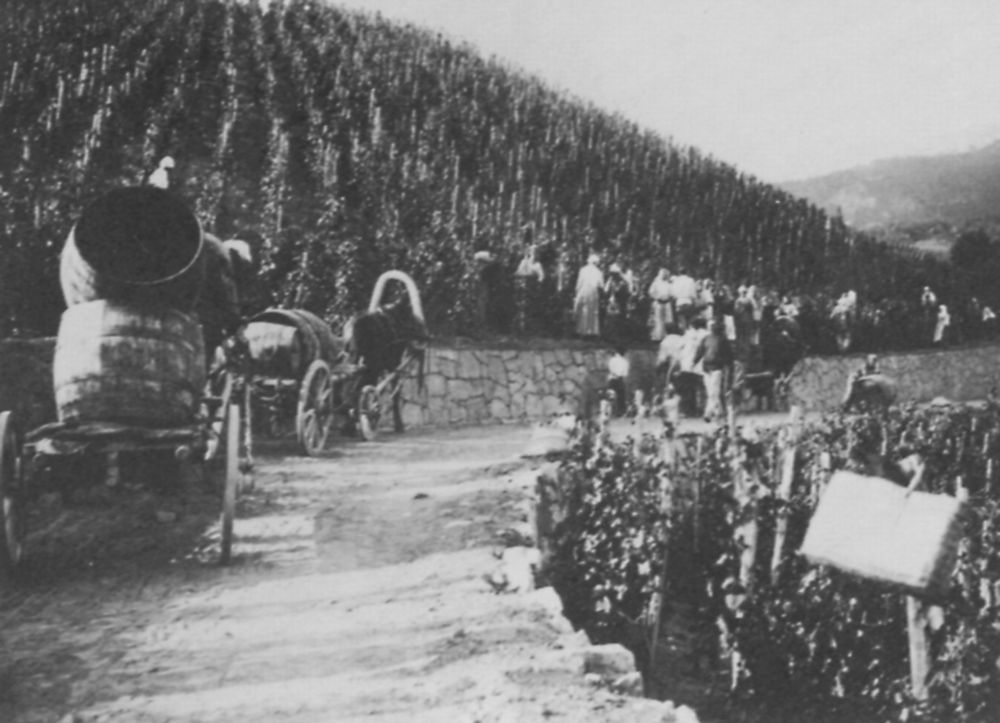
Wine in imperial Russia was largely an aristocratic drink. Before the 1917 Revolution, wine culture existed but was limited in scale compared with Western Europe. The broader population relied more on beer, spirits, and local beverages, while wine remained a symbol of status.
This changed dramatically in the Soviet period, when wine became a planned, mass-market commodity. That shift shaped both production and taste for generations.
The Soviet Legacy of Sweet Wine
The preference for semi-sweet and sparkling wines in Russia is a legacy of the Soviet era. Under Stalin and his minister Anastas Mikoyan, wine was promoted as an affordable drink for ordinary citizens. The result was large-scale production and the cultivation of high-yield, frost-resistant grape varieties.
The trade-off was quality. High yields and cold-resistant vines often produced grapes with sharp acidity and limited flavor. To make the wines palatable, producers relied on sugar additions and, at times, extra alcohol. Those practices created the sweet, fortified styles that became the default for many consumers.
By the late 1950s, the Soviet Union ranked among the world’s largest wine producers by both vineyard area and output. The scale was enormous, but the market skewed toward volume rather than refinement.
The legacy remains cultural as well as technical. Many Russian drinkers still view dry wines as overly sour, a preference that reinforces demand for semi-sweet styles even as quality producers try to shift expectations.
Sparkling wine also played a role in shaping taste. Sweet and semi-sweet sparkling styles were widely promoted, and they became part of celebration culture. That legacy still influences the market: sweetness is often associated with approachability and festivity, while dry wines can be seen as sharp or austere.
Concentrate, Sweetness, and Market Reality
In the low-cost segment, concentrate remains a major factor. Industry voices have described how grape sugar concentrates can be added to thin or acidic base wine to correct flavor. This approach allows producers to mask roughness and deliver sweetness at low cost.
The market consequences are significant. Semi-sweet and sweet wines are often estimated to account for roughly 80 percent of sales, and in the lowest price tiers, their share can exceed 90 percent. Boxed wine and large-format bottles dominate this segment, with extremely low prices per liter.
Critics of the system describe a supply chain where concentrate made from low-grade grapes is blended into wine material, sometimes with artificial flavors and colors. The result can be a product that tastes consistent but lacks the character of fresh fruit or place. For quality-focused producers, this creates reputational drag: the market associates Russian wine with sweetness and shortcuts, even when a small segment is working hard to change that image.
Several producers have lost licenses over poor quality, underscoring the tension between high-volume sales and product integrity. For many consumers, however, these wines align with long-established taste preferences, making rapid change difficult.
The Quality Movement Since the 2000s
Despite the dominance of sweet styles, the last two decades have seen the emergence of quality-focused wineries. Since around 2006, producers have invested in European techniques, better vineyard management, and international benchmarks. Abrau-Durso, near the Black Sea port of Novorossiysk, is often cited as a flagship for the modern Russian wine renaissance, especially in sparkling wine.
Other producers frequently mentioned in the quality segment include Chateau le Grand Vostok, Lefkadia, and Vedernikov. These wineries emphasize dry styles, careful cellar work, and a closer alignment with international standards. They also rely on the climatic advantages of Russia’s southern regions, where a warmer, Mediterranean-like influence can support better ripening.
Abrau-Durso, often described as a flagship, is known for its extensive cellars and a renewed focus on traditional-method sparkling wine. The winery’s profile helped prove that Russian producers could compete in categories beyond simple sweet wines, using technique and patience rather than sugar to build appeal.
A Russian wine guide published in the early 2010s cataloged 55 wines from 13 wineries, a milestone that signaled the rise of a small but serious quality tier. The guide reflected a new domestic appetite for structured, dry wines, even if the broader market remained sweet.
Festivals and regional tastings have also played a role, especially in southern areas where vineyards are more established. These events help bring consumers into direct contact with local producers and encourage trial of drier, higher-quality styles.
Geography matters here. Much of the quality focus centers on the south, including areas near the Black Sea and regions with more consistent heat accumulation. Those zones provide the growing season needed for dry styles, while cooler or more continental areas struggle to reach the same ripeness. This regional split reinforces why a few producers can deliver international-quality wines even as the broader market remains dominated by low-cost sweetness.
Pricing, Policy, and Market Pressure
One of the largest obstacles for quality producers is price. Low-end wines sell at a fraction of the cost of a carefully produced dry wine. Some producers have argued for minimum retail pricing to prevent a race to the bottom and to protect the reputation of Russian wine.
Market data from the early 2010s showed volatility. Non-sparkling wine output dropped by around 9 percent in 2012, while vodka output rose. Imports increased slightly, yet supplies of high-quality wines reportedly fell sharply, highlighting the fragility of the premium segment.
In the economy tier, the cheapest wines were said to sell for around two pounds per liter, mostly in large or boxed formats. This pricing structure leaves little room for higher-quality wines to compete unless consumers can be persuaded to trade up.
Some quality producers have argued for minimum retail pricing or even restrictions on ultra-cheap wines, claiming the lowest tier damages the industry’s reputation. Others point to the need for better enforcement and clearer standards, especially after several producers lost licenses for poor-quality products. The debate reflects the tension between affordability and long-term credibility.
One widely cited statistic from that period noted that supplies of high-quality wines fell by more than 40 percent, dropping to roughly 60 million bottles, even as imports rose. The numbers underline how vulnerable the premium tier was compared with the mass market. For producers trying to build a reputation abroad, that volatility made planning and investment difficult.
One argument frequently raised is that cheap wines created from concentrate undercut legitimate producers and keep the industry trapped in a low-value cycle. The counter-argument is that price controls could limit access for everyday consumers. This tension between accessibility and reputation remains a central fault line in the market.
Outlook for Russian Wine
The Russian wine market is still defined by its past, but it is not static. Consumers are slowly gaining exposure to dry styles, and a small cohort of producers has built reputations that reach beyond Russia.
The future depends on sustained quality improvements, stable policies, and the ability to convince consumers that Russian wine can be both affordable and refined. The challenges are real, but so is the opportunity: a vast domestic market, improving technical knowledge, and a growing interest in local wines.
For now, Russian wine remains a story of contrast. The mass market is still sweet and low-cost, but a new layer of producers is quietly changing the narrative.
If the premium segment continues to grow, it will likely be driven by education and experience: tastings, regional festivals, and better restaurant lists that normalize dry styles. The pace may be slow, but the direction is clear. Russia’s wine future depends not on abandoning its past, but on expanding the range of what Russian wine can be.