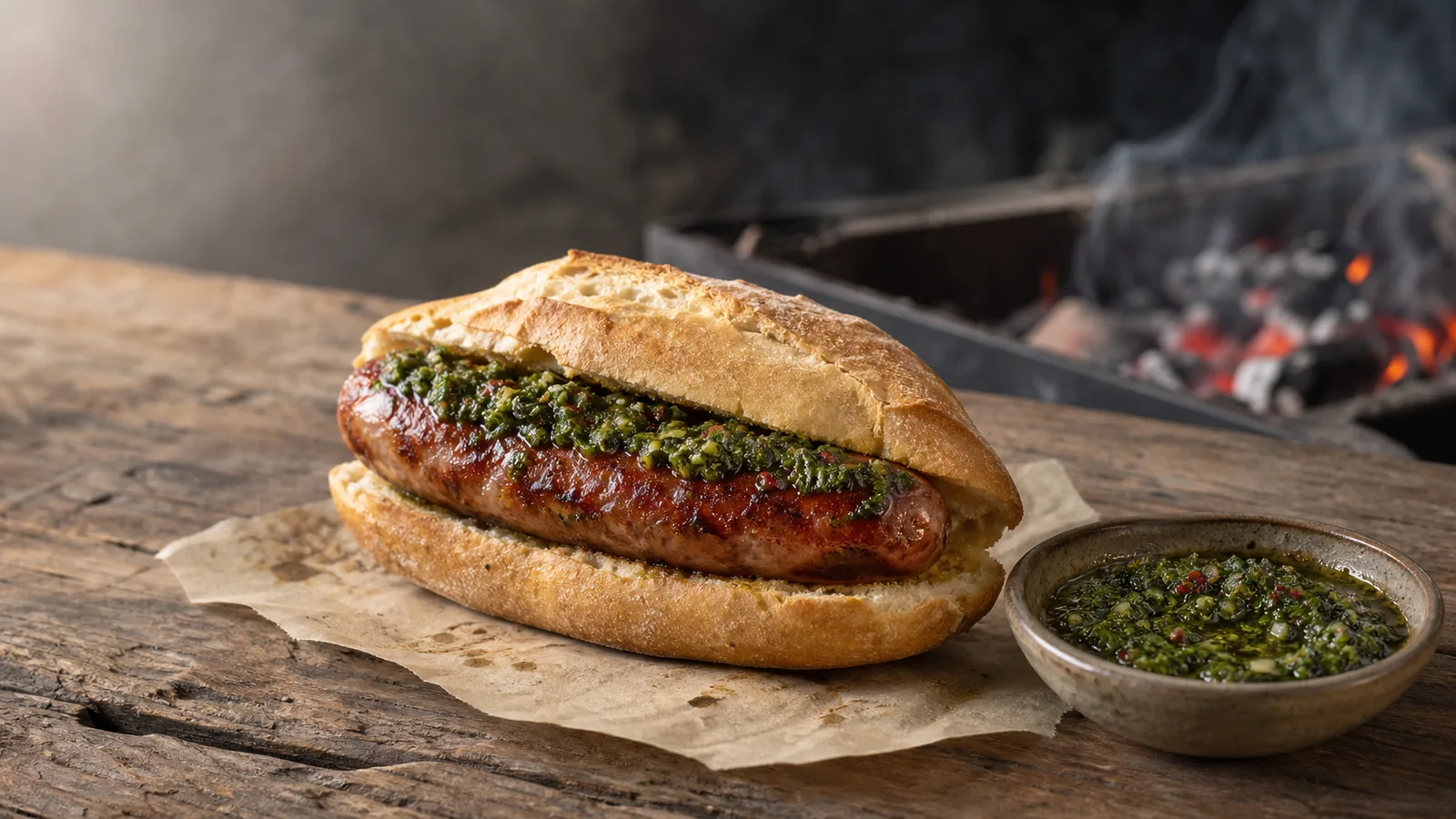
Choripán Recipe: Argentine Chorizo Sandwich
Answer first: choripán is a grilled fresh-chorizo sandwich served on crusty bread, commonly with chimichurri or salsa criolla. Cook fresh pork, beef, lamb, or veal sausage to 160°F (71.1°C), or poultry sausage to 165°F (73.9°C), before it reaches the roll.
The name joins chori, from chorizo, and pan, bread. Argentina’s official tourism site presents it as both street food and an early course at an asado, usually on French-style bread and finished with one of the two sauces above. That is a useful description, not a rule for every grill or household.
This page owns the cooking job. The concise choripán glossary entry keeps the definition and language context.
Choosing the right chorizo
Look for fresh, uncooked grilling sausage, ideally labeled Argentine chorizo or chorizo parrillero. Argentine versions commonly use pork, beef, or both, with a relatively mild garlic-and-paprika profile. Read the package because “chorizo” covers very different products.
- Do not substitute cured Spanish chorizo one for one. It is a ready-to-eat or semi-dry product with a different texture and salt level.
- Loose Mexican-style chorizo will not behave like a link. Its seasoning and casing format serve another cooking job.
- A mild fresh pork sausage or bratwurst can work structurally when Argentine chorizo is unavailable, but the seasoning will be different. A fennel-heavy Italian sausage moves the sandwich in another direction.
- Poultry sausage is an option, but USDA sets its safe minimum at 165°F (73.9°C), five degrees higher than fresh sausage made from pork, beef, lamb, or veal.
Choose links of similar size so they finish together. Keep them refrigerated until the grill or pan is ready.
Grill slowly, then color
The useful home version of an Argentine parrilla is a two-zone grill. Moderate indirect heat cooks the center before the casing scorches; a short direct-heat finish supplies color. Turning every few minutes also limits splitting.
Some cooks serve the link whole. Others make a mariposa cut and open it like a butterfly for more crisp surface. This recipe delays that cut until the sausage has reached its safe minimum, which keeps the safety check simple and reduces juice loss.
An indoor skillet works by the same logic. A small amount of water helps the center heat gently; once it evaporates, the pan browns the casing. Color is not a doneness test. For a thin food such as sausage, USDA advises inserting the thermometer probe from the side so its sensing area reaches the center.
Bread and sauces
A compact baguette-style roll gives you a crisp shell and enough crumb to catch the juices. Toast only the cut face so the outside remains easy to bite. Avoid an oversized loaf that turns the sausage into a garnish.
Chimichurri is herb-led, garlicky, and loose. Salsa criolla is made from chopped vegetables, vinegar, and oil. Use either, or let them share the table. They should brighten the sandwich, not soak the bread before it is served.
If choripán begins a larger meal, follow it with Argentine provoleta and grilled food rather than making every course heavy at once.
Wine pairing
Grilled sausage brings salt, browned fat, smoke, and spice. Chimichurri adds vinegar and herbs; salsa criolla adds raw vegetables and acidity. A fruit-led Malbec with moderate tannin can carry the browned meat while staying responsive to the sauces. A very oaky, high-alcohol red can make a sharp condiment feel harsher.
Start slightly cool, around cellar temperature, and let the glass warm at the table. The Malbec guide explains how origin, oak, and serving temperature change the choice.
Make-ahead plan
Make either sauce a day ahead and keep it refrigerated. Cut the bread earlier the same day, cover it, and toast only when the chorizos are nearly done. Do not partially grill fresh sausage and refrigerate it for later completion. If you need a faster service, cook it fully, chill it promptly, and reheat to 165°F (73.9°C).
Sources and methodology
This recipe combines an official Argentine description of the dish with current U.S. home food-safety guidance. Grill and skillet timing was developed as a practical range; temperature, not the clock, decides doneness.
- Visit Argentina, Asado: A Guide to Experience the Most Delicious Ritual, for choripán’s place at asado and the bread-and-sauce context.
- USDA FSIS, Sausages and Food Safety, updated February 10, 2025, for sausage temperatures and raw/cooked storage windows.
- USDA FSIS, Food Thermometers, for side insertion in thin foods.
- USDA FSIS, Leftovers and Food Safety, for prompt refrigeration, the hot-weather exception, and reheating.
Ingredients
- 4 fresh chorizo links, 4 to 5 ounces (113 to 142 g) each, made from pork, beef, or a pork-beef mixture
- 4 small crusty rolls, about 6 inches long, or 1 baguette cut into 4 pieces
- 1 teaspoon neutral oil, only if using the skillet method
- 2 tablespoons softened unsalted butter or olive oil, for the cut sides of the bread
- 1/2 cup chimichurri, for serving
- 1 cup salsa criolla, optional, for serving
Directions
- Set up safely. Keep the raw sausages and their plate or tongs separate from the bread and sauces. Wash hands and work surfaces after handling the meat. Choose either the grill or skillet method below.
- Preheat. For the grill, prepare a two-zone medium fire, roughly 375-425°F (190.6-218.3°C) at the grate. For the skillet, set a heavy 12-inch pan over medium-low heat and add the 1 teaspoon oil.
- Grill method. Put the chorizos over the cooler side of the grill. Cover and cook for 16-22 minutes, turning every 4-5 minutes so the casings brown without bursting. Move them briefly over direct heat only when they need more color.
- Skillet method. Put the chorizos in the oiled pan with 1/3 cup water. Cover and cook over medium-low heat for 8-10 minutes. Uncover when the water has evaporated, then cook for another 8-12 minutes, turning often, until browned.
- Verify doneness. Insert an instant-read thermometer from the side into the center of each link. Fresh pork, beef, lamb, or veal sausage must reach 160°F (71.1°C); fresh chicken or turkey sausage must reach 165°F (73.9°C). Do not partially cook sausage, refrigerate it, and finish it later.
- Optional mariposa finish. After a link has reached its safe minimum temperature, split it lengthwise without cutting all the way through. Open it like a book and sear the cut side for 1-2 minutes. This adds char but is not required.
- Toast the bread. Split the rolls, brush the cut sides with butter or olive oil, and toast cut-side down for 1-2 minutes on the grill or in a clean skillet.
- Assemble and serve. Put one hot chorizo in each roll. Spoon on chimichurri, salsa criolla, or both. Serve immediately, using clean tongs and a clean platter.
Wine Pairing
A fresh, moderately structured Malbec can meet grilled sausage and chimichurri without making oak the loudest flavor; a juicy red blend is another useful starting point.
Serving Ideas
Serve one sandwich per person as a casual main, or cut each choripán in half when it opens a longer asado. Put chimichurri and salsa criolla in separate bowls so guests can choose an herb-led or vegetable-led topping. A small skillet of provoleta makes a natural first course.
Storage
Follow the sausage package date. USDA guidance lists uncooked fresh sausage for 1-2 days refrigerated. Refrigerate cooked chorizo and assembled leftovers at 40°F (4.4°C) or below within 2 hours, or within 1 hour above 90°F (32.2°C), and use within 3-4 days. Store bread and sauces separately when possible. Reheat cooked sausage to 165°F (73.9°C). Discard a perishable sandwich left out beyond the applicable time limit.
Choripán is at its best when the bread stays crisp, the chorizo is fully cooked but still juicy, and the sauce is added at the last moment. For the wine side of the table, continue with the Malbec guide.
Editorial image created for this recipe; it represents the finished sandwich rather than a documented asado.