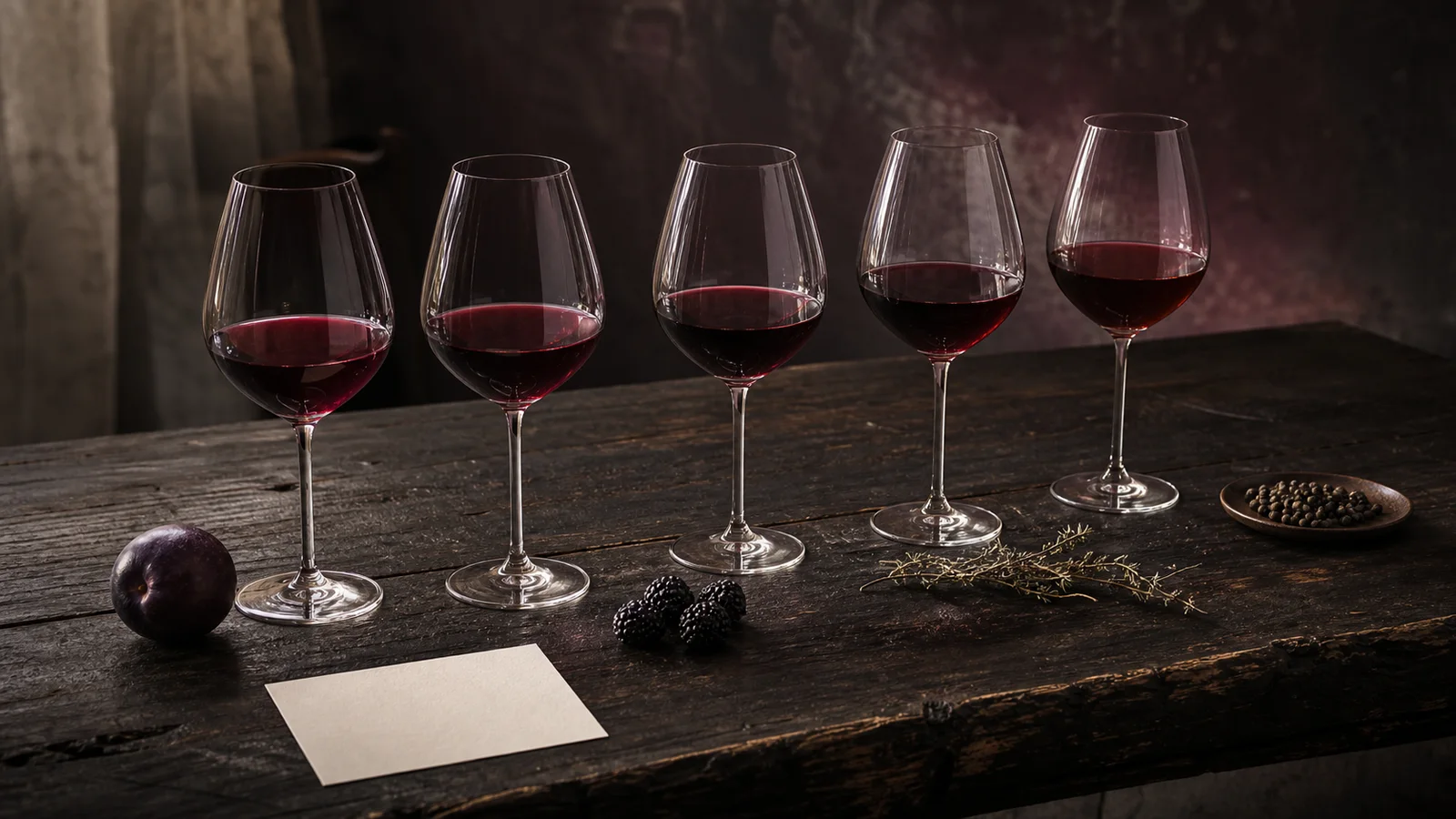
Red-wine decision guide
Malbec Comparison Guide: Which Red Wine Fits Your Table?
Start with the experience you want: softer, firmer, lighter, pepperier, juicier, or more savory. Then use the detailed head-to-head guide for the pair that matters.
Research note: This hub compares typical dry table-wine styles. Producer, origin, vintage, ripeness, blending, and élevage can overturn any generalization, so exact pair pages remain the deeper canonical guides.
Choose Malbec when you want dark fruit, medium-to-full body, and noticeable but usually manageable structure. Choose Merlot for a softer landing, Cabernet Sauvignon for firmer architecture, Pinot Noir for a lighter and brighter red, or Syrah for pepper and savory depth. Zinfandel, Bonarda, and Cabernet Franc offer three more distinct routes.
This is a navigation guide, not a tournament. The most useful wine comparison starts with occasion, food, and texture, not a declaration that one grape is better. A cool-site Merlot can be firmer than a plush Malbec. An earlier-picked Malbec can feel fresher than a ripe Syrah. New oak can make two unrelated grapes taste temporarily similar.
Use the matrix to find your likely direction. Then open the detailed comparison for the two wines you are actually considering.
Malbec and seven red wines at a glance
The entries describe common dry varietal examples. They are deliberately expressed as ranges rather than fixed scores.
On a phone, swipe the matrix horizontally to see every column.
| Wine | Structure: body, tannin, acidity | Fruit, savor, and oak | Good starting occasion or pairing |
|---|---|---|---|
| Malbec | Medium-to-full body; moderate-to-firm tannin; moderate, sometimes fresher acidity | Plum, blackberry, black cherry, violet; oak may add cocoa, vanilla, toast, or cedar | Grilled meat, mushrooms, provoleta, dark-fruit drinkers |
| Merlot | Medium-to-full body; often softer tannin; moderate acidity | Plum, black cherry, red fruit; oak may add spice, while some examples show herbs or chocolate | Roast meats, pasta, mixed dinner tables, softer-texture preference |
| Cabernet Sauvignon | Medium-to-full body; commonly firm, linear tannin; moderate-to-high acidity | Cassis, black cherry, cedar, herbs; oak is often important in structured examples | Steak, lamb, aged cheese, drinkers who want grip and length |
| Pinot Noir | Light-to-medium body; usually lower tannin; often bright acidity | Red cherry, raspberry, cranberry, earth, or spice; oak usually supports rather than dominates | Salmon, chicken, mushrooms, lighter meals, chillable-red territory |
| Syrah / Shiraz | Medium-to-full body; moderate-to-firm tannin; moderate acidity | Blackberry, blueberry, pepper, olive, smoke, or cured-meat notes; oak can add sweet spice | Lamb, sausages, barbecue, peppery or savory cravings |
| Zinfandel | Medium-to-full body; tannin varies; moderate acidity can be hidden by ripeness | Blackberry, raspberry, bramble, baking spice; oak can amplify vanilla and spice | Sweet-smoky barbecue, burgers, ripe-fruit preference |
| Bonarda Argentina | Usually medium body; often gentler tannin and lively acidity | Juicy red and black fruit, flowers, spice; oak is frequently kept in the background | Pizza, sausages, casual gatherings, a bright alternative to Malbec |
| Cabernet Franc | Medium body; fine-to-firm tannin; often fresh acidity | Red and black fruit, herbs, graphite, flowers, pepper; oak can add shape and savory spice | Herb-led dishes, grilled vegetables, roast meats, aromatic complexity |
“Oak’s common role” does not mean a grape requires oak. If you dislike vanilla or toast, seek vessel information on the producer’s technical sheet. If you like those notes, check whether they came from newer barrels, staves, or another wood treatment rather than assuming the front-label term tells the whole story.
The fastest way to choose
I want soft and familiar
Try Merlot. It commonly emphasizes round texture and generous fruit without the same linear grip as Cabernet Sauvignon.
I want a serious steak red
Compare Malbec with Cabernet Sauvignon. Decide whether you prefer broad dark fruit or firmer cassis-and-cedar structure.
I want lighter and brighter
Try Pinot Noir. It is generally paler, lower in tannin, and more red-fruited than Malbec.
I want pepper and savor
Try Syrah. “Shiraz” is the same grape name used in a different stylistic and regional context, not a separate variety.
I want ripe, brambly fruit
Try Zinfandel. Watch alcohol and sweetness cues if you prefer a tauter, less jammy red.
I want something Argentine but less expected
Try Bonarda Argentina or Cabernet Franc, then compare how the producer handles fruit, herbs, and oak.
Malbec vs Merlot
Malbec is often the darker and more structured choice; Merlot is often the rounder and softer one. Their fruit can overlap around plum and black cherry, so texture is usually the clearer dividing line.
Choose Malbec for grilled beef, char, or a more assertive glass. Choose Merlot for roast chicken, pork, tomato-based pasta, or a table where people want a smoother red. Neither grape is inherently sweet, and either can become firm in a cool site or generous in a warm one.
If dinner is specifically pork chops, use the cut-and-sauce pork-chop guide before defaulting to either grape.
Read the full Malbec vs Merlot guide.
Malbec vs Cabernet Sauvignon
Cabernet Sauvignon commonly has more linear tannin, higher-feeling acidity, and cassis, cedar, or herbal notes. Malbec often feels broader, darker-fruited, and more floral. That distinction can narrow with blending, ripe fruit, and similar barrel programs.
Choose Cabernet when you enjoy grip, length, and a wine that may need more time. Choose Malbec when you want substantial body with plum-led fruit and, in many examples, a more immediately generous middle palate. For steak, sauce and doneness matter as much as grape name.
Read the full Malbec vs Cabernet Sauvignon guide.
Malbec vs Pinot Noir
Pinot Noir is usually the lighter, paler, higher-acid choice, with red fruit and lower tannin. Malbec generally brings deeper color, more body, and darker fruit. This is the clearest structural contrast in the group.
Choose Pinot for salmon, roast chicken, mushroom dishes, or a red that can take a slight chill. Choose Malbec for grilled meat, robust sauces, or when you want more weight. A delicate meal can make a large Malbec feel blunt; a heavy barbecue plate can make a subtle Pinot disappear.
If salmon is the meal rather than one line in a grape comparison, the salmon wine-pairing guide starts with preparation—raw, roasted, smoked, glazed, or cream-sauced—before choosing the bottle.
Read the full Malbec vs Pinot Noir guide.
Malbec vs Syrah or Shiraz
Both grapes can make dark, full, structured wines. Syrah often signals black pepper, olive, smoke, or savory meat notes; Malbec often centers plum, blackberry, and violet. “Shiraz” is another name for Syrah, although producers and regions may use the name to suggest a particular style.
Choose Syrah for peppered lamb, sausages, smoky food, or savory aromatics. Choose Malbec for dark fruit, broad texture, and an Argentine grill connection. Compare alcohol and oak details before assuming one will be heavier.
Read the full Malbec vs Syrah and Shiraz guide.
Malbec vs Zinfandel
Zinfandel often leans toward brambly raspberry and blackberry, baking spice, and higher ripeness. Malbec more often puts plum, black fruit, violet, and firmer shape at the center. Both can be powerful, so the useful question is whether you want ripe spice and breadth or dark fruit with more defined grip.
Familia Morgan already has a detailed Malbec and Zinfandel article on the legacy journal. This guide points to that complete article instead of repeating a shorter version here.
Read the existing Malbec vs Zinfandel guide.
Where Bonarda and Cabernet Franc fit
Bonarda Argentina
Bonarda Argentina is a useful choice when Malbec sounds heavier than the meal. Many examples emphasize juicy fruit, fresh acidity, and gentler tannin, which can work with pizza, chorizo, burgers, and casual weeknight cooking. The name has a complicated international history, so do not assume every wine called Bonarda in another country is the same grape.
There is no dedicated Familia Morgan Malbec-vs-Bonarda page yet. This section is the chooser, not a promise that a longer comparison exists.
Cabernet Franc
Cabernet Franc often brings aromatic herbs, flowers, pepper, graphite, and red-to-black fruit with a fresher line through the palate. Against Malbec, it can feel more lifted and savory; in a blend, it may add fragrance and shape while Malbec supplies breadth and dark fruit.
Our existing article covers a Malbec and Cabernet Franc blend, which is a different job from an exact varietal comparison. Read why that blend is gaining attention.
Match the wine to the food, not just the protein
Wine charts often stop at “red meat.” A more useful method adds the sauce and cooking method.
| The plate | Direction to try | Adjustment |
|---|---|---|
| Charred steak with salt | Malbec or Cabernet Sauvignon | Choose Malbec for broader fruit, Cabernet for firmer grip |
| Steak with herb-bright chimichurri | Fresher Malbec, Cabernet Franc, or Syrah | Avoid burying the sauce under heavy new oak |
| Sweet, sticky barbecue | Zinfandel or ripe, softer Malbec | Very dry, severe tannin can clash with sweetness |
| Mushroom pasta | Pinot Noir, Merlot, or savory Malbec | Let sauce weight decide how full the wine should be |
| Sausages and peppers | Syrah, Bonarda, or Malbec | Pepper, smoke, and acidity may matter more than body |
| Mixed table with poultry and red meat | Merlot or lighter Malbec | Aim for flexibility rather than maximum power |
Pasta needs the same level of specificity: the pasta wine-pairing guide chooses by sauce and preparation rather than noodle shape or a blanket red-versus-white rule.
You can make the decision interactive with our steak wine pairing tool, or build the Argentine table around chimichurri and provoleta.
A two-bottle tasting that teaches more than a ranking
Pick one Malbec and one comparator from a similar vintage and price band. Serve both at the same temperature in the same glass shape. Taste before looking up reviews.
Write down only five things: fruit direction, acidity, tannin, body, and the finish. Then add food. A bite of grilled mushroom, cheese, or meat may change which wine you prefer. The aim is to identify why a bottle fits, not to force a winner.
For a fuller grounding in the grape, including dryness, Cahors, Mendoza, oak, serving, and labels, start with the Malbec wine guide.
Choose by style, then test the choice
Explore the current Familia Morgan wines, check the origin and cellar notes, and build a two-bottle comparison around your table.
Sources and methodology
The comparison matrix is an editorial synthesis of typical dry table-wine expressions, not a chemical ranking or a promise about every producer. The detailed head-to-head guides are linked rather than repeated.
- INV, Malbec report, 2025, for Malbec’s Argentine context.
- INAO, Cahors appellation overview, for Malbec/Côt’s protected French context.
- Familia Morgan’s four existing head-to-head comparison guides, used for the deeper grape-by-grape explanations linked throughout this page.