Buyer guide
The Best Wine With Pasta Is Chosen by Sauce, Not Noodle Shape
Spaghetti and rigatoni can carry the same sauce. Start with acidity, richness, herbs, umami, and heat; let the noodle shape break the tie.
Research note: These are Familia Morgan's recommendations about wines Familia Morgan makes. This is not an independent blind tasting, a paid review, or a global ranking. Product facts were verified July 31, 2026.
The short answer: The best wine with pasta follows the sauce, not the noodle. Choose fresh reds such as Sangiovese or Barbera for sharp tomato sauces; fuller reds for slow-cooked meat ragù; fresh Chardonnay for light cream, butter, or seafood sauces; aromatic whites for green herbs; and a light red such as Pinot Noir for earthy mushroom dishes. Sweetness and chile can change every one of those answers.
Pasta itself is a mild carrier. The pairing problem arrives with tomatoes, cheese, cream, meat, mushrooms, shellfish, herbs, garlic, or chile. That is why a rule based on spaghetti versus penne fails: both can carry marinara, while one bowl of spaghetti can be carbonara and another can be alle vongole.
This guide starts with a six-zone sauce map, then adds a separate branch for heat and sweetness. It names Familia Morgan wines only after the method is clear—and it names styles we do not make whenever they are the more useful answer.
Use the sauce map before choosing a grape
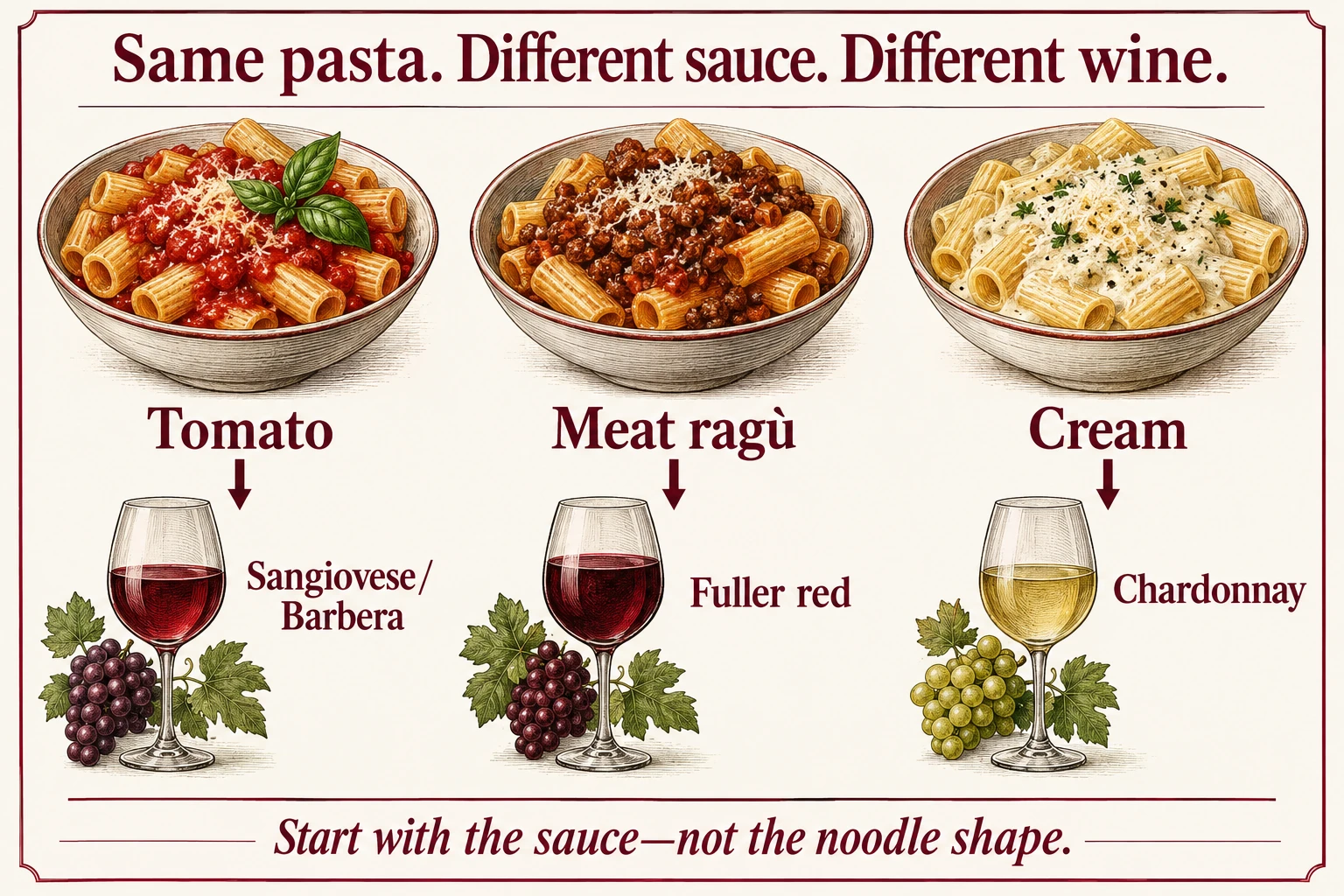
Read the illustration
Tomato sauce points toward fresh Sangiovese or Barbera, meat ragù toward a fuller red, and cream sauce toward Chardonnay. The sauce, not spaghetti versus rigatoni, provides the main pairing clues.
The cuaderno-sauce-map sorts a plate by its dominant color, texture, and flavor pressure. Color is only a mnemonic: every zone is labeled in words so the tool remains useful without color vision. Start in the center with the sauce, then move outward to the trait the wine needs.
01 · Bright red
Tomato and marinara
Need: enough freshness not to seem flat beside the sauce.
Try: Sangiovese, Barbera, or another fresh, moderate red.
02 · Slow red
Meat ragù and baked pasta
Need: body and flavor intensity that match long-cooked meat and browned cheese.
Try: Malbec, a structured red blend, or Sangiovese-based red.
03 · Pale and rich
Cream, butter, and cheese
Need: freshness for contrast or fuller texture for echo.
Try: Chardonnay; choose lean or rich according to the sauce.
04 · Green and aromatic
Pesto and herb sauces
Need: an aromatic, fresh style that will not bury basil or herbs.
Try: Vermentino, Sauvignon Blanc, or fresh unoaked Chardonnay.
05 · Earth and umami
Mushroom and truffle
Need: restraint around umami; heavy tannin can become more bitter.
Try: Pinot Noir, savory white wine, or a mature, supple red.
06 · Briny and light
Seafood, lemon, and olive oil
Need: freshness and no heavy tannic interference.
Try: Vermentino, dry sparkling wine, or fresh Chardonnay.
The map is a starting point, not a command. Carbonara sits between cream and umami because egg, cured pork, and hard cheese matter. Vodka sauce sits between bright tomato and cream. A mushroom ragù can move from the earth zone toward slow red as meat and reduction increase.
The pairing method: pressure before prestige
The best-known grape is not automatically the best bottle for dinner. Identify the pressures the food applies to the wine:
- Acidity: Tomato can make a low-acid wine feel broad or flat. A fresh red style usually keeps the pairing in balance.
- Richness: Cream, butter, egg, and melted cheese can welcome either a contrasting fresh wine or a matching fuller texture.
- Salt: Salt can soften perceived bitterness, acidity, and tannic dryness, but it does not erase the rest of the dish.
- Umami: Mushrooms, Parmesan, cured meat, and slow-cooked stock can make fruit seem quieter and bitterness more noticeable.
- Sweetness: Sweet tomato, caramelized onion, or added sugar can make a dry wine seem drier and less fruity.
- Chile: Heat can emphasize alcohol and tannic harshness. More power is not always the answer.
Then match intensity. A delicate lemon-oil seafood pasta does not need the same wine as lasagna with braised beef and a browned cheese crust. Body and aroma should be proportionate, while personal preference decides whether you echo or contrast texture.
The grape’s name is only part of the evidence. Oak treatment, age, origin, ripeness, and producer choices change style. Our guide to how wine is made explains those cellar levers, while the Chardonnay style guide separates oak from the grape itself.
Match the major sauce families
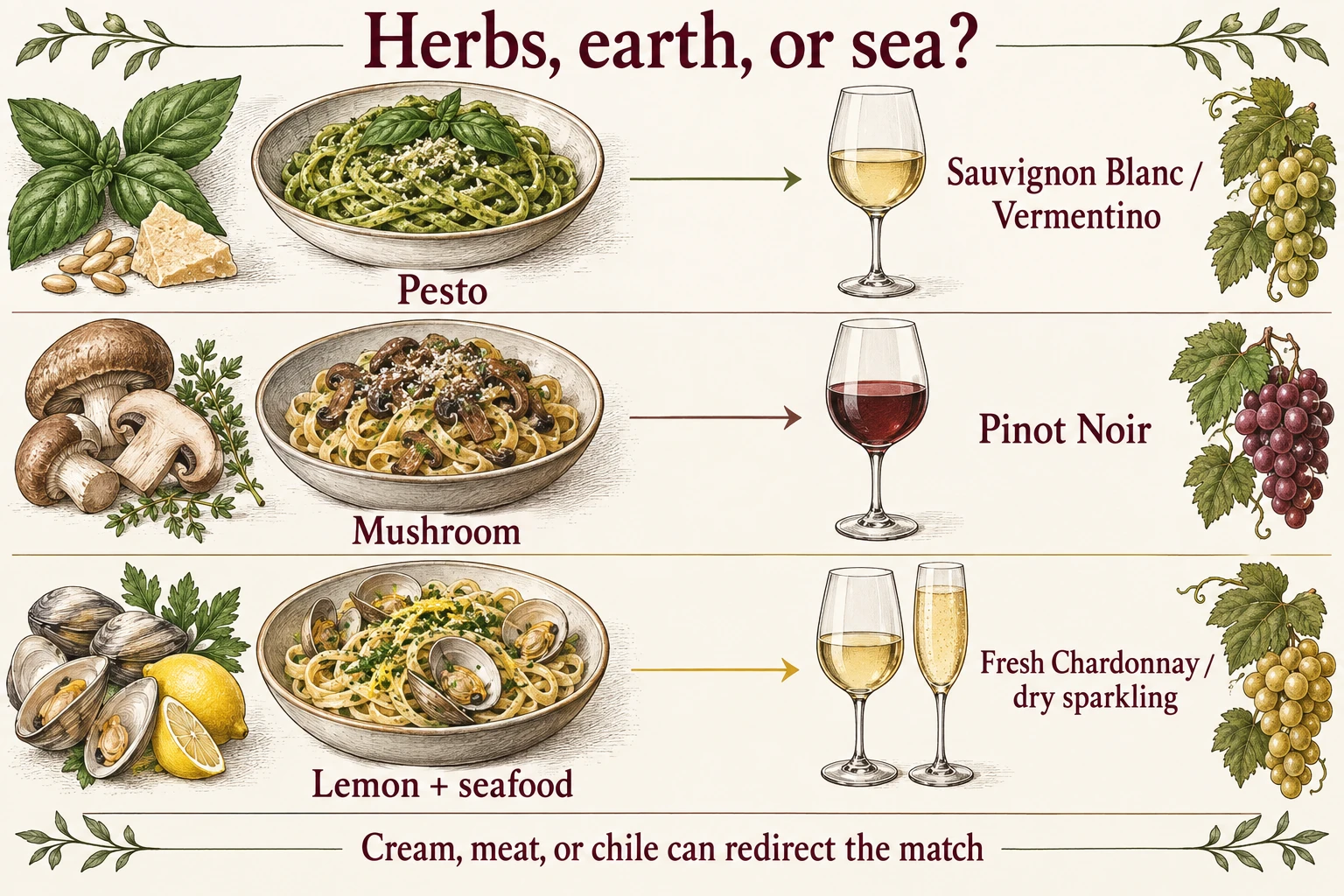
Read the illustration
Pesto can suit Sauvignon Blanc or Vermentino; mushroom pasta can suit Pinot Noir; lemon-seafood pasta can suit fresh Chardonnay or dry sparkling wine. Additions of cream, meat, or chile can change the direction.
Tomato, marinara, and arrabbiata
Tomato brings acidity, and cooked tomato may also bring sweetness. Sangiovese and Barbera are classic directions because their freshness can meet the sauce without seeming flat. Familia Morgan does not currently make either style. A youthful, fruit-led red can work when the sauce is rounder, contains meat, or is baked with cheese, but we would not force a Cabernet-based blend into a sharp, simple marinara when a fresher Italian red is easier.
Arrabbiata adds chile. Look for moderate alcohol and limited tannic aggression; if the dish is genuinely hot, a fruity or slightly off-dry style may be more forgiving than a powerful dry red. Do not assume the fullest bottle is the safest bottle.
Slow-cooked ragù, lasagna, and baked ziti
Long-cooked beef or lamb, stock, mushrooms, tomato, and browned cheese build weight and umami. This is where a structured red can make sense. Malbec Reserva can meet a deeply flavored ragù with dark-fruit and oak-derived notes, while a red blend can suit baked pasta whose tomato, meat, and cheese are in balance. Sangiovese-based red remains a strong alternative when tomato acidity leads.
Use the mature bottle for the mature sauce. It is excessive for plain noodles with fresh cherry tomatoes, and it can make a light vegetable pasta feel smaller. For a deeper understanding of the grape before buying, see the Malbec guide.
Cream, butter, Alfredo, and carbonara
With a light cream or butter sauce, a fresh unoaked Chardonnay provides contrast and keeps the meal from feeling monotonous. A very rich Alfredo or heavily cheesed sauce can support a broader, oak-influenced Chardonnay if you want an echo of texture. Carbonara adds egg, pecorino or Parmesan, black pepper, and cured pork; those salty, savory elements can also welcome a fresh white with enough flavor to remain present.
“Unoaked” does not automatically prove high acidity, dryness, or the absence of malolactic conversion. Treat it as a production fact, then read the producer’s profile. Our unoaked Chardonnay buyer guide shows what can and cannot be verified from label language.
Pesto and green herb sauces
Basil, parsley, mint, arugula, garlic, nuts, and hard cheese make aroma more important than weight. Vermentino and Sauvignon Blanc are useful styles because they can feel fresh and aromatic; Familia Morgan does not currently make either. A fresh, citrus-led unoaked Chardonnay can work with a gentler basil pesto or herb-and-olive-oil sauce, particularly when cream is not heavy and garlic is not raw and dominant.
Pesto is also salty and umami-rich. Avoid a heavily tannic red merely because the sauce contains Parmesan. If red is non-negotiable, choose a light, fresh style and serve it slightly cool.
Mushroom, truffle, and earthy sauces
Mushrooms add umami, and truffle adds an aroma that a highly fruity or heavily oaked wine may overwhelm. Pinot Noir is a versatile red direction; a savory white or mature, supple red can also work. Familia Morgan does not make Pinot Noir. With creamy mushrooms, fresh Chardonnay can provide contrast, but with a dark mushroom reduction, the lighter red route is often more coherent.
Do not repeat the myth that tannin “breaks down fat.” Tannin binds with proteins in saliva and changes the drying sensation; it is not a chemical tenderizer for dinner. Umami can make a heavily tannic choice seem more bitter.
Seafood, clam, shrimp, and lemon-oil pasta
Simple seafood pasta usually benefits from a fresh white that does not introduce heavy tannin. Vermentino, dry sparkling wine, and fresh Chardonnay are practical directions. Nine Queens Chardonnay is most defensible when lemon, herbs, olive oil, or a light cream sauce frames the seafood. A deeply spicy tomato-seafood sauce needs a different answer: follow the tomato and heat, not the shellfish alone.
Garlic intensity also matters. Gently cooked garlic integrates into the sauce; raw or sharply browned garlic can dominate a delicate wine. Taste the finished sauce before opening the bottle if possible.
What changes the answer
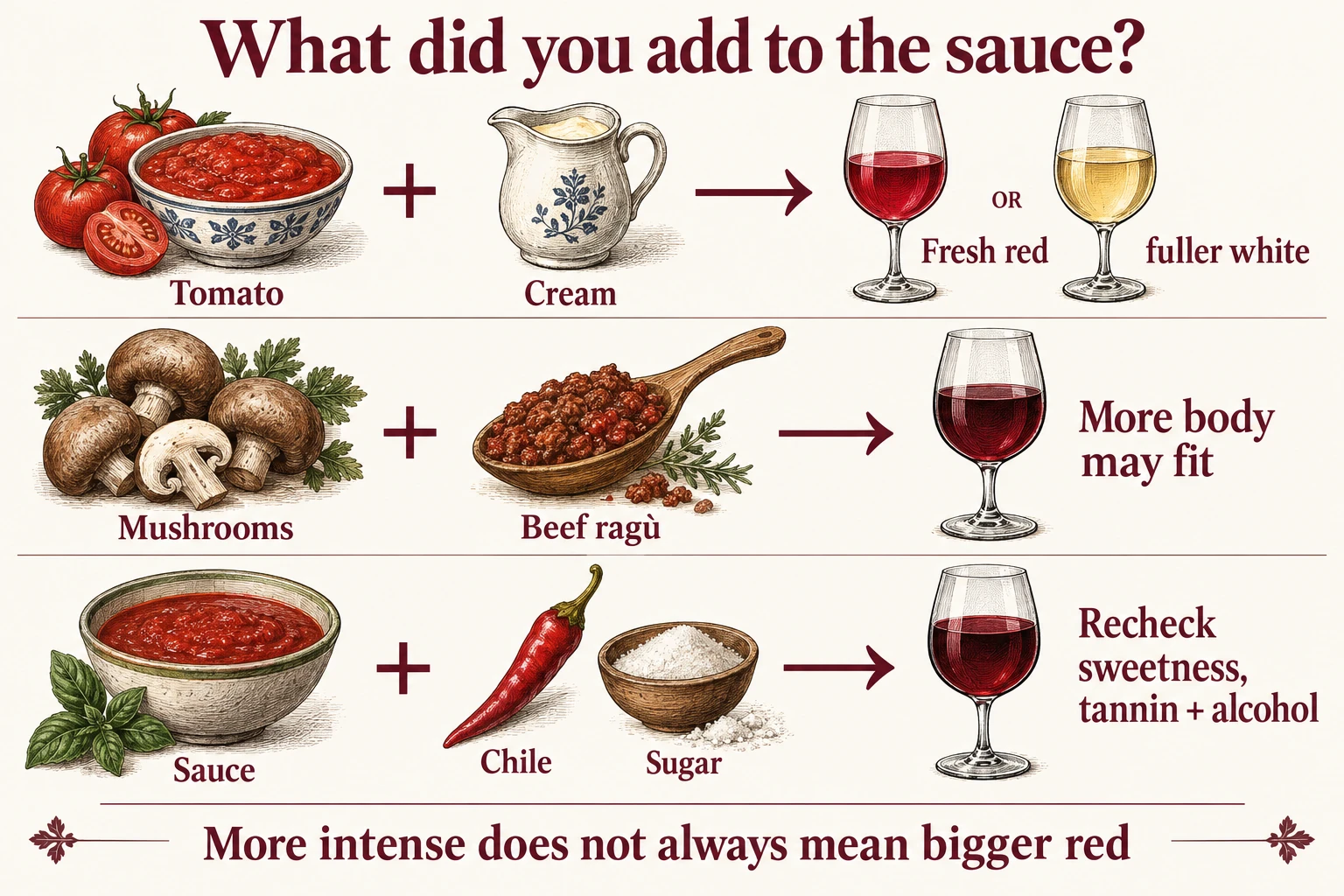
Read the illustration
Adding cream to tomato sauce opens a fuller-white route; adding beef to mushrooms increases intensity; adding sugar or chile calls for checking wine sweetness, tannin, and alcohol rather than simply choosing a bigger red.
Four common changes can move a dish from one zone to another:
- Tomato plus cream: Vodka sauce softens tomato’s sharpness and adds body. A fresh red or fuller white can both work depending on chile and sweetness.
- Mushroom plus beef: A dark meat-and-mushroom ragù needs more body than a simple mushroom-and-olive-oil pasta.
- Pesto plus cream: Cream moves the pairing toward Chardonnay; a lean herbal white still works if you prefer contrast.
- Sugar or chile: These are override switches. Sweetness can make dry wine harsher, and chile can amplify warmth and tannin.
Noodle shape affects how much sauce reaches each bite, so it can fine-tune intensity. It should not outrank the sauce family. Rigatoni loaded with ragù is more intense per bite than lightly dressed spaghetti, but both still belong to the same slow-red decision zone.
Wine for the pan is not automatically wine for the glass
If a recipe calls for wine, use sound wine in a style that supports the sauce; do not cook with a faulty or unpleasant bottle. It need not be the same bottle you serve, and it need not be expensive. Taste after the sauce reduces, then choose the drinking wine for the finished dish. Avoid the absolute claim that all alcohol cooks off: the amount remaining depends on method and time.
When a Familia Morgan wine fits
Our three routes below are intentionally different. The fresh Chardonnay is for lighter cream, butter, seafood, lemon, and herb preparations. The youthful Cabernet-based red blend is for balanced tomato-meat or baked pasta, not the sharpest marinara. The oak-matured Malbec Reserva is for a deeply flavored meat ragù, not a light weeknight sauce.
These are Familia Morgan’s recommendations about wines Familia Morgan makes. This is not an independent blind tasting, a paid review, or a global ranking.
Price, availability, shipping eligibility, taxes, and final terms are confirmed at checkout.
When these are not your bottles
Skip all three recommendations when the sauce points elsewhere. Sharp marinara can be better with Sangiovese or Barbera. Briny clam pasta or assertive pesto may be better with Vermentino or Sauvignon Blanc. Delicate mushroom pasta can be better with Pinot Noir. A very sweet, hot sauce can be easier with an off-dry aromatic white. Familia Morgan does not make those styles today, and that limitation should be visible before checkout.
Also skip the Reserva when the dish is light. Dark fruit, vanilla, and twelve months of oak maturation are not virtues in every context. They are relevant details for an intense ragù and unnecessary weight for lemony primavera.
Reverse lookup: start with the bottle you already have
- Fresh unoaked Chardonnay: build around lemon, herbs, olive oil, light cream, butter, seafood, or spring vegetables. Keep sugar and smoke modest.
- Youthful Cabernet-based red blend: use balanced tomato-and-meat sauce, baked ziti, sausage pasta without aggressive chile, or a modestly smoky preparation.
- Malbec Reserva: choose slow-cooked beef or lamb ragù, lasagna with a deeply browned crust, or another intense sauce where oak and dark fruit have room.
- Pinot Noir, Sangiovese, Barbera, Vermentino, or off-dry Riesling: follow the relevant sauce zone even though those are not in our current portfolio.
For more dinner decisions, continue to the pizza pairing guide or the lamb pairing guide. The same method applies: identify sauce, seasoning, and cooking intensity before shopping by grape reputation.
Questions buyers ask
Is red or white wine better with pasta?
Neither color wins universally. Tomato and meat often lead toward red; cream, butter, seafood, and herbs often lead toward white. Mushroom and rosé sauce can go either way. The sauce supplies the evidence.
What wine goes with spaghetti?
Ask what is on the spaghetti. Marinara points toward a fresh red, carbonara toward a fresh or textured white, clam sauce toward a fresh white, and beef ragù toward a fuller red. Shape alone cannot resolve it.
What wine goes with Alfredo?
Chardonnay is a practical family of answers. Choose a fresh unoaked expression for contrast or a broader oak-influenced expression to echo richness. Very heavy cheese and garlic may overwhelm a delicate bottle.
Can Malbec work with pasta?
Yes, particularly with slow-cooked beef or lamb ragù and other intense sauces. It is not our first choice for delicate seafood, plain pesto, or sharp simple marinara. Malbec styles also differ, so a youthful unoaked example and an oak-matured Reserva should not be treated as interchangeable.
Should cooking wine match the serving wine?
It can, but it does not have to. Use sound wine in the sauce, cook according to the recipe, and choose the serving bottle after considering the completed dish. Matching the style family is more useful than insisting on the exact bottle.
Sources and methodology
This guide combines general sensory principles with disclosed producer recommendations. It does not present a blind tasting, static market ranking, or guarantee of what any individual will prefer. Product facts were checked against Familia Morgan’s live Shopify information on July 31, 2026.
- WSET, pairing wine with takeaway meals, for its treatment of tomato acidity, salt, and umami.
- WSET, food and wine matching principles, for sweetness, fat, acidity, and balance.
- Wine Australia, Chardonnay facilitator guide, for lean unoaked and richer oak-influenced Chardonnay styles, including fish and cream pairing guidance.
- Wines of Argentina, stuffed-pasta pairing guide, treated as regional industry guidance rather than a universal rule.
- Familia Morgan’s live product information for the 2024 Nine Queens Chardonnay, 2024 Nine Queens Red Blend, and 2020 Malbec Reserva. Final product and checkout terms can change.