Buyer guide
Wine Pairing With Pork Chops: Match the Method, Sauce, and Sides
A pork chop is not one pairing problem. A thin center-cut chop with herbs, a charred bone-in rib chop, and a sticky chile glaze each ask for something different in the glass.
Research note: These are Familia Morgan's recommendations about wines Familia Morgan makes. This is not an independent blind tasting, a paid review, or a global ranking. Product facts were verified August 3, 2026.
The short answer: A useful wine pairing with pork chops follows the preparation, not the meat. For a simply seasoned pan-seared or roasted chop, start with a fresh unoaked Chardonnay or a fruit-led lighter red such as Pinot Noir. Move toward off-dry Riesling, dry rosé, or sparkling wine when the plate turns sweet, chile-hot, sharply vinegared, or breaded and fried.
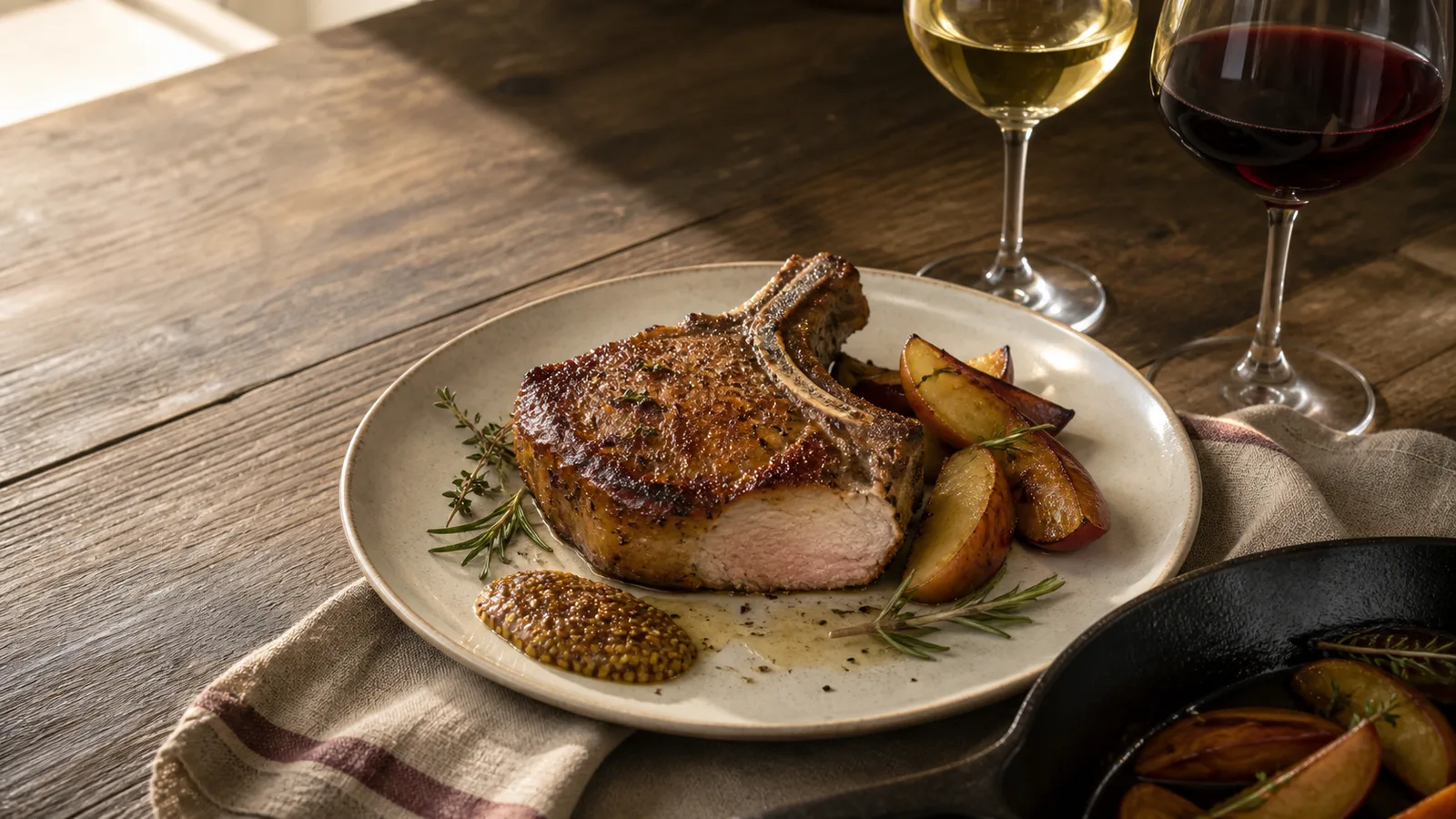
This page owns pork chops: bone-in and boneless, rib, loin, and blade, pan-seared, grilled, roasted, or breaded, plus the sauces that reroute the decision. It does not try to own the rest of the pig. For sauced or smoked American barbecue, go to the best wine with BBQ ribs guide. For the Argentine mixed grill and its running order of cuts, use the asado wine-pairing guide. For fresh pork sausage, the choripán recipe is the right starting point. Those are different plates with different answers.
What kind of pork chop is actually on the plate?
Chops differ enough that “pork chop” is closer to a category than a recipe. The National Pork Board, an industry source rather than a regulator, describes chops as varying by where they are cut, thickness, whether the bone is attached, and marbling. It notes that blade chops are generally more marbled and that thickness materially changes cooking time.
That matters for wine in one practical way: it sets the opening intensity of the plate.
A thin boneless center-cut chop is relatively lean and cooks fast. There is less richness for the wine to meet, so a bottle with modest weight and clear fruit will often stay in balance. A dark, heavily oak-shaped red may simply talk over it.
A thick rib or loin chop gives the cook more room to brown the surface without cooking through and may carry more marbling. It can support a wine with more presence, though “more presence” means enough fruit and weight for the complete plate, not automatically more tannin or oak.
A blade chop, cut nearer the shoulder, is generally more marbled than the other common chop styles. Its richness can make a fresh wine feel especially welcome, and it can give a fruit-led red something to sit beside.
Cut sets the opening bid. It rarely settles the hand, because almost everything that happens after the chop leaves the butcher counter has a louder voice.
The chop ledger: six plates, six directions
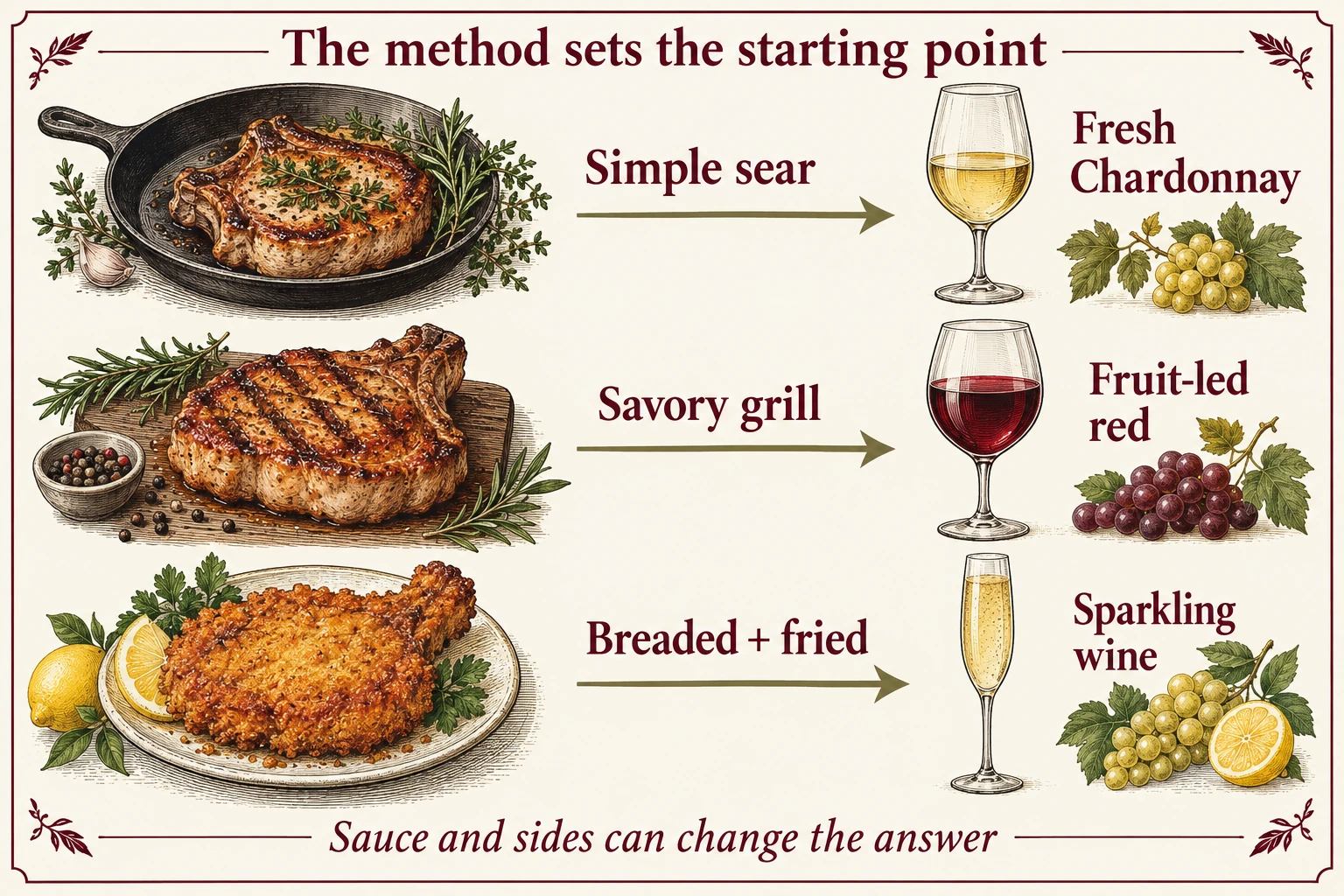
Read the illustration
Simply seared pork chops can suit fresh Chardonnay; savory grilled chops can suit a fruit-led red; breaded and fried chops can suit sparkling wine. Sauce and sides may change each starting point.
Read each row from the plate outward. This chart uses categories rather than scores because food-and-wine matching does not have honest numerical precision.
| Plate or preparation | Dominant signal | Wine direction | Why it can work | When to switch |
|---|---|---|---|---|
| Simple herb pan-sear or roast | Lean meat, browned surface, salt, herbs | Fresh unoaked white, dry rosé, or light fruit-led red | Nothing shouts, so fruit and freshness stay clear | Add weight when the chop is thick and fatty or the sides are creamy |
| Hard-seared or grilled char | Char, smoke, black pepper, browned fat | Fruit-led red with restrained oak influence | Savory browning can support more fruit and structure | Go lighter or cooler when chile rises or the wine feels drying |
| Mustard-cream or mushroom sauce | Richness, tang, salt, umami | Fresh Chardonnay or a supple light-to-medium red | Freshness or softer-feeling structure can remain clear beside the sauce | Let sharp mustard favor freshness; let deep mushroom favor savory character |
| Apple, cherry, or plum glaze | Noticeable sweetness plus fruit acidity | Off-dry Riesling, fruit-led rosé, or gentle red | Some sweetness or generous fruit may be more comfortable than a firm dry red | Return to a dry white or light red when the fruit is tart, not sugary |
| Sweet-hot chile or BBQ glaze | Capsaicin, sugar, vinegar, possible smoke | Off-dry aromatic white, dry rosé, or juicy lower-tannin red | Restraint in alcohol and tannin can reduce perceived harshness | Use the separate ribs guide when rib-style sauce and smoke dominate |
| Breaded and fried chop | Crisp coating, oil, salt, lemon | Sparkling wine, dry rosé, or fresh white | Freshness provides contrast and keeps the pairing lively | Move to a light red only when a savory brown sauce changes the plate |
These are starting points, not promises about a particular bottle. Two Rieslings, two rosés, or two Malbecs may be more different from each other than their grape names suggest.
Does the method or the sauce decide the wine?
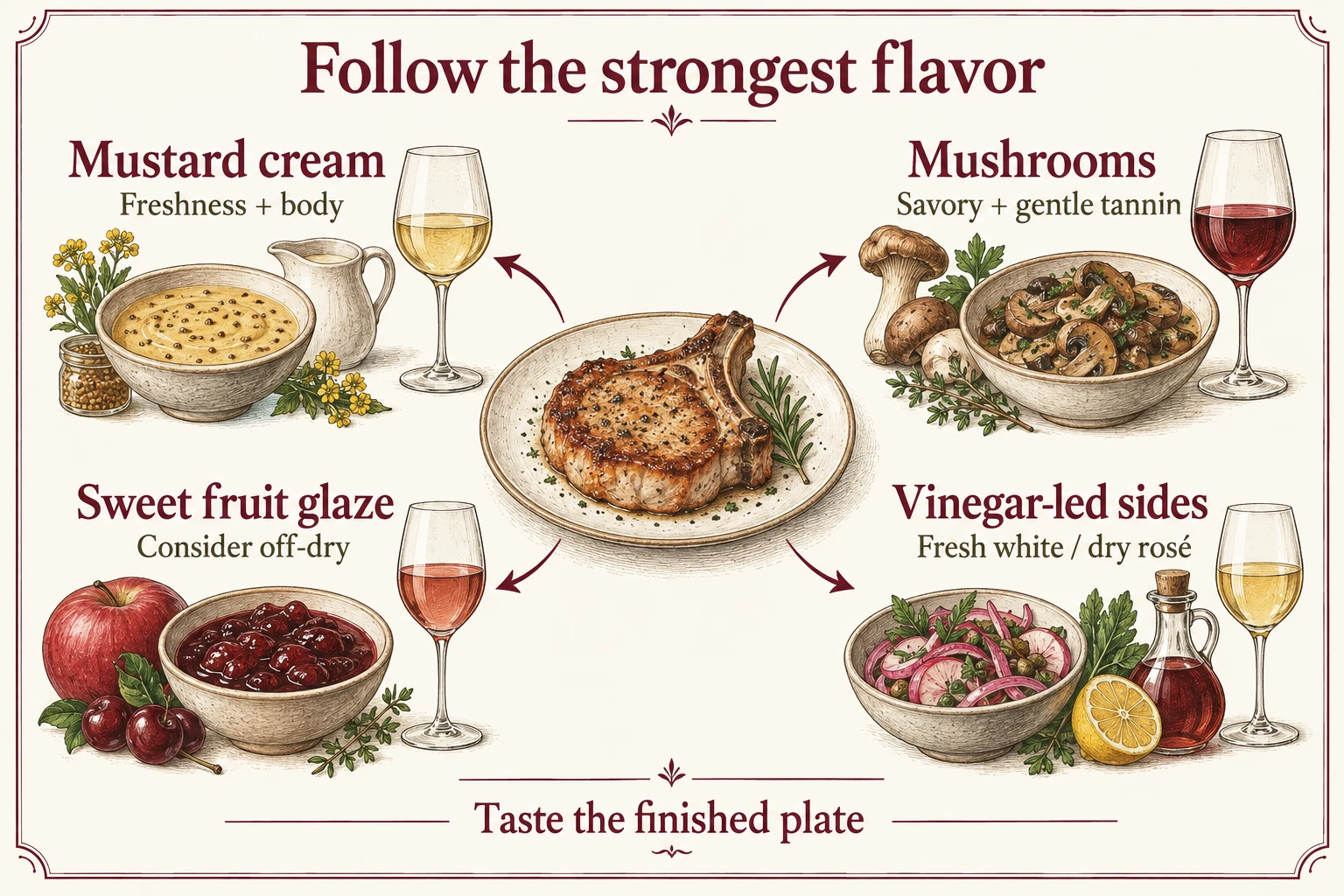
Read the illustration
Mustard cream suggests freshness and some body; mushrooms suggest savory character with gentle tannin; sweet fruit glaze suggests an off-dry style; vinegar-led sides suggest a fresh white or dry rosé. The chop alone does not settle the pairing.
Usually the sauce. Method decides how much browned, charred, or crusted flavor is on the surface. Sauce and sides decide how much sweetness, acidity, salt, umami, and heat arrive with it. When the two disagree, follow the loudest signal on the plate.
Pan-searing and roasting build savory browned flavor without adding a sweet or sharp sauce. This is the friendliest case, and the widest range of wine styles can work.
Hard searing and grilling add char. A fruit-present red or a fresh white may work better here than the most tannic bottle in the rack, especially when black pepper or chile is involved.
Breading and frying put the crisp, oil-rich coating in the foreground, often with lemon at the table. Freshness and bubbles may feel better than sheer weight.
Sauces reverse conclusions. Mustard-cream and mushroom bring richness, salt, tang, or umami. Apple, cherry, or plum can bring real sugar. A sweet-hot barbecue or chile glaze combines sugar and capsaicin. A vinegar-led pan sauce brings sharpness that may flatter a fresh wine and leave an oak-shaped one feeling disconnected.
Sides count as sauce. Apple sauce and honeyed root vegetables push the plate sweet. Braised red cabbage adds vinegar. Creamy polenta or gratin adds richness and weight. Greens dressed with lemon pull the meal toward freshness. Taste the finished plate, not the raw chop, before you open anything.
Which wine styles hold up, and what should you verify?
Grape and region names begin the research; they do not finish it. A variety name does not guarantee body, acidity, tannin, sweetness, or oak influence. Before buying, look for the producer’s actual notes about fermentation and maturation, any explicit sweetness statement, the stated alcohol, and the vintage in front of you.
Chardonnay
“Chardonnay with pork chops” is incomplete advice because Chardonnay covers a wide range of styles. A fresh, unoaked example can suit a simply seasoned chop, a lemon-and-herb treatment, or a mustard-cream sauce that needs lift rather than more weight. A richly oak-influenced style may suit a deeply browned, cream-heavy plate and may feel dominant beside chile. Our Chardonnay buyer guide walks through style before bottle.
Pinot Noir and other lighter reds
Pinot Noir is often a graceful red route for this dish. Many examples bring less tannic grip than a firmly structured Cabernet, which can suit a lean chop or a savory mushroom-and-herb sauce. With chile, judge the actual bottle rather than relying on the grape name; tannin and alcohol can both feel more forceful beside heat.
Malbec and other fruit-led reds
Malbec ranges from fresh and red-fruited to dark and oak-shaped, so the word on the label cannot answer the pairing by itself. A fresher, unoaked expression can be a useful match for a savory grilled or hard-seared chop. A dark, heavily oak-matured version may be more wine than a lean loin chop needs, and it will not solve a sweet glaze. The Malbec guide explains what origin and cellar choices do and do not settle. Apply the same discipline to Grenache, Syrah, Merlot, and red blends: verify the bottle rather than assigning it a personality from the grape name.
Riesling and aromatic whites
Riesling is particularly useful because it spans bone-dry to distinctly sweet, and producers often provide clues about where a bottle sits. An off-dry Riesling, Gewürztraminer, or Pinot Gris may be the most comfortable choice for a sweet-hot glaze, an apple or cherry sauce, or a chop served with honeyed sides. Verify sweetness rather than inferring it from “aromatic,” which describes aroma, not sugar.
Dry rosé
Dry rosé handles the awkward middle of this category well: a grilled chop with salad, herbs, salt, and vinaigrette that could make a heavier red feel misplaced. It is also practical at a warm outdoor table, where a lightly chilled wine may feel more refreshing than a room-temperature red.
Sparkling wine
Sparkling wine is a real first choice for a breaded, fried, schnitzel-style chop. Carbonation and freshness provide contrast to the coating, while lemon and salt give the wine plenty to answer. It is not a consolation prize.
Cook it safely first, then pair it
This is a kitchen instruction, not a pairing rule. USDA guidance controls the safety answer, and it does not change because of what is in the glass.
A thermometer replaces guesswork. A properly cooked, rested chop can also be juicier than one cooked until it is uniformly gray, which may make many pairings feel easier. That is a texture observation, not a safety claim, and it does not change USDA’s minimum.
What did we verify about our bottles?
When neither of our current bottles is the call
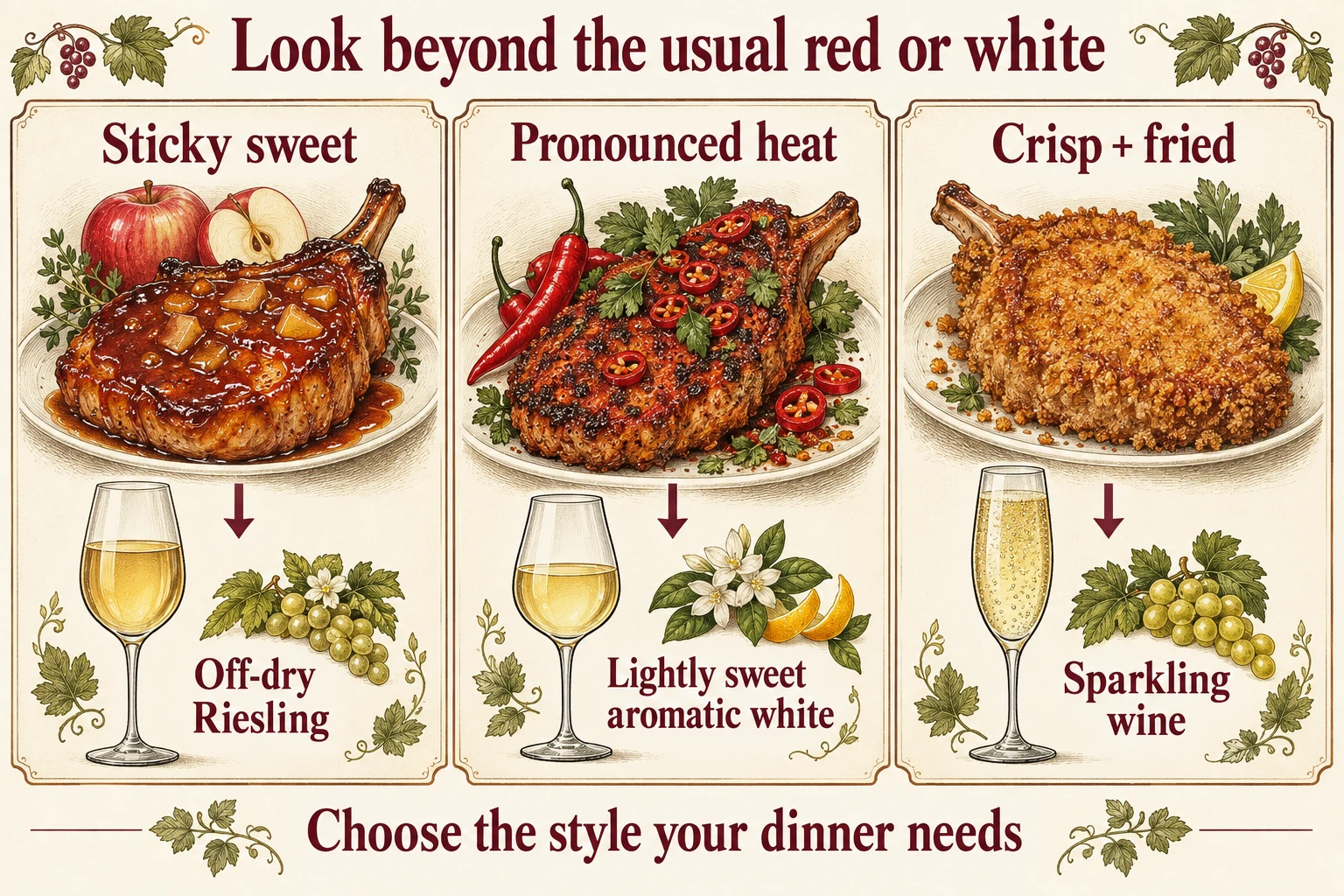
Read the illustration
Sticky sweetness can favor off-dry Riesling, pronounced chile can favor a lightly sweet aromatic white, and breaded fried chops can favor sparkling wine. Red or white is only the first question; match the actual style.
We would rather lose the sale than sell the wrong bottle for Tuesday dinner.
Sticky-sweet glazes. Neither current product record establishes a sweet style. A wine that seems markedly drier than the dish may taste more bitter and less fruity beside it. For an apple, maple, honey, or brown-sugar glaze, look for an off-dry Riesling or another wine with a stated touch of sweetness.
Chile heat. With a genuinely hot chop, tannin and alcohol can feel more forceful. A lightly sweet aromatic white, chilled dry rosé, or softer lower-alcohol red may be the more comfortable purchase.
Sharply vinegar-led sauces. Freshness and restraint matter more here than any specific grape. A fresh dry white or dry rosé may be safer than reaching for structure.
Breaded and fried chops. Reach for sparkling wine or a dry rosé. We currently make neither.
Related decisions on this site
- If the plate is lamb rather than pork, the lamb pairing guide starts from cut and sauce in the same way.
- If it is beef, the steak guide is the closer neighbor.
- To separate a sensory description from a kitchen myth, see the tannin definition.
Questions shoppers ask
What wine goes with pork chops if I only want one bottle?
A fresh unoaked white or a fruit-led lighter red will cover the widest range of simply prepared chops. Choose the white if cream, mustard, lemon, or herbs dominate, and the red if browning and grilling do. A sweet or chile-hot glaze needs a different answer.
Is red or white wine better with pork chops?
Neither is required. Pork chops sit comfortably between the two, which is why preparation decides. A lean chop with cream sauce may favor white; a charred chop with savory rub may favor red; a sweet or hot glaze can point past both toward an off-dry aromatic style.
What wine goes with grilled pork chops?
Start with a fruit-led red such as Pinot Noir, Grenache, or a fresh unoaked Malbec, or choose dry rosé when the seasoning is light. Increase structure only as char and richness increase. If chile rises, restraint in alcohol and tannin may feel more comfortable.
Does Malbec work with pork chops?
It can, particularly a fresh, fruit-led, unoaked style with a savory grilled or hard-seared chop that has no sweet or hot glaze. Malbec varies widely, so check whether the bottle is fresh and unoaked or dark and oak-matured before assuming the match.
What is the best wine with pork chops and apple sauce?
Often, it is a wine with a stated touch of sweetness, such as off-dry Riesling. Apple sauce brings sugar, and a bone-dry wine may seem harder and less fruity beside it. If the apples are tart and barely sweetened, a fresh dry white or light red can still work.
What wine goes with breaded pork chops?
Sparkling wine, dry rosé, or a fresh dry white. The pairing needs contrast for the crisp coating and oil more than it needs a powerful red. If a savory brown sauce arrives, a light red becomes more plausible.
Does pink pork change the wine pairing?
No. Doneness is a cooking and safety matter, not a wine-style signal. USDA says properly cooked whole-muscle pork may remain pink and that color alone is not a safety test. Choose the wine from the seasoning, sauce, and sides.
What temperature should pork chops reach?
USDA lists whole pork chops at a minimum internal temperature of 145°F (62.8°C) followed by a rest of at least three minutes. Ground pork is listed separately at 160°F (71.1°C). Doneness is a safety question, not a pairing one.
Sources and methodology
This guide separates food-safety facts from conditional pairing guidance. USDA controls the safety facts; the National Pork Board is an industry source for chop differences; WSET supports the sensory principles; and live Familia Morgan records control product facts. When a recommendation goes beyond those records, it is labeled as a producer inference or preference.
- USDA FSIS, Safe Minimum Internal Temperature Chart, for the 145°F whole-cut minimum with a three-minute rest and the separate 160°F figure for ground pork.
- USDA FSIS, Food Thermometers, for thermometer placement in chops and thin cuts.
- USDA FSIS, Fresh Pork From Farm to Table, for marbling context and the statement that cooked pork can be pink at a safe internal temperature.
- National Pork Board, Pork Chops, an industry source, for how chops differ by location, thickness, bone, and marbling.
- WSET, Four rules to masterful food and wine pairing, for conditional effects of salt, acidity, and fat on tannic wine, and for preference.
- WSET, Winter wine and food matching, for how fat, salt, acidity, and intensity in food can change wine perception.
- WSET, A guide to Easter food and wine pairings, for the effect of sweet food on a dry wine’s perceived fruit and bitterness.
- WSET, How to pair drinks with spice, for chile and its interaction with alcohol, tannin, sweetness, and heavy oak.
- Familia Morgan, 2024 Nine Queens Chardonnay and 2020 Unoaked Malbec, checked August 3, 2026 for the product facts stated here.
Price, availability, shipping eligibility, taxes, and final terms are confirmed at checkout.