Argentina · Field guide No. 01
Argentine Wine: A Field Guide from the Andes to the Table
A sourced orientation to the places, grapes, labels, and table traditions that make Argentine wine far more varied than one grape or one famous valley.
Research note: National and provincial figures below are vineyard-area data, labeled 2025. Regional groupings are explained rather than treated as one universal map.
The short answer
What defines Argentine wine?
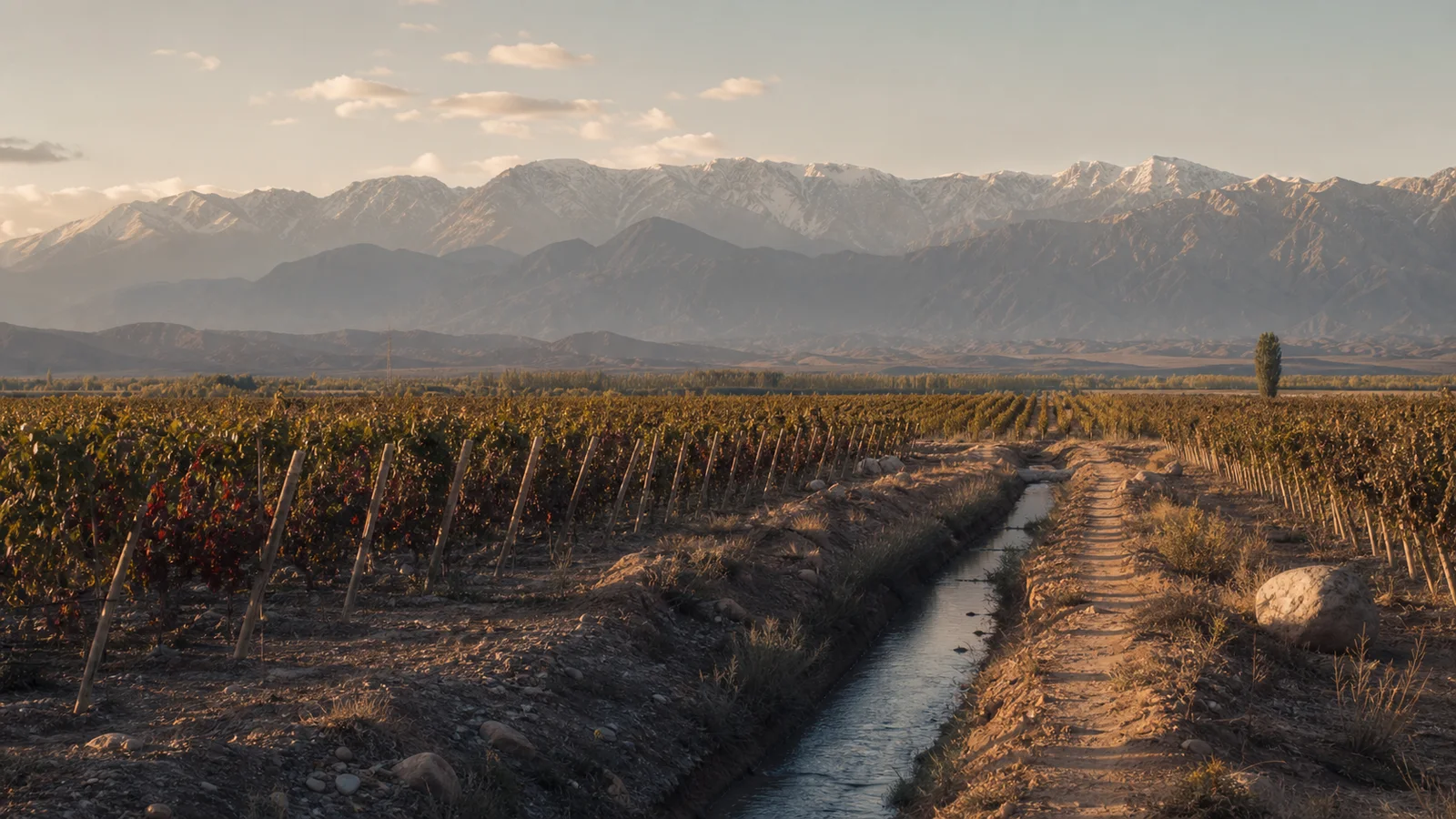
Argentina is a long, dry, geographically varied wine country shaped by the Andes, irrigation, and dramatic changes in latitude and elevation. Malbec is its best-known red and Mendoza contains most of its vineyard area, but that headline is only the opening chapter. Torrontés in the northwest, Pinot Noir in Patagonia, Bonarda across Cuyo, new Atlantic sites, and distinct corners of Mendoza all widen the picture.
The useful way to choose a bottle is to read three things together: grape, place, and producer intent. No single altitude, aging word, or regional name guarantees quality.
Argentina wine, by the numbers
The INV, Argentina’s national wine authority, recorded 196,220 hectares of vineyard area in 2025. Mendoza accounted for 140,682 hectares, or 71.7% of that national vineyard area. Those are planting figures—not a claim that Mendoza made the same share of finished wine.
Data: INV’s 2025 national surface report and 2025 Malbec report. Hectares describe planted vineyard area; they do not describe sales, exports, quality, or finished-wine volume.
A country of wine landscapes
Argentina’s vineyards stretch from high northern valleys to cool southern latitudes and east toward the Atlantic. Different organizations group newer and smaller areas differently, so a responsible map needs a legend. For orientation, four broad landscapes are useful; for official statistical analysis, the INV also reports individual provinces and specific regions. Mendoza, the country’s largest vineyard province, is then divided into five statistical winegrowing zones.
Northwest
High valleys in and around Salta, Jujuy, Tucumán, and Catamarca. Torrontés is an essential reference point, alongside powerful reds.
Cuyo
Mendoza, San Juan, and La Rioja form the historic center of Argentine viticulture. Aridity and managed water are central to the story.
Patagonia
Río Negro, Neuquén, La Pampa, Chubut, and Santa Cruz push winegrowing south, generally at lower elevations than western high-altitude regions.
Atlantic & emerging areas
Buenos Aires and other provinces expand the old Andes-only mental map. These sites should be read by their specific province, climate, and producer—not as one uniform style.
Orientation plate · 01
Argentina’s wine landscapes, in context
Read this from north to south, then move from the broad color to the exact province, department, and recognized origin on a bottle.
- 01 Northwest Jujuy · Salta · Tucumán · Catamarca
- 02 Cuyo La Rioja · San Juan · Mendoza
- 03 Patagonia La Pampa · Neuquén · Río Negro · Chubut · Santa Cruz
- 04 Atlantic & emerging Buenos Aires shown; read every newer site by its precise origin
Mendoza, read in five zones
Mendoza is a province, not a single vineyard. The INV’s statistical framework separates it into North, Center, East, Uco Valley, and South. “Primera Zona” is a narrower historical-commercial idea and should not be used as a synonym for all five-zone Mendoza reporting.
- North Lavalle · Las Heras
- Center Luján de Cuyo · Maipú · neighboring departments
- East San Martín · Junín · Rivadavia · Santa Rosa · La Paz
- Uco Valley Tupungato · Tunuyán · San Carlos
- South San Rafael · General Alvear Familia Morgan’s lens
San Rafael belongs to Mendoza’s South, sometimes called the Southern Oasis. It is not the Uco Valley, and it should not be described as if all of its vineyards occupy Uco’s most extreme elevations. Place names matter because “Mendoza Malbec” can encompass markedly different landscapes and growing decisions.
Use the Mendoza wine regions guide for the full five-zone map, department names, and a closer comparison of the North, Center, East, Uco Valley, and South.
Altitude is a condition, not a score
Elevation can change temperature patterns, ultraviolet exposure, wind, water demand, and the pace of ripening. It works together with latitude, slope, soil depth, irrigation, vine material, canopy, crop level, and the season. Research on Argentine Malbec shows that site can change grape and wine chemistry, but it does not support the shortcut that higher always means better.
The other half of the Mendoza picture is water. In an arid environment, canals and acequias move water through agricultural landscapes. Warm days and cooler nights can create a meaningful diurnal range, but the size and effect of that range vary by site and season.
The high-altitude wine guide follows those variables in detail and explains why an elevation number needs place, water, soil, season, and farming context.
Start with place
Province, zone, recognized origin, latitude, and the producer’s actual vineyard source.
Add growing conditions
Elevation, soils, water, exposure, temperatures, wind, and the season—not altitude alone.
Finish with choices
Yield, harvest timing, extraction, fermentation, blending, vessel, and maturation.
Five Argentine grapes worth knowing
The following grapes are not a ranking. They are a practical tasting route through Argentina’s range. Climate, farming, harvest date, and cellar choices can move each one beyond the shorthand below.
Red · national reference
Malbec
Argentina’s leading planted wine grape by vineyard area: 46,890 hectares in 2025. Expect styles from bright and unoaked to concentrated, structured, and cellar-aged.
Read the complete Malbec guide, then see Malbec beside Merlot.
Red · Cuyo mainstay
Bonarda
The INV identifies Bonarda as Argentina’s second most-planted red variety after Malbec. It can offer juicy fruit and freshness as well as more ambitious, structured expressions.
Red · savory counterpoint
Cabernet Franc
A useful choice when you want red-fruit lift, herbal or peppery detail, and structure without simply buying another version of Malbec.
White · aromatic reference
Torrontés
Torrontés Riojano represents most of the country’s Torrontés plantings. Its floral and citrus aromas can suggest sweetness even when the wine is dry, so check the label and producer description.
Read the concise Torrontés definitionWhite · many expressions
Chardonnay
Planted across 17 provinces, with 93.7% of the national area in Mendoza and San Juan in the INV’s 2025 report. Styles range from taut and unoaked to richer, barrel-shaped wines and sparkling bases.
When you are ready to choose a style rather than survey the country, use the recommended Chardonnay guide to compare freshness, texture, oak influence, and the food on the table before considering a bottle.
Choose by the experience you want
| If you want… | Start with… | Then check… |
|---|---|---|
| A vivid, fruit-led red | Unoaked or lightly matured Malbec or Bonarda | Vintage, place, alcohol, and vessel language |
| A structured dinner red | Malbec, Cabernet Franc, Cabernet Sauvignon, or a blend | Producer, vineyard source, maturation, and serving time |
| An aromatic dry white | Torrontés | Dryness, freshness, region, and serving temperature |
| A versatile white or sparkling base | Chardonnay | Still vs. sparkling, oak vs. no oak, and origin |
Read an Argentine wine label
This is a decision decoder, not a second dictionary. Exact terms still belong to their dedicated glossary entries and to Argentina’s current regulations. The percentages and aging rules below reflect INV Resolution 37/2025, effective January 1, 2026.
For the producer words that sit beside origin and aging claims, use the wine estate terms guide to compare bodega, domaine, château, cantina, tenuta, quinta, and related label language.
- Bodega
- Winery. It identifies the wine-producing business or facility, not by itself a guarantee that every grape came from an estate-owned parcel.
- Finca
- Farm or estate in ordinary Spanish usage. Read the surrounding wording: the term alone does not tell you the exact ownership, bottling, or sourcing relationship.
- Variety & vintage
- From 2026, a single variety or vintage declaration requires at least 85% of the stated grape or harvest, under the resolution’s rules.
- IG · Indicación Geográfica
- A legally recognized geographical indication. Treat the precise IG on the label as more useful than a broad travel-region shorthand.
- Reserva · red wine
- At least 135 kg of grapes per 100 L of wine and at least 12 months of aging under the current Argentine rule.
- Gran Reserva · red wine
- At least 140 kg of grapes per 100 L and at least 18 months of aging under the current Argentine rule.
Argentine wine belongs at the table
Pairing is preference, not a law. Start with weight and intensity, then account for smoke, salt, acid, herbs, and chile. A tannic red can feel satisfying with grilled meat, but “steak equals Malbec” is an invitation to explore—not a universal sensory rule.
Asado & grilled beef
Try Malbec for dark fruit and structure, Cabernet Franc for a fresher savory edge, or Bonarda when you want a juicier red. The cut and doneness matter.
Empanadas
Match the filling: beef can welcome medium-bodied reds; corn, cheese, or vegetable versions can be happier with a fresh white or lighter red.
Provoleta
Salty, browned cheese can work with a fresh red or a bright white. Use acidity and serving temperature to keep the pairing lively.
Make our Argentine provoletaChimichurri
Garlic, herbs, vinegar, and chile change the pairing more than the meat alone. Taste the sauce before choosing the bottle.
Make five-minute chimichurriAnd after the food comes sobremesa: the time at the table when the plates are cleared but conversation continues. Choose a wine you want to stay with, not simply the bottle a rule tells you to buy.
San Rafael: Familia Morgan’s point of view
The 2025 INV surface data records 10,739 hectares of vineyard area in San Rafael, including 2,152 hectares of Malbec—about one-fifth of the department’s planted vineyard area. Its identity cannot be reduced to Malbec alone, and its position in Mendoza’s South gives it a different frame from the Uco Valley.
From our rows
A great winemaker stays connected to the fruit. The laboratory can explain what is happening in a wine; it cannot replace time with the vines, the people tending them, or the decisions made before a grape reaches the cellar.
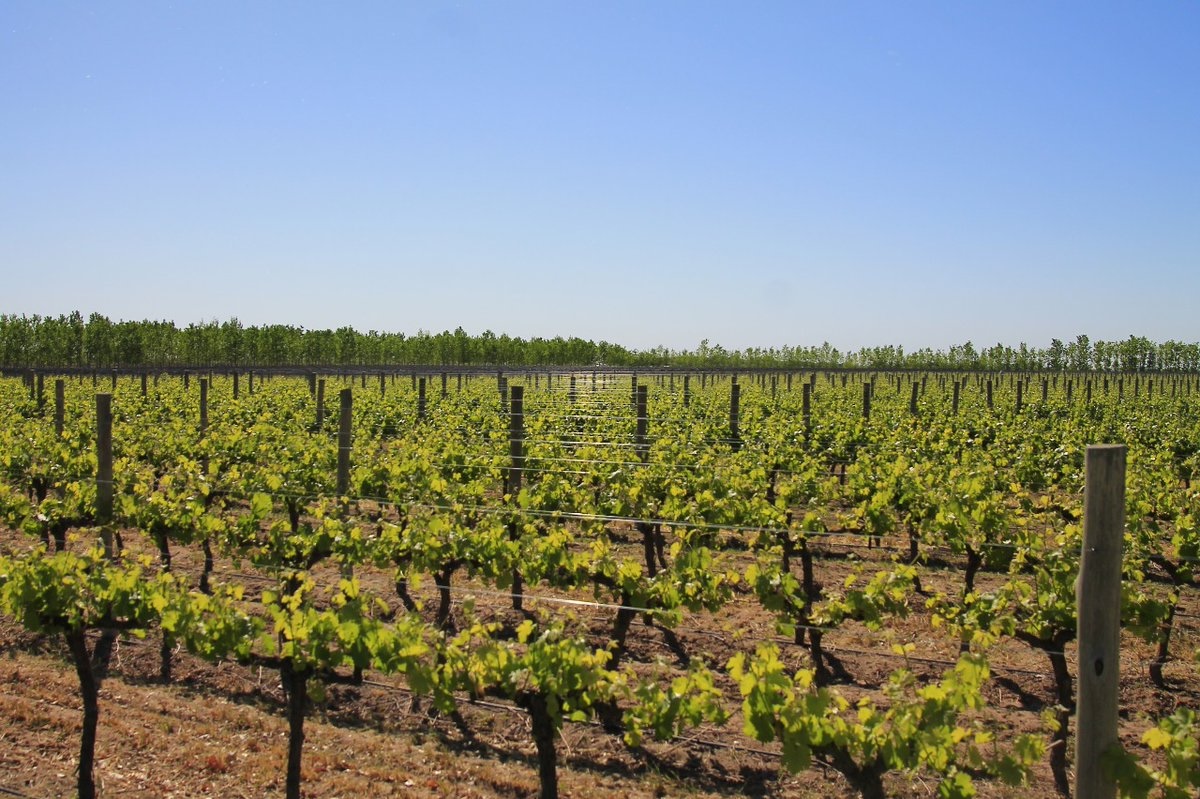
That is why this guide ends in San Rafael. For Familia Morgan, the region is not a pin on a map—it is the working context for decisions about pruning, balance, harvest, and the kind of wine we want to share around a table.
A natural next step
Taste the San Rafael chapter
Now that you can read the region, grape, and label together, explore the Familia Morgan wines made through our San Rafael lens. The shop is the tasting path; this guide remains the reference.
Explore San Rafael winesKeep the guide
Take the journey offline
The printable journey is a companion for slower reading and sharing. The sourced HTML page above remains the current, linkable reference.
Sources & methodology
Statistics are dated because vineyard surfaces and regulations change. Regional language is qualified where official statistical categories and broad educational maps serve different purposes. Sensory descriptions are starting points, not promises about every bottle.
- INV, Annual Vineyard Surface Report 2025—national, provincial, and departmental vineyard-area figures.
- INV, Malbec Report, April 2025—variety history and the prior-year distribution context; the 2025 annual surface report supplies the current figures above.
- INV, Argentine Winegrowing Regions—regional reports and the five Mendoza zones.
- Argentina’s GeoRef territorial dataset, based on IGN geometry—province and department geometry simplified for the orientation maps; the diagrams do not replace official legal cartography.
- INV, Grape Variety Reports, including the agency’s 2025 Bonarda, Torrontés, Chardonnay, and Cabernet reports.
- INV Resolution 37/2025—variety, vintage, Reserva, Gran Reserva, Roble, and Barrica rules effective January 1, 2026.
- Berli et al., 2008, and Urvieta et al., 2018—peer-reviewed work informing the qualified discussion of UV, altitude, site, and Malbec composition.