Malbec vs Cabernet Franc: Which Red Fits Your Taste?
Quick Takeaways
- Start with Malbec for plum or dark-fruit emphasis and an often generous texture; fresh, floral and firmly structured versions also exist
- Explore Cabernet Franc for red or black fruit with possible herbs, flowers and pepper; Loire and Argentine examples can feel quite different
- Choose the place as well as the grape: a concentrated Argentine Cabernet Franc may be fuller than a fresh, lightly extracted Malbec
- For dark fruit and a rounder starting point, try Malbec. For aromatic herbs and a fresher impression, begin with Loire Cabernet Franc, then check the bottle.
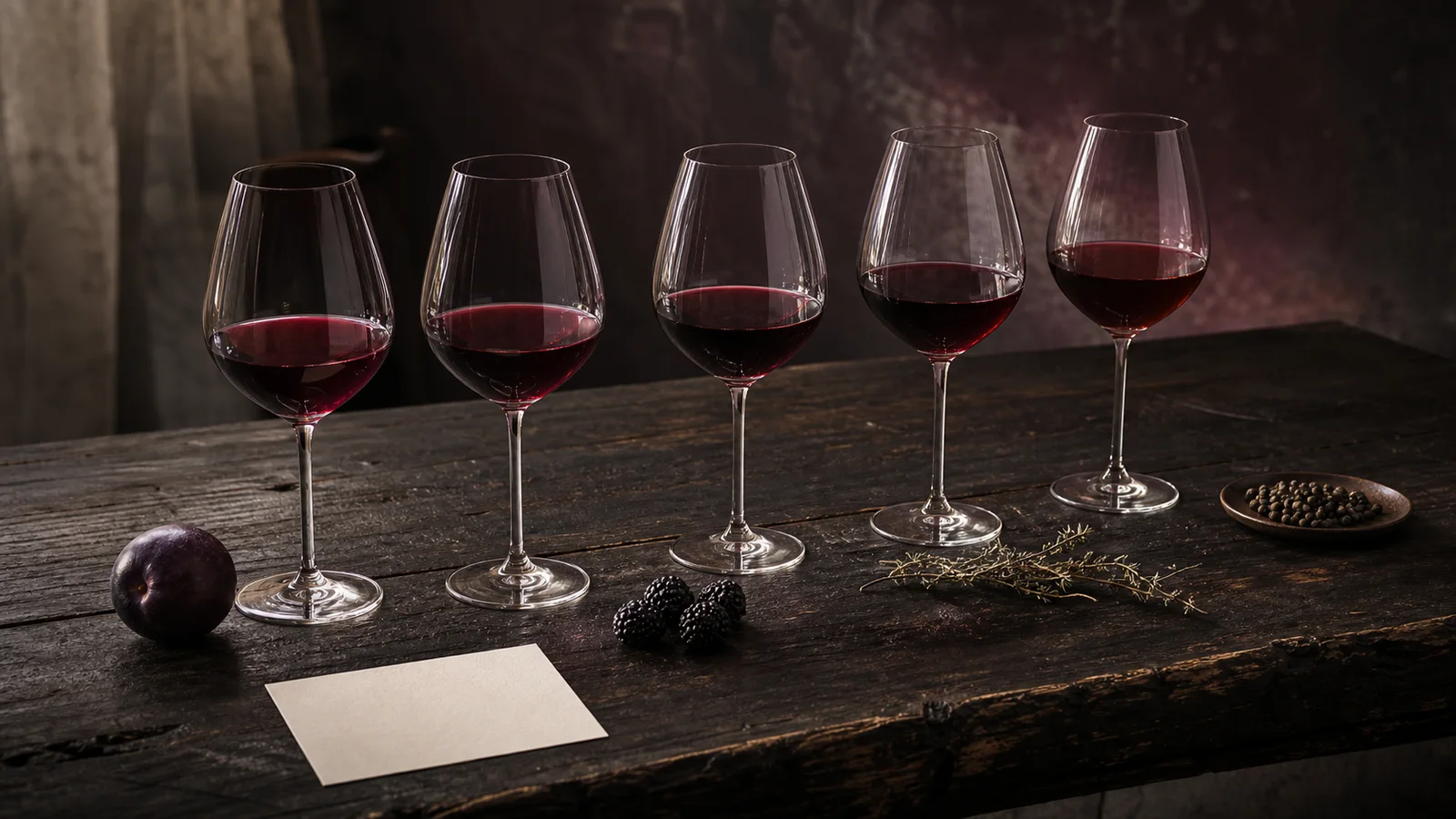
For Malbec vs Cabernet Franc, the most useful first question is whether you want fruit to lead or would welcome a more herbal, savory dimension. A familiar Argentine Malbec often provides a generous, fruit-led starting point. Cabernet Franc is worth exploring when raspberry, herbs, flowers or pepper sound appealing.
That is an introduction, not a fixed divide. Malbec can be fresh and restrained. Cabernet Franc can be dark, concentrated and firmly tannic, especially in some Argentine expressions. Origin and the producer’s choices can matter as much as the grape name.
This article compares wines labeled for the individual varieties. If you are interested in a bottle combining them, our Malbec–Cabernet Franc blend article covers that separate choice.
Malbec vs Cabernet Franc at a Glance
The table describes common directions in still red table wines, not measurements or a guarantee about any bottle.
| Attribute | Malbec | Cabernet Franc |
|---|---|---|
| Fruit direction | Often plum or dark berries; red fruit also occurs | Red or black fruit; raspberry is a Loire cue |
| Other aroma clues | Floral or spicy notes, depending on style | Flowers, herbs or pepper may stand out |
| Body | Often generous; lighter, fresher styles exist | Lighter through substantial, depending on style |
| Tannin | Often rounded; firm styles also exist | Fine through firm, depending on the wine |
| Freshness | Cooler-site examples can be notably fresh | Often fresh in the Loire; varies elsewhere |
| Sweetness | Dry styles are common; verify the bottle | Dry styles are common; verify the bottle |
| Places to explore | Mendoza and Cahors; varied expressions | Loire, Argentina and Bordeaux blends |
| First dinner idea | Grilled beef or roasts; choose by texture | Herb-led roast or grilled vegetables |
Taste and Texture: Where the Difference Helps
Malbec: fruit can lead without everything being heavy
Malbec is widely associated with deep color, dark fruit and smooth tannins. WSET also describes a broad range: richly fruited Argentine wines, fresher and more floral high-altitude expressions, and firmly tannic Cahors. A grape can have a familiar identity while still offering very different bottles. WSET: Understanding Malbec
Look at the description’s emphasis. “Plum,” “rounded” and “generous” suggest a different experience from “fresh red fruit,” “floral” and “restrained.” Those words are useful clues, not a standardized scale. If you enjoyed one Malbec’s plush texture, another Malbec chosen only by grape name might feel unexpectedly firm.
Wines of Argentina documents differences in both aroma and tannin across the country’s regions, including markedly structured northern examples. There is no need to choose between “all Malbec is soft” and “all Malbec is powerful.” Both overlook the range. Wines of Argentina: Grape varieties guide
Cabernet Franc: the herbal side is worth knowing
In Saumur-Champigny, the official appellation guide describes youthful Cabernet Franc through red fruit, sometimes violet, and possible pepper or herb notes. It links these differences to site and ripeness and describes a fresh impression with fine tannins. Saumur-Champigny: Cabernet Franc
That gives a Malbec drinker a useful reason to try it: the interest may come from the aromatic detail around the fruit. If you enjoy herbs on roast meat or the smell of peppers on the grill, that savory direction may appeal. The wine does not need to taste like a vegetable dish to show a little of that character.
If herbal aromas are something you actively dislike, say so. Ask for a ripe, fruit-led Cabernet Franc rather than buying any bottle with the name and hoping those notes disappear.
Argentine Cabernet Franc changes the comparison
Cabernet Franc from Argentina can offer concentrated fruit, a generous palate and firm tannins alongside herbs and spice. Wines of Argentina specifically describes this combination, making it a useful corrective to the idea that Cabernet Franc must be a light red. Wines of Argentina: Cabernet Franc in Argentina
For a substantial Argentine Malbec drinker, this may be the more familiar first step. You can explore a different aromatic profile without necessarily giving up weight. For someone seeking a lighter experience, ask specifically for freshness, restraint and gentle extraction in either grape.
Neither grape has a permanent position on a tannin scale
Tannin is the drying or gripping sensation in the mouth; body is the wine’s overall weight. A wine can be substantial yet polished, or comparatively light yet quite grippy. Comparing those sensations separately makes your preferences easier to communicate.
Try “I like dark fruit, but I don’t want a drying finish” or “I enjoy firm tannin if the wine still feels fresh.” Those requests are more precise than asking which grape is smoother. The wine texture guide offers more vocabulary for the distinction.
Fruit, oak and sweetness need separate checks
Plum, raspberry and vanilla are aroma descriptions. They do not tell you whether a wine finishes sweet. Both grapes are commonly encountered as dry table wines, but the particular producer’s description should settle your purchase.
Oak can also make two different grapes feel more familiar to each other through overlapping vanilla, toast or spice impressions. If you want to notice the grape contrast, compare bottles with similar, preferably restrained, oak influence. “Unoaked” is useful information about production, but it does not guarantee lightness, low tannin or dryness. WSET: Wine styles, WSET: Oak in winemaking
Where They Grow: Read the Region with the Grape
For Malbec:
- Mendoza: A broad starting point for Argentine Malbec, with substantial variation between producers and sites.
- Uco Valley: Higher-site examples can offer fresh fruit and floral detail; check the individual wine.
- Cahors: A useful French reference for firmer tannin and dark fruit.
For Cabernet Franc:
- Loire Valley: Chinon, Bourgueil and Saumur-Champigny are useful label clues for exploring fresh red-fruit and possible herbal character.
- Argentina: Look for wines combining generous fruit with herbs, spice and potentially firm structure.
- Bordeaux: Cabernet Franc often appears in blends, so read the composition if the individual grape is your focus.
These regional clues draw on the WSET, Loire, Bordeaux and Wines of Argentina sources above and below. They narrow the search while leaving room for the producer’s choices.
Read the Label in Four Steps
- Identify the actual grape and wine type. Cabernet Franc and Cabernet Sauvignon are different varieties. Check that you are comparing varietal reds rather than a blend or another style carrying a similar name.
- Use the region to narrow the search. Mendoza is a useful Malbec starting point, but more precise origin and producer details help. For Cabernet Franc, Loire names such as Chinon, Bourgueil and Saumur-Champigny are useful clues; check the individual wine’s composition.
- Choose your texture words. Do you want fresh and gentle, rounded and substantial, or firmly structured? Look for those descriptions before letting dark-fruit or floral language decide everything.
- Check oak and the current vintage. Compare the bottle in front of you with its own producer notes. A description of another vintage or cuvée may not apply.
The Loire’s official grape guide identifies Cabernet Franc with those appellations. In Bordeaux it often appears as a blending component, so a regional name may be more prominent than the grape. Loire Wines: Grape varieties, Bordeaux: Cabernet Franc
A useful shop request is: “I like a rounded Malbec. I’d like to try Cabernet Franc with some herbal detail but similar weight.” For the opposite preference, ask for a fresh, restrained Malbec to compare with a Loire Cabernet Franc you already enjoy.
Choose for the Preparation, Not Just the Protein
These suggestions apply general pairing principles. They are invitations to try a style with dinner, not claims from a tasting of particular bottles. Sweetness, salt, acidity and savory intensity in food can change the wine’s impression. WSET: Food and wine pairing principles
Steak with salt, or steak with chimichurri?
For a simply salted, charred steak, start with a fruit-led Malbec or a substantial Argentine Cabernet Franc. Decide whether you prefer broad fruit or added herbal and spicy detail. There is room for both beside the same cut.
With plenty of chimichurri, consider a fresher version of either grape and keep conspicuous oak in check. Cabernet Franc’s possible herbal character makes it an appealing direction to explore, but the sauce does not require that grape. Taste the wine with the dressed steak, not only the meat.
Roast lamb, pork or chicken
Herb-roasted lamb offers a good reason to explore Cabernet Franc. Choose its weight to suit the preparation: a gently roasted dish and a deeply reduced sauce do not call for identical wines. Malbec remains an option when you want fruit to take the lead.
With pork or chicken, a restrained wine may fit better than a concentrated example of either variety. Browning, stuffing and gravy can support more texture; a delicate preparation may be better with a different wine altogether. Our wine with chicken guide follows those preparation changes.
Mushrooms, peppers and vegetable dishes
For roasted peppers or herb-dressed grilled vegetables, try a fresh Cabernet Franc or a lighter Malbec with limited oak influence. For mushroom pasta, let cream, stock reduction and cheese guide how much weight you choose.
Mushrooms do not automatically call for the earthiest or most tannic bottle. Start with a gentler texture if a drying finish bothers you, then taste alongside the complete dish. For more sauce-specific options, use the pasta wine guide.
Sweet glaze or substantial chile heat
Sticky barbecue sauce can make a dry wine feel less fruity and more bitter; heat can also change the balance. Neither grape name solves this. A gentler style or another kind of wine may be preferable to forcing a concentrated red into the pairing. WSET: Winter wine and food matching
A Fresh Malbec Example from Our Range
Our 2024 Nine Queens Malbec comes from San Rafael, Mendoza. Its listing records stainless-steel fermentation and an unoaked style. The producer’s notes describe red-fruit aromas, balanced structure and a smooth finish, providing a useful example of Malbec beyond the dark, heavily oak-influenced stereotype.
Those are producer descriptions, not an independent tasting. Choose this bottle if its fruit-led, unoaked direction fits your taste. Choose a Cabernet Franc from another producer if exploring that grape’s herbal or savory possibilities is your goal. Nine Queens cannot stand in for the other side of the comparison.
For more context on place, read our Mendoza wine regions guide.
FAQ: Malbec vs Cabernet Franc
Is Cabernet Franc the same as Cabernet Sauvignon?
No. They are different grape varieties, even though their names and some aroma associations overlap. Check the complete name on the label. For the other comparison, see Malbec vs Cabernet Sauvignon.
Is Cabernet Franc always lighter than Malbec?
No. Some Loire Cabernet Francs offer a relatively fresh, restrained style, while Argentine Cabernet Franc can be concentrated and firmly structured. Malbec also includes lighter expressions. Compare the two producer descriptions rather than assigning a fixed body to each grape.
Do herbal notes mean Cabernet Franc is unripe?
Not necessarily. Herb and pepper associations can be part of its character, with the prominence changing by place and ripeness. An aroma description alone is not enough to diagnose poor ripening. Decide whether that particular style is appealing to you.
Which should I choose if I dislike oak?
Look for an explicitly unoaked or minimally oak-influenced bottle of either variety. The grape name does not reveal the maturation program, and a fresh-looking label does not prove the absence of wood contact.
Should I compare a Malbec with a Cabernet Franc blend?
You can enjoy that comparison, but it answers a different question. For a clearer first look at the two varieties, choose wines labeled for each grape with disclosed composition and broadly similar maturation. A blend’s other components introduce additional differences.
The Final Word: Pick the Difference You Want
Start with Malbec for a familiar fruit-led direction, then choose how fresh or substantial you want it. Explore Cabernet Franc when herbs, flowers and pepper sound interesting, using the region and producer to decide the weight.
If you compare two bottles, use matching glasses and similar serving conditions. Notice fruit, herbs, freshness, grip and body separately, then taste again with dinner. The useful result is learning what you want to buy again.
For more alternatives, return to the Malbec comparison guide or the complete Malbec guide.
Sources and approach
This guide synthesizes official regional and educational descriptions, with editorial pairing suggestions. It does not report a blind tasting or rank the grapes. The Familia Morgan product details were checked October 19, 2026.
- WSET: Understanding grapes, Malbec, for Malbec’s range and regional differences
- Wines of Argentina: Grape varieties in Argentina, for regional Malbec and Argentine Cabernet Franc descriptions
- Saumur-Champigny: Cabernet Franc, for Loire aroma, texture and ripeness context
- Wines of Argentina: Cabernet Franc, a classic reborn, for substantial Argentine styles
- Loire Wines: Grape varieties and Bordeaux: Cabernet Franc, for regional label context
- WSET: Wine styles, oak in winemaking, food and wine pairing principles and winter food matching, for style distinctions and conditional pairing effects
- Familia Morgan: 2024 Nine Queens Malbec, for the limited bottle-specific example