Pairing guide
What Wine Goes With Chicken? Match the Method, Sauce, and Seasoning
Chicken is not automatically a white-wine dish. A lemon-herb breast, fried thigh, mushroom roast, tomato braise, and sticky barbecue wing need different bottles.
The short answer: Choose wine for chicken by following the cooking method, sauce, and seasoning. Fresh Chardonnay, Sauvignon Blanc, Pinot Gris, and dry rosé suit simple, herb, or citrus preparations. Richer Chardonnay and other textured whites suit cream sauces. Pinot Noir and other light, low-tannin reds suit roast chicken, mushrooms, and tomato. Sparkling wine excels with fried chicken, while off-dry Riesling or another aromatic white is often best with chile, sweetness, or strongly spiced sauces.
The three-part chicken pairing decision
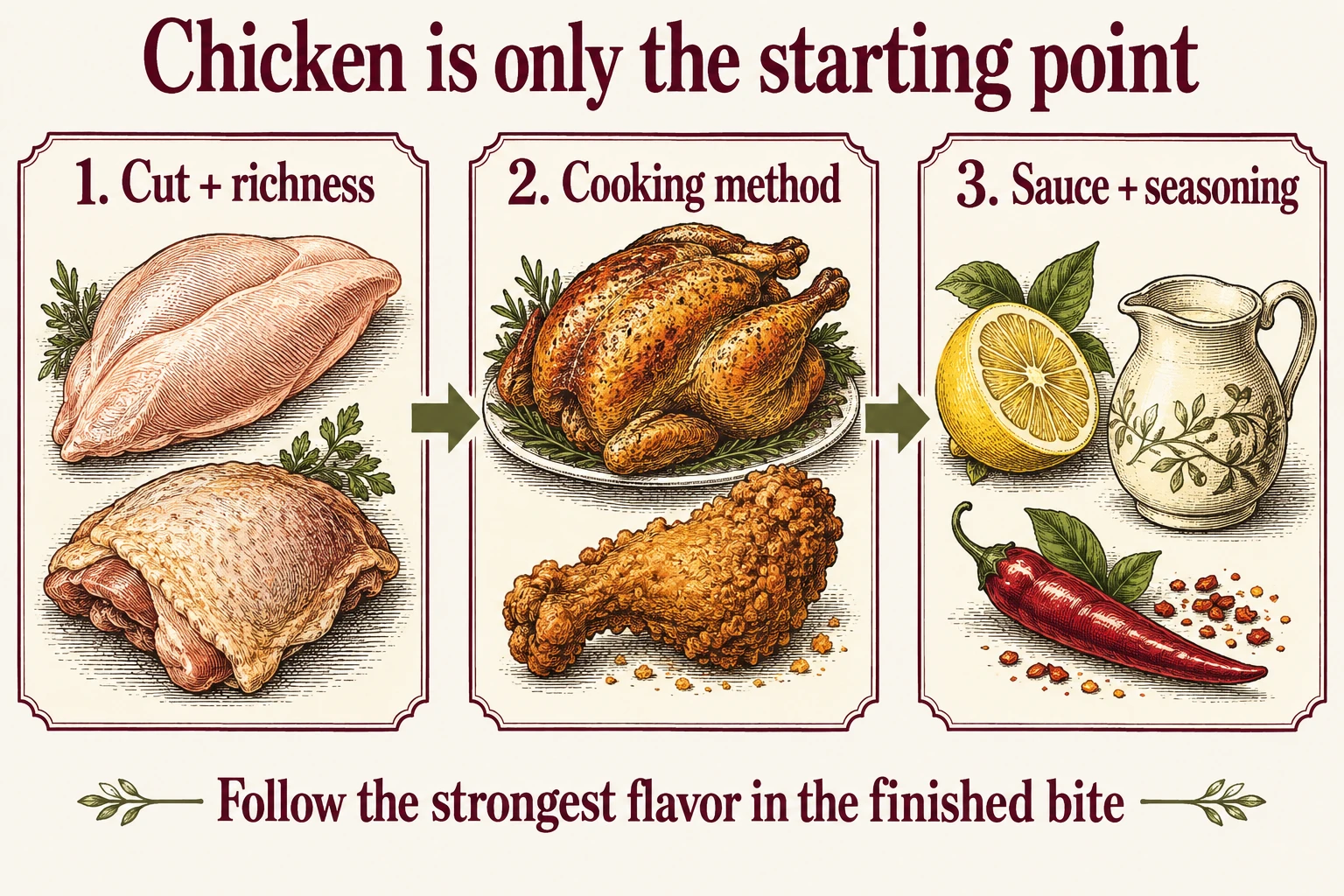
Read the illustration
Cut sets weight, cooking adds intensity, and the strongest sauce or seasoning can override both.
Chicken is mild, but chicken dishes are not. The same bird can be poached with lemon, roasted with garlic, fried under a crisp coating, covered in cream and mushrooms, lacquered with sweet barbecue sauce, or simmered in tomato and olives. A useful pairing starts with three layers.
1. Name the cut and richness
Breast meat is lean and delicately flavored. Thighs and legs bring more fat and savory intensity. Skin adds salt and richness, especially when browned or fried. These differences set the baseline weight, but they rarely make the final decision.
2. Identify the cooking method
Poaching and steaming preserve delicacy. Roasting and pan-searing add browned flavor. Grilling adds char and possibly smoke. Frying adds a crisp, oil-rich coating. Braising shifts attention toward the liquid. Cooking method tells you how much intensity the wine needs.
3. Follow the sauce and seasoning
Cream, lemon, tomato, mushrooms, mustard, barbecue sauce, curry, garlic, herbs, soy, vinegar, and chile all change wine perception. A sweet-hot glaze can overrule the difference between breast and thigh. When the method and sauce disagree, follow the louder signal.
Wine-pairing chart for chicken dishes
| Chicken dish | Start with | Why | Change direction when… |
|---|---|---|---|
| Simple roast chicken | Chardonnay, Pinot Noir, Chenin Blanc | Moderate weight and freshness match browned skin and tender meat | Gravy, stuffing, or smoke makes the plate heavier |
| Lemon-herb chicken | Sauvignon Blanc, unoaked Chardonnay, Pinot Grigio | Citrus and herbal freshness echo the seasoning | Butter or cream becomes dominant; choose more texture |
| Grilled chicken | Sauvignon Blanc, dry rosé, Pinot Noir, light Grenache | Freshness meets herbs and char without excessive weight | Sweet barbecue sauce or chile controls the bite |
| Fried chicken | Sparkling wine, high-acid white, dry rosé | Bubbles and freshness contrast with coating, oil, and salt | Hot honey or chile suggests an off-dry aromatic white |
| Creamy chicken or Alfredo | Chardonnay, white Rhône blend, textured Chenin | Body and acidity remain present beside cream | Heavy oak and low acidity make the meal tiring |
| Chicken with mushrooms | Pinot Noir, Chardonnay, mature light red | Earthy and savory notes connect with mushrooms | Cream pushes toward white; tomato pushes toward fresh red |
| Tomato-braised chicken | Sangiovese, Barbera, Valpolicella, rosé | Red fruit and acidity meet tomato | Chile or sweetness rises; soften tannin and alcohol |
| Barbecue chicken | Zinfandel, Grenache, fruit-led red, rosé | Fruit and spice can handle smoke and tang | Sticky sweetness or heat suggests off-dry white or softer red |
| Chicken curry | Off-dry Riesling, Gewürztraminer, aromatic white, rosé | Aroma and possible sweetness suit spice and chile | Coconut richness without heat can support a fuller dry white |
| Chicken stir-fry | Riesling, Sauvignon Blanc, rosé, light red | The sauce determines whether freshness, sweetness, or fruit leads | Soy, sesame, chile, or sweet sauce changes the target |
| Chicken cacciatore | Sangiovese, Barbera, Grenache, Pinot Noir | Tomato, herbs, and olives favor fresh savory reds | A very delicate preparation may need lighter wine |
| Cold chicken salad | Sauvignon Blanc, dry rosé, sparkling wine | Freshness fits chilled meat, herbs, and crisp vegetables | Sweet dressing or fruit may favor off-dry Riesling |
These are style directions. Two Chardonnays can differ more than the chart implies. Read the producer’s notes about oak, alcohol, sweetness, and body.
White, red, rosé, or sparkling with chicken?
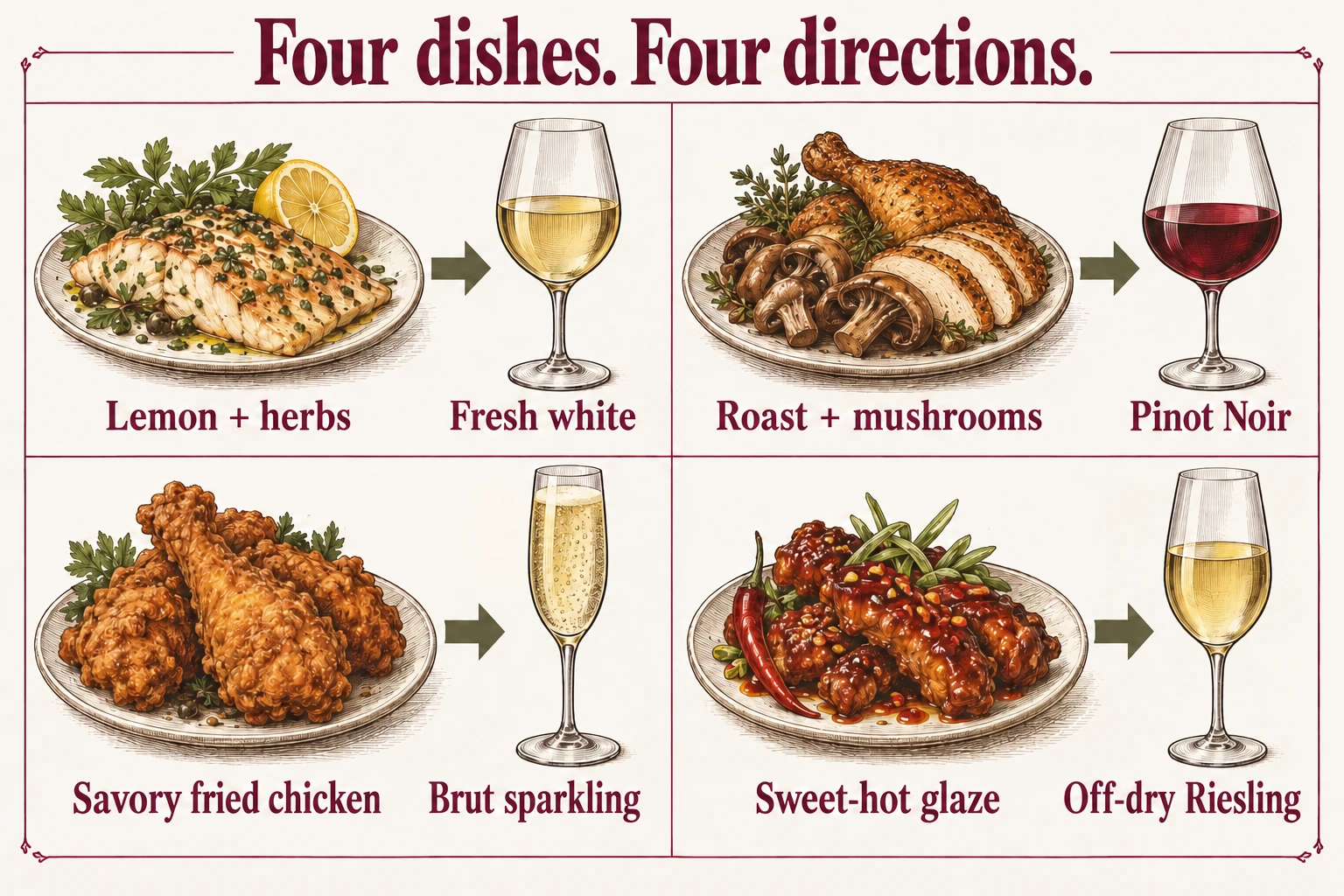
Read the illustration
Lemon-herb chicken can suit fresh white wine; roast with mushrooms can suit Pinot Noir; savory fried chicken can suit brut sparkling; sweet-hot chicken can suit off-dry Riesling.
White wine is the broad default, not a rule
White wine often works because chicken is mild and many preparations include citrus, herbs, butter, cream, or vegetables. The range within white wine is wide enough to cover delicate and rich plates.
Chardonnay is the most versatile familiar option. Fresh unoaked Chardonnay can suit lemon, herbs, simple roasting, and lighter cream sauces. Fuller barrel-influenced Chardonnay can suit browned skin, butter, mushrooms, and richer sauce. Heavy oak is not automatically better with cream, and it may clash with chile or sharp tomato. The Chardonnay guide separates these choices.
Sauvignon Blanc fits lemon, green herbs, salads, asparagus, and grilled chicken with fresh seasoning. A very grassy style can dominate plain chicken, while a riper style may handle more char and sauce.
Riesling is the problem-solver. Dry Riesling can work with roast, herbs, and lighter Asian preparations. Off-dry Riesling handles sweet-hot sauce, curry, chile, and fruit glazes more comfortably. Confirm sweetness on the bottle or with the seller.
Pinot Gris, Pinot Grigio, Albariño, Vermentino, Chenin Blanc, and white Rhône blends each cover a portion of the category. Light crisp whites favor delicate or citrus-led dishes. Textured whites favor roasting, cream, and richer sides.
Red wine works when it stays proportionate
The question is not “Can red wine go with chicken?” It can. The question is whether the red’s body, tannin, alcohol, and oak overwhelm the actual dish.
Pinot Noir is the most flexible red starting point for roast chicken, mushroom sauce, herbs, and dark meat. Red fruit and moderate structure can add complexity without burying the bird.
Gamay, Valpolicella, and lighter Grenache work with roast, tomato, char, and casual preparations. Slightly cool serving can keep them refreshing.
Merlot can suit roasted or mushroom-led chicken when the wine is soft and the plate is substantial. Cabernet Sauvignon, structured Syrah, and powerful Malbec require more care; smoke, barbecue, dark meat, and strong seasoning can make them plausible, but plain breast meat rarely needs that force.
The guide to choosing a smooth red can help when guests want red without aggressive tannin. For a direct style comparison, see Malbec versus Pinot Noir.
Rosé owns the awkward middle
Dry rosé is useful when grilled chicken, herbs, salad, tomatoes, salt, and outdoor weather appear together. It provides some red-fruit flavor without the weight of a red. A fuller rosé can suit dark meat, char, and Mediterranean seasoning; a pale light rosé suits chilled or citrus-led plates.
Sparkling wine belongs with fried and salty chicken
Fried chicken is one of the clearest reasons to keep sparkling wine at the table. Carbonation and acidity contrast with the coating and oil, while fruit and yeast-derived flavor can meet browned crust. Brut sparkling wine works with savory fried chicken; hot honey or obvious sweetness may favor a wine with slightly more sweetness.
The sauce ladder
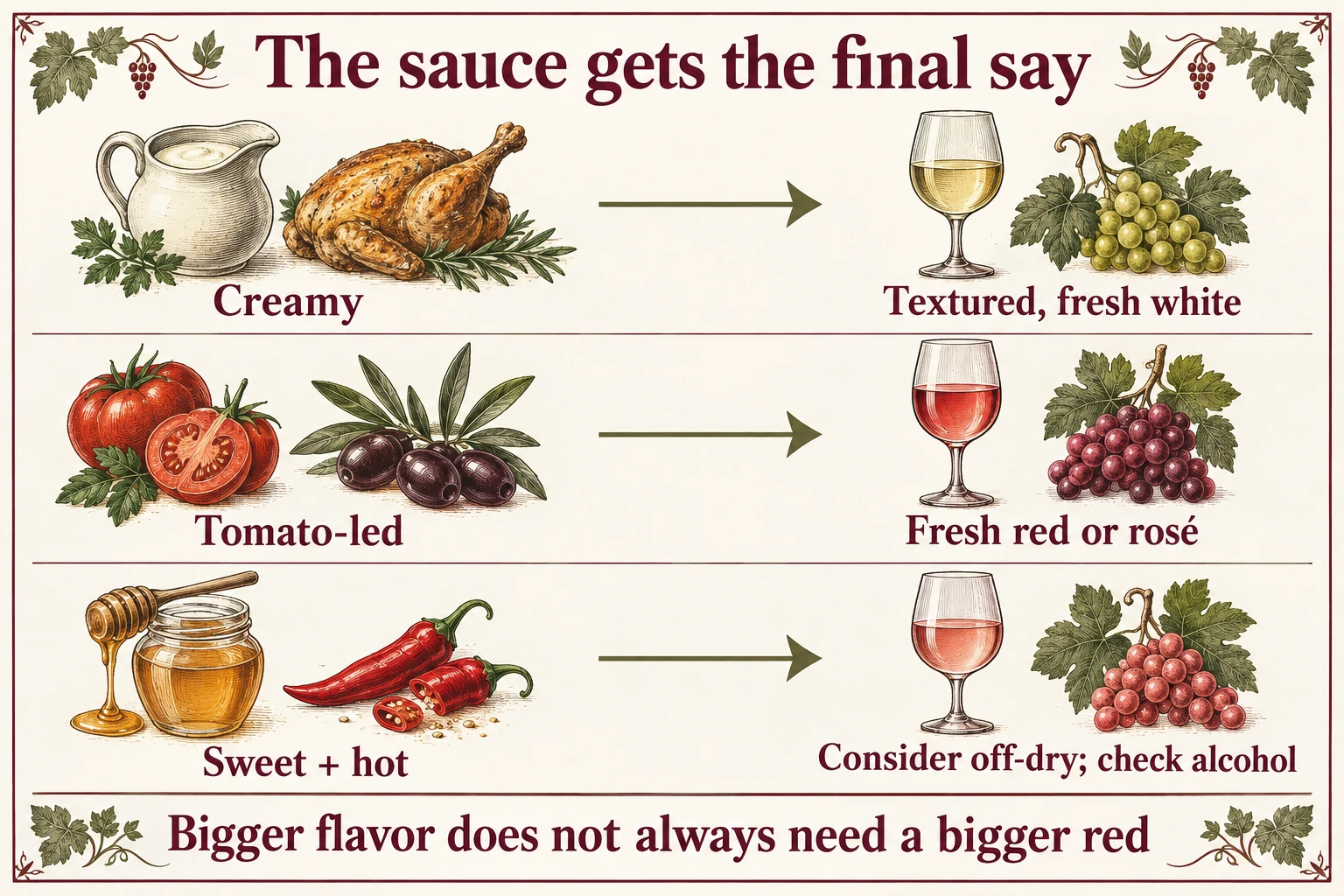
Read the illustration
Cream calls for texture and freshness, tomato for a fresh red or rosé, and sweet chile sauce for restrained alcohol and tannin, with some sweetness potentially useful.
When uncertain, locate the sauce on this ladder and let it narrow the wine.
Light, herbal, and citrus
Examples: lemon, parsley, tarragon, basil, salsa verde, light pan jus.
Start with Sauvignon Blanc, unoaked Chardonnay, Pinot Grigio, Albariño, or dry rosé. The goal is freshness and aromatic compatibility. If butter thickens the sauce, move toward more texture without abandoning acidity.
Rich and creamy
Examples: Alfredo, cream-and-mustard sauce, pot pie filling, creamy mushroom sauce.
Start with Chardonnay, Chenin Blanc, white Rhône blend, or a supple Pinot Noir when mushrooms and roasting are prominent. Acidity keeps the combination from becoming monotonous. A low-acid, heavily oaked wine can make an already rich meal feel exhausting.
Earthy and savory
Examples: mushrooms, lentils, roasted root vegetables, thyme, pan gravy.
Start with Pinot Noir, mature light red, Chardonnay, or Chenin Blanc. Umami can make some wines seem less fruity and more bitter or drying, so fruit and restrained tannin are useful.
Tomato, olive, and Mediterranean
Examples: cacciatore, puttanesca-like sauce, peppers, olives, oregano.
Start with Sangiovese, Barbera, Valpolicella, Grenache, or structured rosé. Tomato’s acidity rewards a wine that remains fresh. Salt from olives can alter tannin perception, so judge the entire bite.
Sweet, smoky, and barbecue
Examples: molasses barbecue sauce, teriyaki, hoisin glaze, honey garlic.
Start with a fruit-led Grenache or Zinfandel, dry-to-off-dry rosé, or off-dry Riesling. The sweeter the sauce, the more severe a bone-dry tannic red may seem. Smoke can support savory depth; sugar and chile can remove that permission.
Hot and aromatic
Examples: curry, jerk seasoning, peri-peri, gochujang, chile crisp.
Start with off-dry Riesling, Gewürztraminer, aromatic white, or fruity rosé. Higher alcohol and firm tannin can feel more forceful with capsaicin. Distinguish aromatic spice from actual heat: cumin, coriander, cinnamon, and turmeric without much chile do not require sweetness in the same way.
Use the wine in the sauce—carefully
If a recipe calls for wine, a sound bottle similar to the wine served at the table can create continuity. It does not have to be the same expensive bottle, and “cooking wine” with added salt is not a substitute for a drinkable table wine.
Match color and style to the sauce:
- Dry white for lemon, herbs, cream, garlic, or light pan sauce.
- Light red for mushroom, tomato, or red-wine braise.
- Fortified or sweet wine only when the recipe is designed for its concentration and sugar.
Wine added early and reduced changes substantially. The bottle poured at dinner remains fresh and aromatic, so similarity is useful but exact identity is unnecessary.
One bottle for a mixed chicken dinner
If several chicken dishes or preferences share the table, choose the least aggressive versatile style.
For a white-only table: balanced Chardonnay or dry Riesling. Chardonnay covers roast and cream; Riesling covers herbs and spice.
For a red-only table: Pinot Noir or Gamay. They handle roast, mushrooms, and moderate char without demanding a very rich dish.
For maximum flexibility: dry rosé or brut sparkling wine. Both tolerate salt, herbs, fried textures, and varied sides.
For a hot or sweet menu: off-dry Riesling. A small amount of sweetness is more useful than extra tannin.
Common chicken-pairing mistakes
Defaulting to the biggest Chardonnay
Rich Chardonnay can be excellent with roast or creamy chicken, but strong oak and alcohol can dominate lemon, herbs, chile, or a delicate breast.
Rejecting red wine on principle
Pinot Noir, Gamay, Valpolicella, and other lighter reds can be excellent with roast, mushroom, tomato, and grilled chicken. Color rules are less useful than intensity and sauce.
Pairing the protein instead of the glaze
Sticky barbecue, teriyaki, hot honey, and fruit sauce bring sugar that can make dry wine seem hard. Follow the glaze.
Treating all spice as chile heat
Aromatic spices can welcome dry, flavorful wine. Capsaicin specifically can intensify heat, alcohol, and drying sensations. Taste the dish before deciding.
Ignoring serving temperature
Warm white wine can feel broad and dull; hot red wine can feel alcoholic. Very cold wine hides aroma. Adjust gradually and let the glass evolve.
Overpowering the leanest cut
A plain chicken breast does not need a wine built for steak. Add intensity only when browning, skin, sauce, smoke, or sides justify it.
The final chicken-wine checklist
- Breast, thigh, leg, wings, or whole roast?
- Poached, roasted, grilled, fried, or braised?
- Is the skin a major part of the bite?
- Does cream, tomato, mushroom, citrus, barbecue, or chile lead?
- Is the sauce noticeably sweet?
- Does the wine need refreshment, richness, fruit, or savory depth?
- Would a light red, rosé, or sparkling wine solve the middle better than white or red convention?
- Is the actual bottle’s oak, sweetness, alcohol, and tannin appropriate?
Questions people ask
What white wine goes best with chicken?
Chardonnay is the broadest familiar answer: unoaked for lemon, herbs, and simple roast; fuller styles for cream, butter, and browned flavors. Sauvignon Blanc suits citrus and herbs. Riesling is best when spice, chile, fruit, or sweetness appears.
What red wine goes with chicken?
Pinot Noir is the most flexible starting point for roast chicken, mushrooms, herbs, and dark meat. Gamay, Valpolicella, lighter Grenache, and soft Merlot can also work. Save firmer reds for smoked, barbecued, tomato-braised, or strongly seasoned dishes.
What wine goes with roast chicken?
Try Chardonnay, Pinot Noir, Chenin Blanc, or Gamay. Choose white when butter, cream, or lighter herbs lead; choose red when browned skin, mushrooms, gravy, and savory herbs lead.
What wine goes with fried chicken?
Brut sparkling wine, high-acid white, or dry rosé. Bubbles and freshness contrast with the crisp coating, oil, and salt. For hot chicken or hot honey, consider an off-dry sparkling or aromatic white.
What wine goes with chicken Alfredo?
Choose Chardonnay with enough acidity, a textured Chenin Blanc, or another full but fresh white. Avoid a flat, heavily oaked bottle that adds richness without refreshment.
What wine goes with barbecue chicken?
Fruit-led Grenache, Zinfandel, dry rosé, or off-dry Riesling. Smoke supports a savory red, but sticky sweetness and chile favor generous fruit, restrained tannin, and sometimes a little residual sugar.
Does Malbec pair with chicken?
It can with smoked, grilled, barbecue, or tomato-rich dark-meat dishes, especially when the Malbec is fruit-led rather than heavily tannic. It is usually too much for plain poached or lightly seasoned breast meat.
Can I serve the same wine used in the sauce?
Yes, if it is sound and the style suits the finished dish. The cooking bottle does not need to be expensive or identical to the table bottle. Avoid salted “cooking wine” when the recipe expects normal table wine.
Related guides
- Best wine with turkey
- Wine pairing with pork tenderloin
- Wine with burgers
- Recommended Chardonnay styles
- How to choose a smooth red wine
- Best wine with pasta
- Best wine with pizza
Sources
- Wine Folly, wine with chicken and poultry, for the preparation-and-sauce framework.
- La Crema, chicken wine pairing guide, for the preparation-led style categories.
- Wine Spectrum, wine with chicken, for white, red, rosé, and sparkling routes.
- Food & Wine, chicken stir-fry pairing, for following the dominant sauce rather than the protein alone.