Red Blend vs Cabernet Sauvignon: Which Bottle Fits Your Dinner?
Quick Takeaways
- Choose Cabernet Sauvignon when cassis, dark fruit and a firm tannic frame sound appealing; confirm the producer’s style
- Choose a red blend when its disclosed grapes and texture fit dinner; the category includes fresh, soft, powerful and oak-matured wines
- Expect overlap: Cabernet Sauvignon can be a blend’s main grape, and a varietal Cabernet can contain other grapes
- For steak with a savory sauce, either can work. For a lighter mixed table, look for a fresh, gentler bottle in either category.
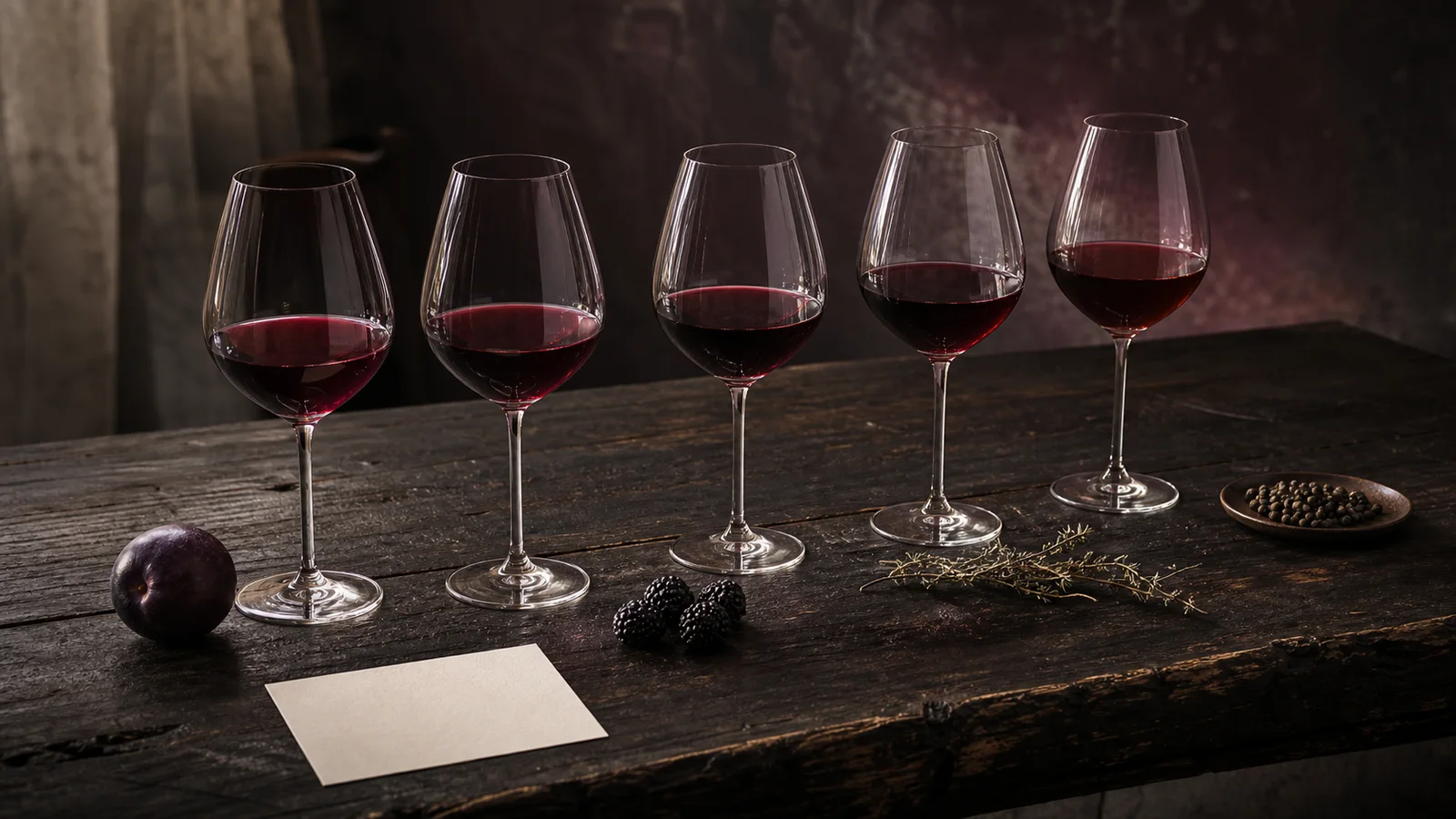
The quickest answer to red blend vs Cabernet Sauvignon is this: Cabernet Sauvignon gives you a grape-based starting point, while a red blend needs a little more explanation from the producer. Start with Cabernet if you want familiar blackcurrant fruit and firm structure. Pick the blend if its actual description better matches the meal and the texture you enjoy.
A blend is not automatically sweeter, softer or easier to drink. A Cabernet-led blend may feel very close to a wine labeled Cabernet Sauvignon. Meanwhile, two Cabernets can differ markedly in fruit, tannin and oak influence.
This guide helps you choose between those two labels at dinner. For a broader bottle-shopping framework across blend families, use our red blend buying guide.
Red Blend vs Cabernet Sauvignon at a Glance
Read the comparison as a set of starting clues. The bottle’s origin, vintage and winemaking can change the result.
| Style | Red blend | Cabernet Sauvignon |
|---|---|---|
| Label | A blended red; often several grape varieties | The named grape; other grapes may be present |
| Fruit | Depends on the grapes and their mix | Often cassis or dark fruit; sometimes herbs |
| Tannin | Gentle through firmly structured | Often firm; substantial variation |
| Dry or sweet | The category does not establish sweetness | The grape name does not establish sweetness |
| Oak | Check maturation details | Check maturation details |
| Blend role | Cabernet may be a base grape or a small part | The grape named on the label |
| More clues | Base grape, grape mix and style notes | Origin, texture and oak details |
| Dinner | Choose the blend for the finished dish | Structured styles for substantial savory food |
The practical question is how much the two bottles differ. If both are Cabernet-led and similarly matured, texture and producer style may matter more than the label category.
Why the Categories Overlap
Cabernet can sit at the center of a red blend
Cabernet Sauvignon commonly contributes a firm tannic frame and dark-fruit character. Bordeaux’s official grape guide identifies cassis, mint and licorice among its aroma associations and describes its structural role in blends. These are useful reference points, not a promise that every Cabernet will show all those notes. Bordeaux: Cabernet Sauvignon
Winemakers can combine it with other grapes to adjust the finished wine. Merlot may bring roundness; Cabernet Franc may add fragrance; Petit Verdot may contribute further weight and tannin. Blending therefore does not have a single direction. It can make a wine feel gentler, more powerful or simply more balanced, depending on the ingredients and aim. WSET: Why blend wine?
If you like Cabernet but dislike a particular bottle’s grip, a Cabernet-led blend could be worth exploring. Ask for a rounder texture rather than treating the word “blend” as a guarantee.
A varietal label does not always mean one hundred percent
A wine labeled Cabernet Sauvignon may include other varieties. For example, US federal rules generally permit an American wine to use a single grape-variety name when at least 75% comes from that grape, with applicable origin requirements. This is an American-label example, not a worldwide threshold. TTB: Grape variety designations
Even a wine made entirely from Cabernet Sauvignon can combine different vineyards or barrels. The front label cannot describe every cellar decision. If exact composition matters, look for the current vintage’s technical sheet.
Smoothness, body and sweetness are separate
Body is the wine’s weight in the mouth. Tannin contributes the drying or gripping sensation. Acidity supplies the mouthwatering quality. You might enjoy a substantial wine with polished tannins while disliking a lighter wine with sharper grip.
“Smooth” is an imprecise description, so explain what you mean when asking for help. “I want generous fruit with little drying sensation” is a more useful request than “I want a smooth red blend.” Our wine texture guide helps separate those sensations.
Sweetness needs its own check. Ripe berry aromas or vanilla-like oak notes do not establish a sweet finish. Look for an explicit dry, off-dry or sweet description tied to the bottle. Similarly, “unoaked” describes a production choice; it does not determine sweetness or body. WSET: Understanding label clues
Where the Grapes Grow: Regional Clues
Red blend is a category rather than a grape, so its origin helps identify a blending tradition. Cabernet Sauvignon has its own regional expressions, and it can appear on either side of this comparison.
For a red blend:
- Bordeaux: Look for Cabernet Sauvignon, Merlot and other local blending varieties; the actual mix matters.
- Southern Rhône: Grenache, Syrah and Mourvèdre offer a different blend family to explore.
- San Rafael, Mendoza: Our two examples below show how one origin can produce both fresh, unoaked and oak-matured blends.
For Cabernet Sauvignon:
- Bordeaux: Cabernet’s firm structure and dark-fruit character are useful reference points, including within blends.
- Argentina: Regional expressions vary; check the producer’s fruit and herbal descriptions alongside the precise origin.
- Napa Valley: A Cabernet Sauvignon label identifies the named grape under American labeling rules; check the composition and cellar notes for the complete picture.
These are shopping clues, not fixed regional flavor profiles. WSET’s blending guide explains the blend families; Wines of Argentina’s grape guide describes regional Cabernet variation.
Five Label Checks Before Dinner
- Find the grapes. For the blend, look for a named base or full composition. For Cabernet, check whether the producer discloses other varieties. Leave missing proportions unknown.
- Read the place and vintage together. Compare the current bottle rather than notes for an older release. A regional name provides context, but it cannot settle the choice on its own.
- Separate fruit from texture. Blackcurrant and plum describe aroma direction. Firm, supple, rounded and concentrated describe different aspects of how the wine may feel.
- Check maturation. If you dislike evident toast or vanilla, seek a wine explicitly presented as unoaked or restrained in oak influence. If you enjoy those notes, check the producer’s actual description rather than assuming Cabernet requires them.
- Describe the complete plate. Include the sauce and cooking method. “Roast beef with herb jus” gives a seller much more to work with than “beef.”
For two bottles that still look similar, choose the one with the clearer fit to your preference and budget. A higher price or more elaborate blend recipe does not tell you which one you will enjoy more.
Choose for the Dinner You Are Actually Making
These are practical starting points, not results from a controlled tasting. Food changes how we perceive wine, and the sauce can matter as much as the main ingredient. WSET: Food and wine pairing principles
Salted steak, char and a savory jus
Try a structured Cabernet Sauvignon or a Cabernet-led blend. If you enjoy a gripping finish with the meat, choose the firmer description. If you want fruit and a rounder mouthfeel, seek that explicitly in either category.
A lean steak with a delicate jus gives the wine a different job from a heavily charred cut with a rich pan sauce. Match the intensity rather than automatically reaching for the biggest bottle. For a larger roast, our prime rib wine guide follows the sauces and accompaniments.
Burgers and a mixed grill
For burgers with cheese, sausages and grilled vegetables sharing the table, a fresh, fruit-led blend can be a useful starting point. A supple Cabernet can do the same job. The aim is enough flavor for browned food without imposing a severe tannic finish on every bite.
Ketchup, relish and sweet barbecue sauce may change the answer. Sweet food can make a wine seem drier or more bitter; adding sweetness to the plate does not automatically make a ripe-smelling dry wine a comfortable match. WSET: Winter wine and food matching
Tomato pasta or mushroom dishes
For tomato pasta, look for freshness and manageable tannin rather than maximum concentration. A blend described that way is more useful than one chosen solely because it contains several grapes. A fresh Cabernet is also an option if its grip suits you.
For mushrooms, distinguish a light sauté from a creamy risotto or a deeply reduced sauce. Start with a gentler red for the first and consider more texture for the richer preparations. Our pasta pairing guide makes the sauce the starting point.
Herb-heavy or hot dishes
With chimichurri, roasted peppers or aromatic herbs, consider a fresh style with unobtrusive oak. When substantial chile heat enters the picture, reassess both choices. Tannin can become more conspicuous alongside heat, and a different wine style may be more comfortable than either bottle you first considered.
Two Blend Examples from Our Cellar
Our 2024 Nine Queens Red Blend is a San Rafael, Mendoza example for the fresh-style side of this decision. Its listing describes a Cabernet-based blend, stainless-steel fermentation and an unoaked style, with producer-described red fruit and a smooth finish. The complete grape composition and percentages are not disclosed.
Our 2020 Red Blend Reserva takes another direction. Its listing specifies 70% Cabernet and 30% Syrah, with 12 months in French and American oak. Its producer notes describe red fruit, spice, vanilla and structured tannins. That composition belongs to the Reserva, not Nine Queens.
These are examples from wines we make, not an independent tasting or proof that blends outperform Cabernet Sauvignon. Choose another producer’s varietal Cabernet if exploring that grape is the point of dinner. For an unoaked wine with fully disclosed percentages, seek a bottle that publishes both facts.
FAQ: Red Blend vs Cabernet Sauvignon
Can a red blend taste like Cabernet Sauvignon?
Yes, especially when Cabernet Sauvignon is a major component. The other grapes, ripeness and maturation can preserve or reshape that character. Read the composition and style notes rather than expecting “red blend” to describe a different flavor family.
Which is better for someone who dislikes tannin?
Choose the specific bottle described as gentle or supple. A red blend can have substantial tannin, and a Cabernet can have a polished texture. Tell the seller you dislike a drying finish; the category alone cannot solve that preference.
Does blending make a wine cheaper or lower quality?
No. Blending is used across many price and quality levels. It can serve balance, complexity or consistency as well as commercial goals. Judge the producer and the finished style instead of treating the number of grapes as a quality score.
Should I decant both bottles?
Follow any bottle-specific guidance, then assess the wine. For a casual comparison, taste a small pour first and revisit it as it opens. There is no single decanting duration that follows from either label, and an older bottle may need different handling from a young one.
If I already like Cabernet, which blend should I try first?
Start with a disclosed Cabernet-led blend and choose one deliberate change, such as gentler tannin or less prominent oak. Keeping the meal, serving conditions and price band similar makes it easier to understand what you prefer.
The Final Word: Let the Bottle Earn Its Place
Choose Cabernet Sauvignon when you want to explore its dark-fruit and structured character. Choose the red blend when its actual grapes, texture and maturation better fit the meal. If both bottles are Cabernet-led, expect overlap and let the producer’s details guide the choice.
For a grape-to-grape decision, continue with Malbec vs Cabernet Sauvignon. For other red-wine directions, use the Malbec comparison guide.
Sources and approach
This comparison combines wine-education principles with official regional descriptions. Pairings are editorial suggestions; no blind tasting or numerical ranking was performed. Product claims are limited to the linked Familia Morgan listings checked October 19, 2026.
- WSET: Why do we blend wine?, for blending purposes and overlapping categories
- Bordeaux: Cabernet Sauvignon, for grape character and its role in blends
- TTB: Grape variety designations on American wine labels, for the explicitly US-scoped labeling example
- WSET: How to find a wine you’ll like, for label, texture, oak and sweetness distinctions
- WSET: Food and wine pairing principles and winter wine and food matching, for conditional food effects
- Familia Morgan’s Nine Queens Red Blend and 2020 Red Blend Reserva, for the bottle-specific examples