Buyer guide
Best Wine With Prime Rib: Match the Slice, Jus, and Sides
One rib roast can give the table a juicy center slice, a browned end cut, and three different sauces. Choose the wine for the bite people will actually eat.
Research note: These are Familia Morgan's recommendations about wines Familia Morgan makes, not an independent blind tasting or global ranking. Product style records were verified July 31, 2026; public catalog prices and availability were checked October 13, 2026.
For classic prime rib with savory jus, start with a fruit-present Malbec, Merlot, or Cabernet Sauvignon whose tannic grip you enjoy. An herb-crusted roast can suit a savory Tempranillo or Cabernet-led blend; a delicate center slice can be lovely with Pinot Noir. The best wine with prime rib depends on the slice, sauce, and diners, rather than the roast’s size or price.
This guide chooses wine to drink with the roast. Wine for a pan sauce is a separate recipe decision. A holiday dinner does not require an expensive bottle, and a rich cut does not require the most powerful red you can find.
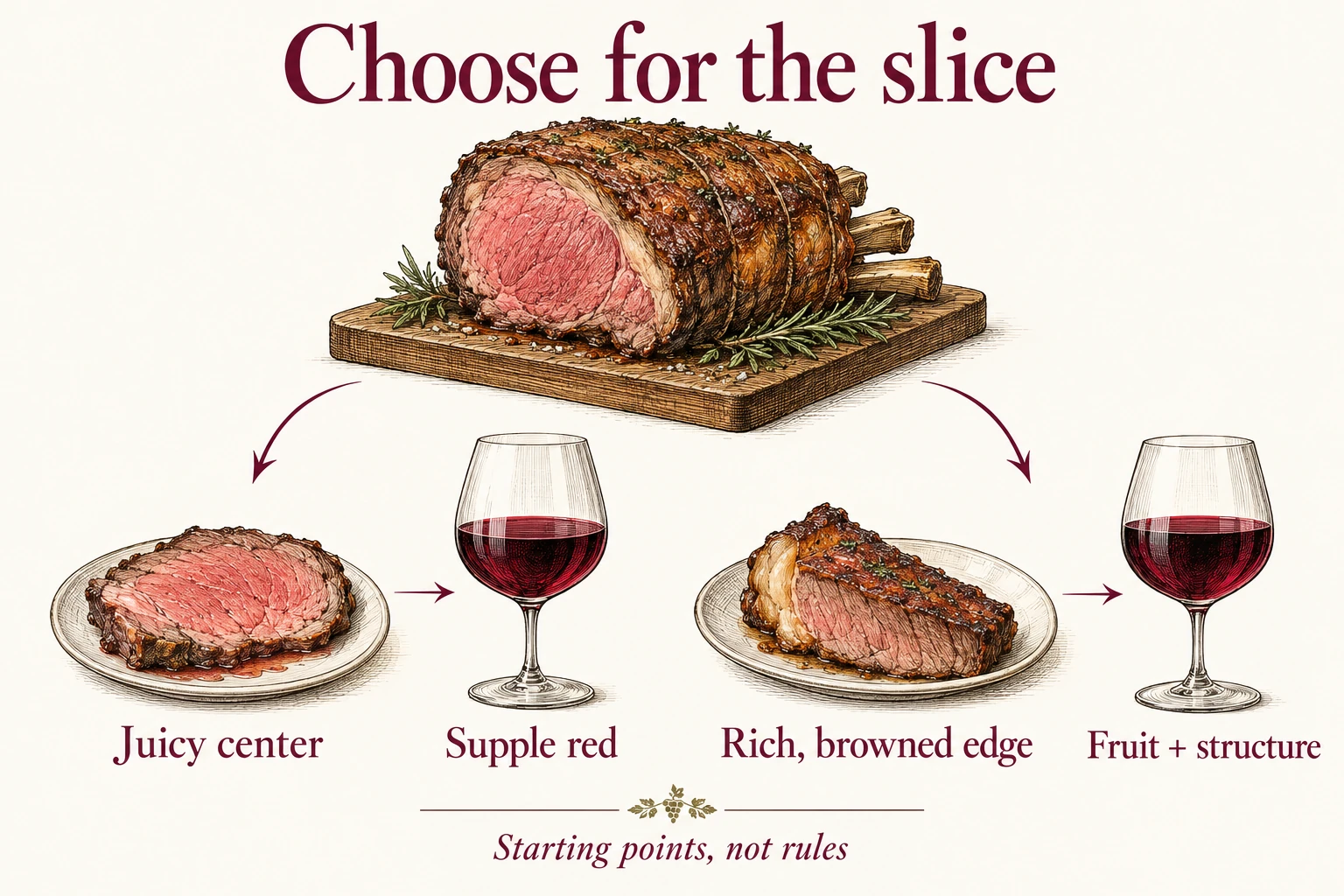
Start at the carving board
Prime rib is a whole rib roast served in slices. A standing rib roast has bones attached; its name describes the cut and presentation. Beef. It’s What’s For Dinner’s cut guide identifies it as a bone-in rib roast suited to oven roasting.
That makes the wine problem different from choosing for individual steaks. A roast offers a large interior under a browned surface, and diners may receive very different proportions of each. Some want the tender center with a little jus. Others want a richly browned edge, rendered fat, and a spoonful of horseradish cream. Choose for those plates.
Our starting rule is simple: keep the wine generous enough for the rich bite, but comfortable enough to drink with the gentler one. If the table prefers a softer-feeling red, begin there. No pairing rule requires guests to enjoy a drying finish.
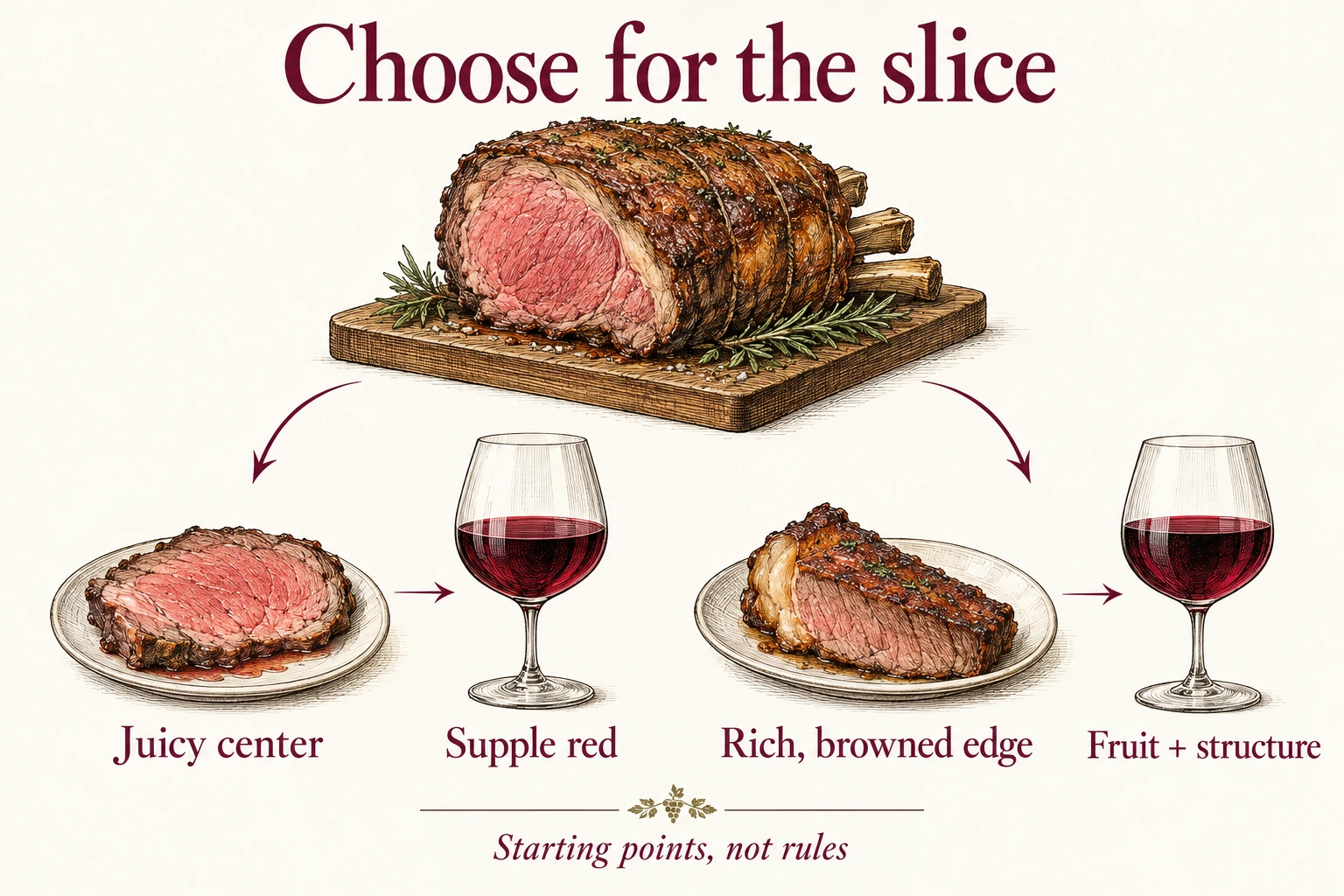
Read the illustration
A juicy center slice can suit a supple red. A rich, browned edge can welcome fruit and structure. These are style suggestions, not fixed tannin requirements.
Center slices and browned end cuts
For a juicy center slice with modest seasoning, we would begin with a rounded Malbec or Merlot. If you prefer a lighter red, a flavorful Pinot Noir is a reasonable choice. Look for a bottle you would enjoy alongside the simple beef before complicating the decision with sides.
A browned end cut with a rich cap of fat gives more room for a substantial Cabernet, Malbec, or savory blend. “More room” does not mean “more tannin is always better.” You still need enough fruit and freshness for the next sip to be enjoyable.
If one roast must satisfy both camps, a fruit-present, moderately assertive red is a practical middle ground. Offering two styles is another option when the group is large enough to enjoy both.
Match the wine to the whole bite
A bottle can feel right with plain beef and less convincing once gravy, herbs, or sharp sauce joins it. Taste the complete bite before committing the entire table to one pairing.
| On the plate | Start with | What to check |
|---|---|---|
| Center slice, light jus | Rounded Malbec, Merlot, or flavorful Pinot Noir | Does the wine leave room for the beef rather than cover it? |
| Rich edge, browned crust, savory jus | Cabernet Sauvignon, oak-matured Malbec, or savory red blend | Look for fruit and freshness as well as structure. |
| Garlic and herb crust | Savory Tempranillo, Cabernet-led blend, or Malbec | Choose the oak level you like with the herbs. |
| Mushroom gravy | Supple Pinot Noir, Merlot, or restrained savory red | Taste with the gravy; strong savory flavors can expose a drying finish. |
| Horseradish cream or sharp mustard | A gentler red; consider a fresh, textured white if preferred | Check the actual sauce strength and amount on the fork. |
| Sweet glaze or sweet sides in every bite | Fruit-led gentle red, or a wine with suitable sweetness | Do not assume ripe fruit aroma means the wine contains enough sugar. |
Jus and red-wine sauce
A light spoonful of roast juices keeps the pairing close to the beef. A heavily reduced gravy has a stronger voice. Our practical approach is to taste the sauce first and decide whether you want the wine to echo its depth or offer a fresher contrast.
The wine used to make a pan sauce does not have to be the wine poured at the table. Follow the sauce recipe for its ingredient wine; choose the drinking bottle for the finished meal. You do not need to pour a special Reserva into the roasting pan to justify serving it with dinner.
Garlic, rosemary, and other herbs
Herbs can make a savory Tempranillo or Cabernet-led blend especially appealing. That is our pairing preference, not a claim that those grapes taste identical to rosemary. If you like fruit contrast, a Malbec can be equally useful.
The crust’s intensity matters more than counting its ingredients. A light herb coating leaves plenty of room for a gentle wine. A dark, assertive crust may suit a more substantial one, provided the oak does not dominate your sip.
Horseradish and mustard
Keep these on the side when possible. Prepared horseradish, horseradish cream, and mustard can differ considerably in pungency, acidity, and richness. A teaspoon on one person’s plate is a different pairing from a thick coating on every slice.
Try a sip with the amount you actually plan to eat. If it makes a firm red feel unpleasant, move toward a gentler bottle or try a fresh, textured white. Do not assume horseradish behaves exactly like chile, or that choosing a sweeter wine automatically solves every sharp sauce.
Mushroom gravy and sweet holiday sides
Mushrooms add a savory quality that can make some wines seem less fruity or more drying. Sweet sides can also change the sip. WSET’s food-pairing guidance explains why umami matters, while its winter pairing guide covers sweetness and salt.
Our solution is to test the forkful you will repeat. If glazed carrots are an occasional side, the roast can still lead. If sweet sauce coats every slice, select the wine for that sweeter meal.
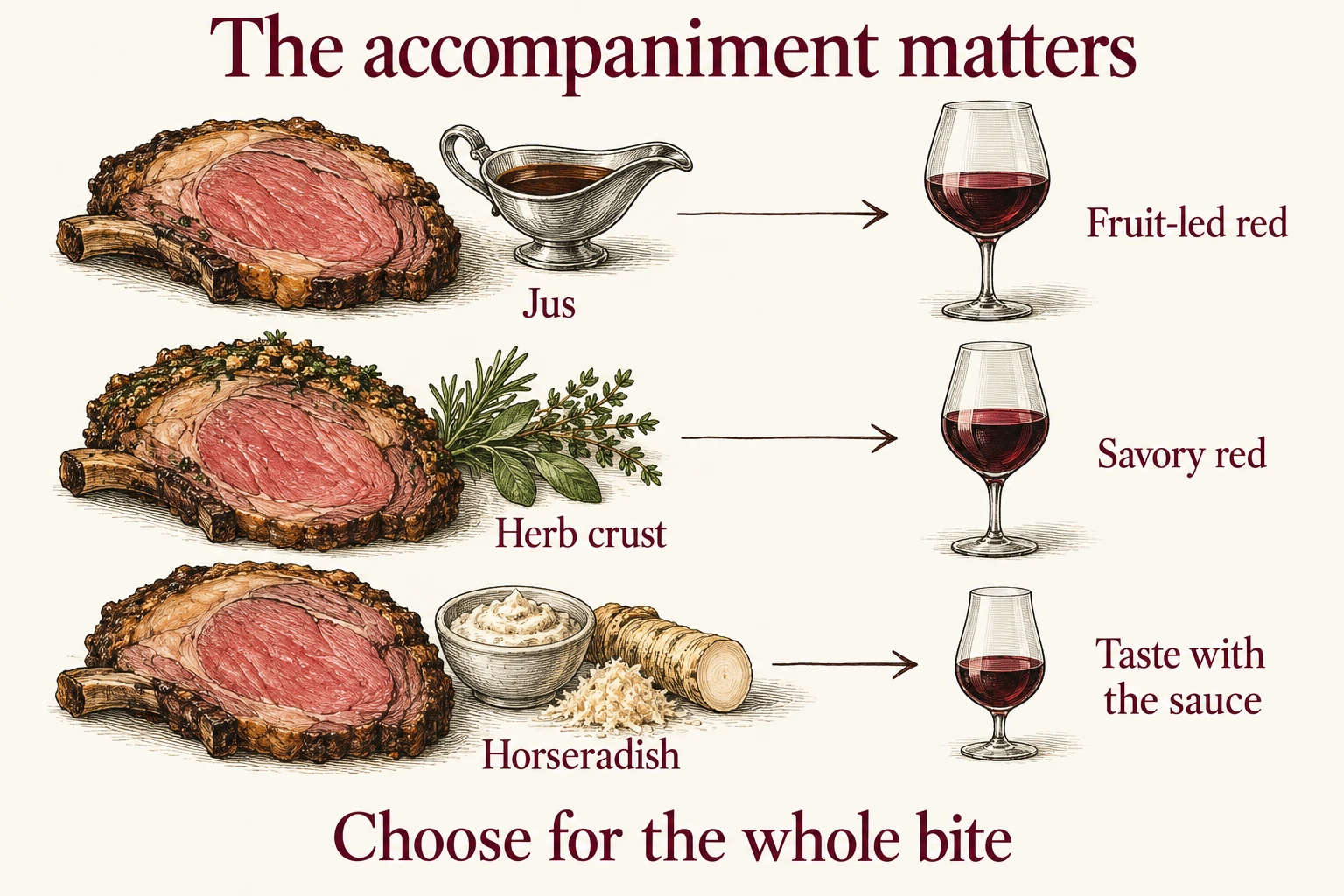
Read the illustration
Jus: begin with a fruit-led red. Herb crust: consider a savory red. Horseradish: taste the wine with the actual sauce. The whole bite is the useful test.
Which wine style should you buy?
Malbec is our first place to look when you want recognizable fruit with the roast. Compare a fresher, little-oaked expression with an oak-matured one according to your preference; do not assume the latter is automatically the holiday upgrade.
Cabernet Sauvignon or a Cabernet-led blend makes sense when you enjoy a firmer, more substantial red and the plate is savory and rich. Skip this direction if you dislike a drying finish, regardless of how often Cabernet is recommended with beef.
Merlot is worth considering when you want a rounded red-fruit or plum-led option. Check the bottle description: Merlot can also be structured, so the grape alone does not promise softness.
Tempranillo, including Rioja or Ribera del Duero, gives another way to explore fruit and maturation. We would consider a savory, oak-influenced example with an herb crust, or a youthful one when brighter fruit is the preference. The Malbec–Tempranillo comparison helps separate the grape from its aging style.
Pinot Noir is a good choice when the table wants a lighter-feeling red, particularly with a simply served center slice or mushroom accompaniment. Pick by actual flavor and texture; a very delicate bottle may be lost beside a heavily browned, strongly sauced plate.
White wine remains an option. If your guests prefer it, try a Chardonnay with enough presence for the meal and a level of oak they enjoy. The Chardonnay buying guide can help narrow that style choice. Personal preference is part of pairing, as WSET emphasizes.
Make the wine easy to serve
A roast dinner already asks the host to coordinate carving, warm plates, sauce, and sides. Keep the wine plan simple.
- Choose before cooking day. Decide whether the table wants one flexible red or two different styles. Check the actual bottles rather than relying on a general grape ranking
- Keep sauces separate. This lets guests adjust the bite and gives a single wine a better chance of working across the table
- Try a small pour before dinner. Check the bottle’s condition and whether you enjoy it as poured. Follow bottle-specific advice for air or decanting
- Taste again with food. A small piece of beef with jus and your chosen condiment tells you more than tasting the wine alone
- Put water and an appealing nonalcoholic drink on the table. Guests should have a comfortable choice without needing to explain it
For two bottles, make the contrast useful: one fruit-led red and one more savory, oak-influenced red. They can be different grapes or different expressions of the same grape. A more expensive bottle earns its place only if someone prefers it.
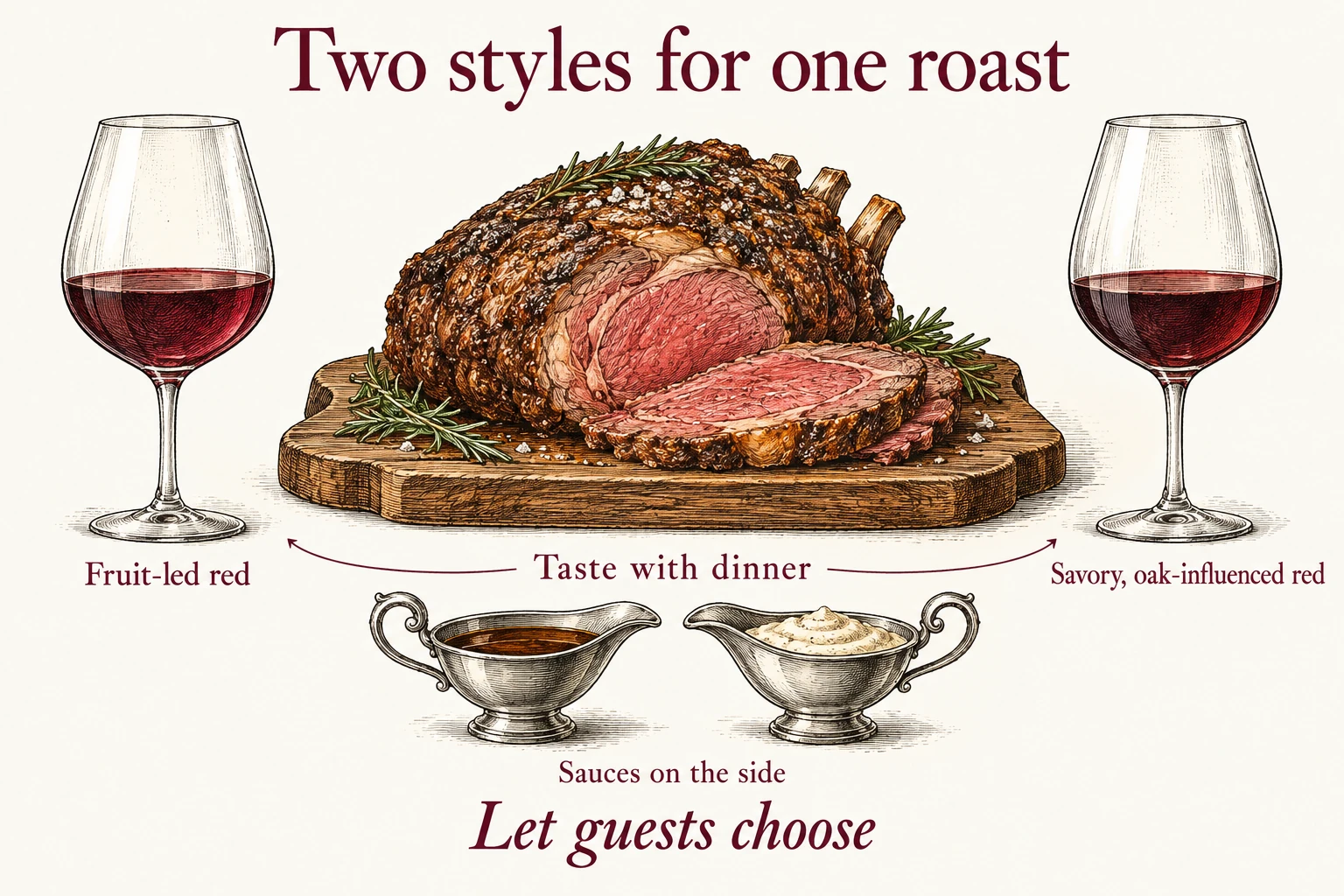
Read the illustration
Offer a fruit-led red and a savory, oak-influenced red if the group wants both. Keep sauces on the side and begin with a small pour. Let guests choose.
Two Malbec directions from our cellar
The October 13, 2026 public catalog listed 2024 Nine Queens Malbec at $20 and 2020 Malbec Reserva at $55. Those are dated bottle prices, not checkout totals or an assurance of inventory. Decide whether you want the documented style before choosing the price tier.
Prime-rib wine questions
Is Cabernet or Malbec better with prime rib?
Either can work. Start with Malbec if the bottle’s fruit profile is what you want; choose Cabernet if you prefer the particular wine’s structure and flavor. Both grapes vary. Jus, crust, condiments, and your tolerance for drying tannin matter more than declaring one the permanent winner.
Can you drink Pinot Noir with prime rib?
Yes. We would consider it for a simply served center slice, especially when guests prefer a lighter red or mushrooms accompany the roast. Check that the chosen bottle has enough presence for the actual plate.
What wine goes with prime rib and horseradish?
Taste with the actual horseradish sauce. Its strength, acidity, creaminess, and portion change the pairing. Keep it on the side, begin with a gentler red, and consider a textured white if that tastes better to you.
Do I need an expensive wine for a holiday rib roast?
No. A bottle with the style your guests enjoy is more useful than an expensive bottle they find too firm or oaky. Spend more when the specific wine offers something you want, not because the roast was costly.
Must the sauce and drinking wine be the same?
No. Follow the sauce recipe for the cooking wine and choose the bottle in the glass for the finished dinner. Our beef-stew guide explains the broader pot-versus-glass distinction without requiring a premium cooking ingredient.
Related decisions and sources
For individual steaks, use the cut-by-cut steak pairing guide. For another whole-cut dinner with a different texture, see wine with brisket. The Malbec comparison guide helps when choosing the grape is still the open question.
Our plate-level recommendations are conditional judgments built from the cut, preparation, and published pairing principles. We did not conduct a blind tasting for this article. The primary cut and wine-education sources are linked alongside the relevant claims above. Product evidence comes from the Nine Queens Malbec listing and Malbec Reserva listing, together with Familia Morgan’s dated product records. Catalog prices and public availability were checked October 13, 2026; final purchase terms remain those displayed at checkout.