Pairing guide
Wine and Cheese Pairings: A Practical Guide by Cheese Style
The strongest cheese does not need the strongest red. Start with texture and intensity, then use acidity, sweetness, bubbles, and tannin deliberately.
The short answer: Good wine and cheese pairings match intensity while managing texture, salt, acidity, sweetness, and tannin. Fresh and tangy cheeses often favor crisp whites; creamy bloomy-rind cheeses welcome sparkling wine or fresh Chardonnay; aged hard cheeses can meet structured whites or reds; pungent blue cheeses usually need sweetness. For a mixed board, sparkling wine, Riesling, Chenin Blanc, or another fresh white is often safer than a firm young red.
The six pairing levers
Wine and cheese seem destined for each other because both offer fermentation-derived flavor, acidity, texture, and long regional traditions. That does not mean every wine works with every cheese. A creamy Brie, chalky chèvre, salty aged Parmesan, pungent washed rind, and sweet-salty blue create different sensory problems.
1. Match intensity
Delicate wine disappears beside powerful cheese. Delicate cheese disappears beneath powerful wine. Start with comparable aromatic and flavor intensity, then decide whether the textures should echo or contrast.
Young fresh cheese tends to be mild, milky, and tangy. Long-aged cheese becomes firmer, saltier, nuttier, and more concentrated. Aged wine can become savory and complex, but age alone does not guarantee enough fruit or intensity for an assertive cheese.
2. Use acidity for refreshment
Acidity gives wine lift and can refresh the palate after a rich bite. That is why sparkling wine, Sauvignon Blanc, Riesling, Chenin Blanc, and fresh Chardonnay are so useful with cheese. The goal is not to claim that acid chemically erases fat; it is to create a lively sensory contrast instead of stacking richness on richness.
3. Treat sweetness as a tool
Salt and pungency can make a sweet wine feel more balanced, while the wine’s sweetness can make an intense blue or washed-rind cheese seem less aggressive. The classic blue-cheese-and-sweet-wine family works because neither partner disappears. A bone-dry, highly tannic red may feel bitter or stripped of fruit beside the same cheese.
4. Respect tannin
Tannin contributes drying grip. Cheese proteins and salt can change how that grip is perceived, sometimes softening it and sometimes creating a bitter or metallic impression. A firm young red is therefore not a universal answer to rich cheese. Mature reds, light reds, fruity reds, and whites may be easier depending on the cheese.
5. Decide whether texture should echo or contrast
Creamy cheese can echo the breadth of a textured Chardonnay, or it can contrast with the snap and bubbles of sparkling wine. Crystalline aged cheese can echo the savory complexity of mature wine. There is no requirement to use only one method; the best pairings often combine an intensity match with a textural contrast.
6. Use place as a clue, not proof
“What grows together goes together” is useful because regional food and wine traditions developed side by side. Sancerre and Loire goat cheese, Chianti and Pecorino, Comté and Jura wine, or Manchego and Spanish reds are sensible starting points. Geography does not overrule the actual cheese age or wine style. A young and an aged version from the same region may behave very differently.
Wine-pairing chart by cheese family
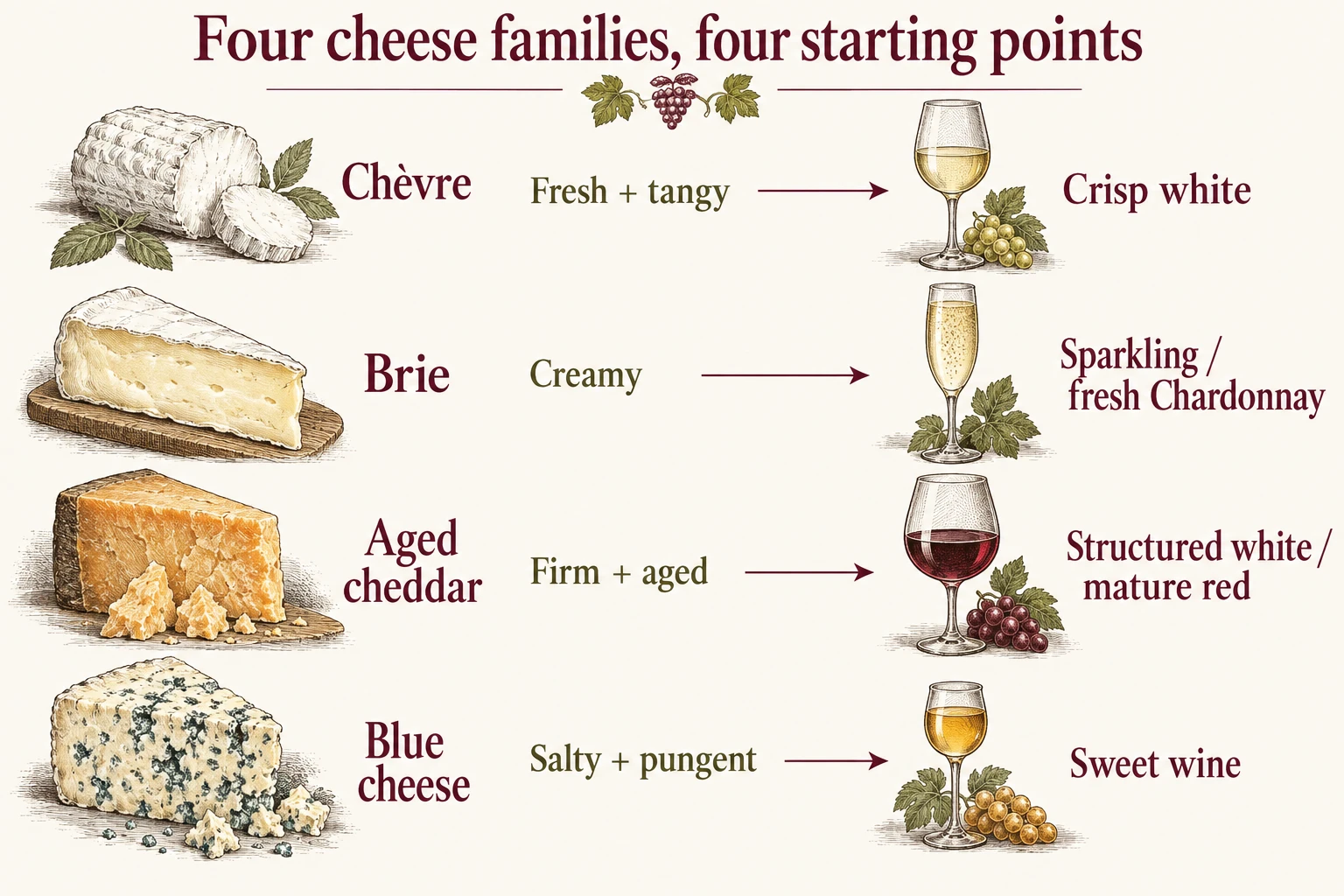
Read the illustration
Fresh tangy cheese suggests crisp white wine; creamy Brie suggests sparkling or fresh Chardonnay; aged firm cheese suggests structured white or mature red; pungent blue suggests sweet wine.
| Cheese family | Examples | Start with | Why | Be cautious with |
|---|---|---|---|---|
| Fresh, soft, high-moisture | Ricotta, mozzarella, burrata, feta, young chèvre | Sauvignon Blanc, Pinot Grigio, dry rosé, sparkling wine | Freshness meets tang and moisture without overpowering | Heavy oak, high alcohol, firm tannin |
| Bloomy rind | Brie, Camembert, triple cream | Champagne or other sparkling, Chardonnay, Chenin Blanc | Bubbles or acidity contrast with cream; textured whites can echo it | Very tannic young red, delicate wine beside ripe pungent rind |
| Washed rind | Époisses, Taleggio, Munster | Gewürztraminer, off-dry Riesling, Saison-like savory white, mature light red | Aroma, spice, and possible sweetness meet pungency | High-tannin red that becomes bitter or loses fruit |
| Semi-soft and nutty | Havarti, Fontina, young Gouda, Monterey Jack | Chardonnay, Pinot Noir, dry rosé, light red | Moderate intensity leaves several routes open | Extremely delicate or highly powerful wine |
| Firm and aged | Cheddar, aged Gouda, Comté, Gruyère, Manchego | Cabernet Franc, Rioja, mature Cabernet, oxidative or structured white | Concentration, salt, and nutty flavor can support more wine intensity | Light neutral whites that disappear |
| Very hard and granular | Parmigiano-Reggiano, Pecorino Romano, Grana Padano | Lambrusco, Sangiovese, mature red, sparkling wine | Salt and umami welcome fruit, freshness, and savory depth | Low-acid wine that feels flat |
| Blue | Roquefort, Stilton, Gorgonzola, Cabrales | Port, Sauternes, sweet Chenin, late-harvest or botrytized wine | Sweetness balances salt and pungency | Bone-dry tannic red as the default |
| Goat cheese | Crottin, chèvre log, Valençay | Sauvignon Blanc, Chenin Blanc, dry rosé | Acidity and herbal/citrus notes suit tangy, earthy cheese | Broad, heavily oaked red |
Milk source is one useful clue, but texture and age usually tell you more. A fresh cow’s-milk mozzarella is not paired like aged cow’s-milk Cheddar. A young goat cheese differs from an aged goat tomme. Ask how the cheese was made and matured instead of reducing it to cow, sheep, or goat.
Twelve classic wine and cheese pairings
These combinations are useful because each demonstrates a repeatable principle. They are not commandments.
| Pairing | Why it works | Alternatives |
|---|---|---|
| Brie + sparkling wine | Bubbles and acidity contrast with creamy texture | Crémant, Cava, Franciacorta, dry sparkling rosé |
| Camembert + Chardonnay | Similar breadth with enough acidity for the rind and cream | Chenin Blanc, mature sparkling wine |
| Goat cheese + Sauvignon Blanc | High acidity and herbal/citrus character meet tang and earthiness | Chenin Blanc, dry rosé |
| Mozzarella or burrata + crisp white | A light, fresh wine does not bury delicate milk flavor | Pinot Grigio, Vermentino, sparkling wine |
| Feta + dry rosé | Acidity and red-fruit freshness suit salt and tang | Sauvignon Blanc, Assyrtiko-style high-acid white |
| Gruyère + Pinot Noir | Moderate red fruit and gentle tannin fit nutty, medium intensity | Chardonnay, Jura white, Gamay |
| Comté + Jura-style white | Regional affinity and savory, nutty complexity | Champagne, Chardonnay, mature Chenin |
| Cheddar + Cabernet family red | Aged Cheddar has enough concentration for structure and dark fruit | Cabernet Franc, mature Cabernet Sauvignon, cider |
| Aged Gouda + tawny Port | Caramelized, nutty notes echo while sweetness balances salt | Madeira-style fortified wine, mature red |
| Manchego + Tempranillo | Sheep’s-milk richness and savory Spanish red create a regional match | Garnacha, dry sherry style |
| Parmigiano-Reggiano + Lambrusco | Acidity and bubbles refresh; red fruit meets savory salt | Sangiovese, sparkling wine |
| Blue cheese + sweet wine | Sweetness meets salt and pungency at equal intensity | Port, Sauternes, sweet Riesling, botrytized Chenin |
If you want to test the logic, pour one wine with two cheeses: one expected match and one deliberate mismatch. A firm young Cabernet beside chèvre and aged Cheddar will teach more about intensity and tannin than memorizing a chart.
Start with the wine
Sometimes the bottle is already open. Reverse the decision.
Sparkling wine
Choose Brie, Camembert, triple cream, Parmesan, or another salty hard cheese. Sparkling wine is one of the best mixed-board options because freshness, bubbles, and a range of body levels can handle creamy and firm textures.
Sauvignon Blanc
Choose fresh goat cheese, feta, herb-coated chèvre, or another tangy fresh cheese. A very grassy Sauvignon Blanc can feel intense beside neutral mozzarella, while a riper example may have broader range.
Chardonnay
Choose Brie, Camembert, Fontina, Gruyère, Comté, or mild-to-medium Cheddar based on the wine’s body and oak. Fresh unoaked Chardonnay favors lighter and tangier cheeses; a fuller style can meet cream and nuttiness. Use the Chardonnay style guide before assuming every bottle tastes alike.
Riesling
Dry Riesling works with goat cheese, young Gouda, and washed-rind cheese. Off-dry Riesling is particularly useful with pungent or spicy cheeses and sweet accompaniments. Confirm sweetness instead of guessing from the grape.
Pinot Noir and Gamay
Choose Gruyère, Comté, young Gouda, Brie that is not aggressively ripe, or mushroomy bloomy-rind cheese. These reds often bring enough fruit with less tannic force than young Cabernet. A slight chill can make them especially useful on a broad board.
Merlot, Malbec, and other rounder reds
Choose medium-to-aged Cheddar, Gouda, Manchego, or a savory semi-firm cheese. Avoid making “smooth” synonymous with “works with everything.” Even a smooth red wine can become bitter or flat beside the wrong blue or very tangy fresh cheese.
Cabernet Sauvignon and structured red blends
Choose aged Cheddar, aged Gouda, Manchego, or another firm, concentrated cheese. Mature bottles may work more broadly than young firm ones. For the red-blend side of the decision, read the red-blend buyer guide and verify the actual grapes and maturation.
Sweet and fortified wine
Choose blue cheese, aged Gouda, or a pungent washed rind. Keep portions small because both wine and cheese can be intense. “Sweeter than the food” remains a useful direction when the board includes honey, jam, or dessert elements.
One wine for an entire cheese board
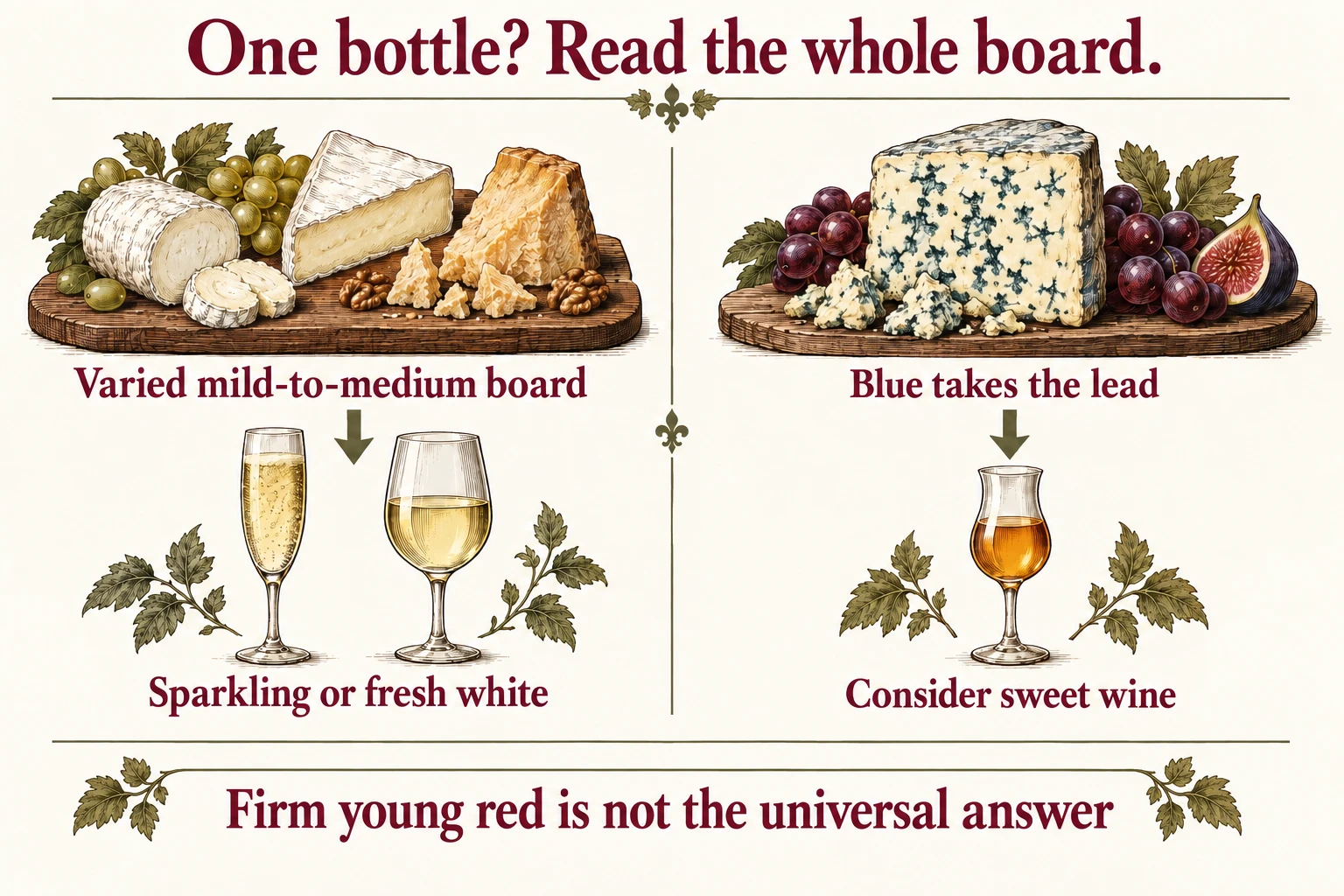
Read the illustration
A varied mild-to-medium board can favor sparkling or a fresh white. A board centered on blue cheese can favor sweet wine. A firm young red is not the universal choice.
The safest one-bottle answer is usually sparkling wine or a fresh white with meaningful acidity. A mixed board may contain tangy fresh cheese, creamy Brie, nutty aged cheese, and blue. A young tannic red may excel with one and fight three.
Good one-bottle strategies include:
- Brut sparkling wine: broadest textural contrast, especially when blue cheese is absent or modest.
- Riesling with a little residual sugar: useful when the board includes washed rind, blue, fruit, or chutney.
- Chenin Blanc: enough acidity and texture for fresh through semi-firm cheeses, with sweetness depending on style.
- Dry rosé: practical for mild-to-medium cheeses, herbs, charcuterie, and outdoor serving.
- Light red served slightly cool: Gamay or Pinot Noir for boards weighted toward Brie, Gruyère, Comté, Gouda, and charcuterie.
If blue cheese is the centerpiece, build around a sweet wine instead of asking one dry bottle to cover it.
How to build a wine-friendly cheese board
Choose three to five cheeses with distinct jobs
A useful five-cheese board might include:
- A fresh or tangy cheese.
- A bloomy-rind cheese.
- A semi-firm nutty cheese.
- An aged hard cheese.
- A blue or washed-rind cheese.
You do not need all five. Three thoughtfully different cheeses are easier to taste than eight similar wedges.
Keep accompaniments supportive
Plain bread and neutral crackers reset the palate. Fresh pear, apple, grapes, nuts, olives, honey, and preserves add contrast, but each also changes the wine pairing. Honey and jam can make a dry wine seem harder. Pickles and olives add acid and salt. Spiced nuts add heat. Treat accompaniments as ingredients, not decoration.
Separate strong aromatics
Blue and washed-rind cheeses can dominate a board if they touch milder cheese or share a knife. Give them space and separate utensils. This improves both tasting clarity and hospitality.
Label the cheese and the order
Guests taste with more confidence when they know what they are eating. List milk type, style, and age if known. Arrange from mild to strong and explain that anyone can ignore the order after the first pass.
How to serve a wine and cheese tasting
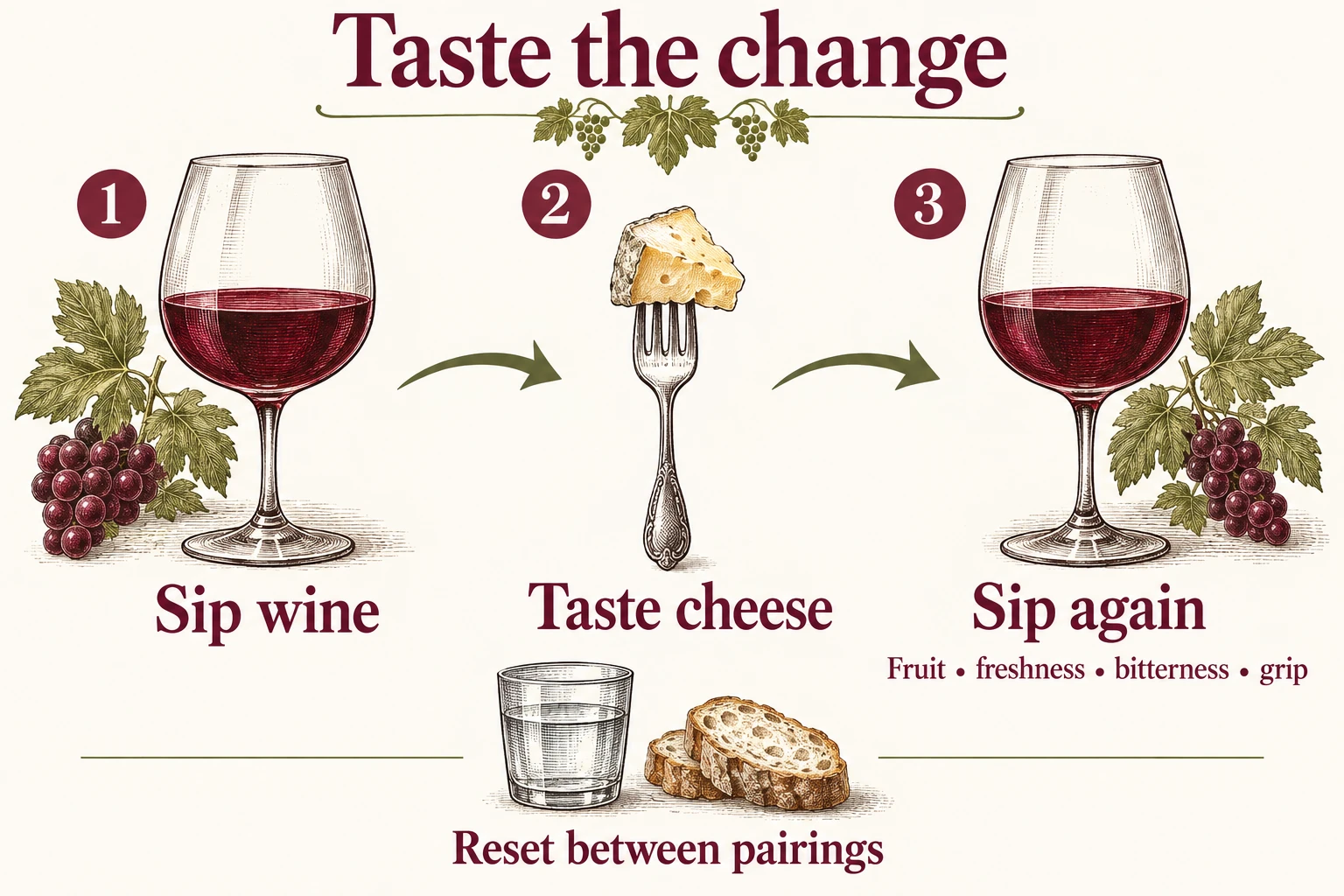
Read the illustration
Taste wine, take a bite of cheese, then taste the same wine again. Notice changes in fruit, freshness, bitterness and drying grip; use water and plain bread between pairings.
- Bring cheese out before serving. Very cold cheese hides aroma and texture. Exact timing depends on cheese type and room conditions; avoid leaving perishable food in unsafe conditions.
- Keep wine temperature appropriate. Whites and sparkling wines should be cool rather than numbingly cold; lighter reds often benefit from a slight chill.
- Pour small amounts. Several pairings become tiring if every pour is full-sized.
- Taste wine, then cheese, then wine again. Notice what changes: fruit, acidity, bitterness, astringency, salt, creaminess, and finish.
- Move from mild to strong. Save blue, pungent washed rind, and sweet fortified wine for later.
- Provide water and plain bread. Palate fatigue is real, and hydration matters.
- Write down surprises. Preference is valid evidence for your next board.
Research using temporal sensory methods adds a useful caution to static pairing charts. In a study summarized by INRAE and NPR, cheese often changed how participants perceived and liked the wines, while the wine had less effect on liking the cheese. Dry white wines performed reliably across several cheeses, though results varied by wine and cheese. That does not prove white is always better; it supports testing pairings over several alternating bites and sips rather than judging from one isolated taste.
Common wine-and-cheese pairing mistakes
“Red wine always goes with cheese”
Some reds are excellent with cheese. The error is treating tannin as a universal answer to fat. Fresh whites, sparkling wine, rosé, and sweet wine often handle mixed boards, fresh cheese, and blue cheese more gracefully.
Matching only by color
White cheese does not always require white wine, and orange cheese does not require red. Texture, age, salt, and aromatic strength contain more information than color.
Making every element intense
Powerful wine, blue cheese, spicy chutney, smoked meat, and candied nuts can create noise rather than complexity. Give one or two elements the lead.
Serving cheese directly from the refrigerator
Cold suppresses aroma and firms texture. Allow an appropriate tempering period while maintaining safe handling.
Letting the accompaniments sabotage the wine
Sweet jam, chile honey, pickles, and strongly flavored crackers can reverse a pairing. Taste them with the wine before presenting the board.
Treating the chart as a scorecard
Charts generate useful first pours. They do not invalidate the combination your table prefers.
Questions people ask
What wine goes best with cheese?
For a mixed board, sparkling wine, Riesling, Chenin Blanc, or another fresh white is often the safest answer. For one cheese, match its style: Sauvignon Blanc with goat cheese, sparkling or Chardonnay with Brie, mature red or structured white with aged hard cheese, and sweet wine with blue.
Is red or white wine better with cheese?
White wine is often more flexible because acidity refreshes and there is no tannin to clash with tangy or creamy cheese. Red wine can be excellent with aged, firm, nutty cheeses when its fruit and structure match their intensity. Neither color wins every pairing.
What cheese goes with Malbec?
Aged Cheddar, Manchego, Gouda, or another savory semi-firm to firm cheese can suit a fruit-led Malbec. A heavily oaked or firmly tannic Malbec may need a more concentrated cheese than a fresh, unoaked example. Verify the wine style first.
What cheese goes with Chardonnay?
Brie, Camembert, triple cream, Fontina, Gruyère, and Comté are useful options. Fresh unoaked Chardonnay can suit lighter cheeses, while a richer barrel-influenced style can handle more cream and nuttiness.
What wine goes with Brie?
Sparkling wine is the classic contrast. Chardonnay and Chenin Blanc can also work, especially when the wine has enough acidity. A light Pinot Noir may suit a mushroomy Brie, but a firm young red can overwhelm it.
What wine goes with blue cheese?
Sweet wines such as Port, Sauternes-style botrytized wine, late-harvest wine, or sweet Riesling are classic. Sweetness balances salt and pungency. A dry tannic red is a riskier default.
What is the best wine for a cheese board?
Choose brut sparkling wine for the widest dry-wine coverage, or an off-dry Riesling when the board includes blue, washed rind, fruit, or chutney. If the board is mostly aged firm cheese, a mature red becomes more plausible.
Related guides
- How to choose a smooth red wine
- Best wine with turkey
- Recommended Chardonnay styles
- What wine texture means
- How to choose a red blend
- Acidity definition
- Tannin definition
Sources
- INRAE, sensory analysis for pairing wine and cheese, for the temporal sensory research and its limits.
- NPR, white wine and cheese sensory study, for the consumer-facing account of the same research.
- Wine Folly, twelve classic wine and cheese pairings, for examples of traditional pairings.
- Atelier du Vin, pairing wines with cheese, for the traditional-red-versus-modern-flexibility framing.