Wine basics
How to Choose a Smooth Red Wine: Tannin, Body, Oak, and Style
Smooth is a texture judgment, not a grape, region, price tier, or synonym for sweet. Here is how to translate the word into a bottle you will actually enjoy.
The short answer: To choose a smooth red wine, look for ripe, moderate or low tannin; generous fruit; balanced acidity; and alcohol that does not feel hot. Merlot, Grenache, Gamay, Pinot Noir, Valpolicella, and fruit-led Malbec can all produce approachable examples, but the grape name is only a clue. Region, ripeness, extraction, oak, bottle age, serving temperature, and your own sensitivity to bitterness and dryness decide whether the wine actually feels smooth.
What does “smooth red wine” actually mean?
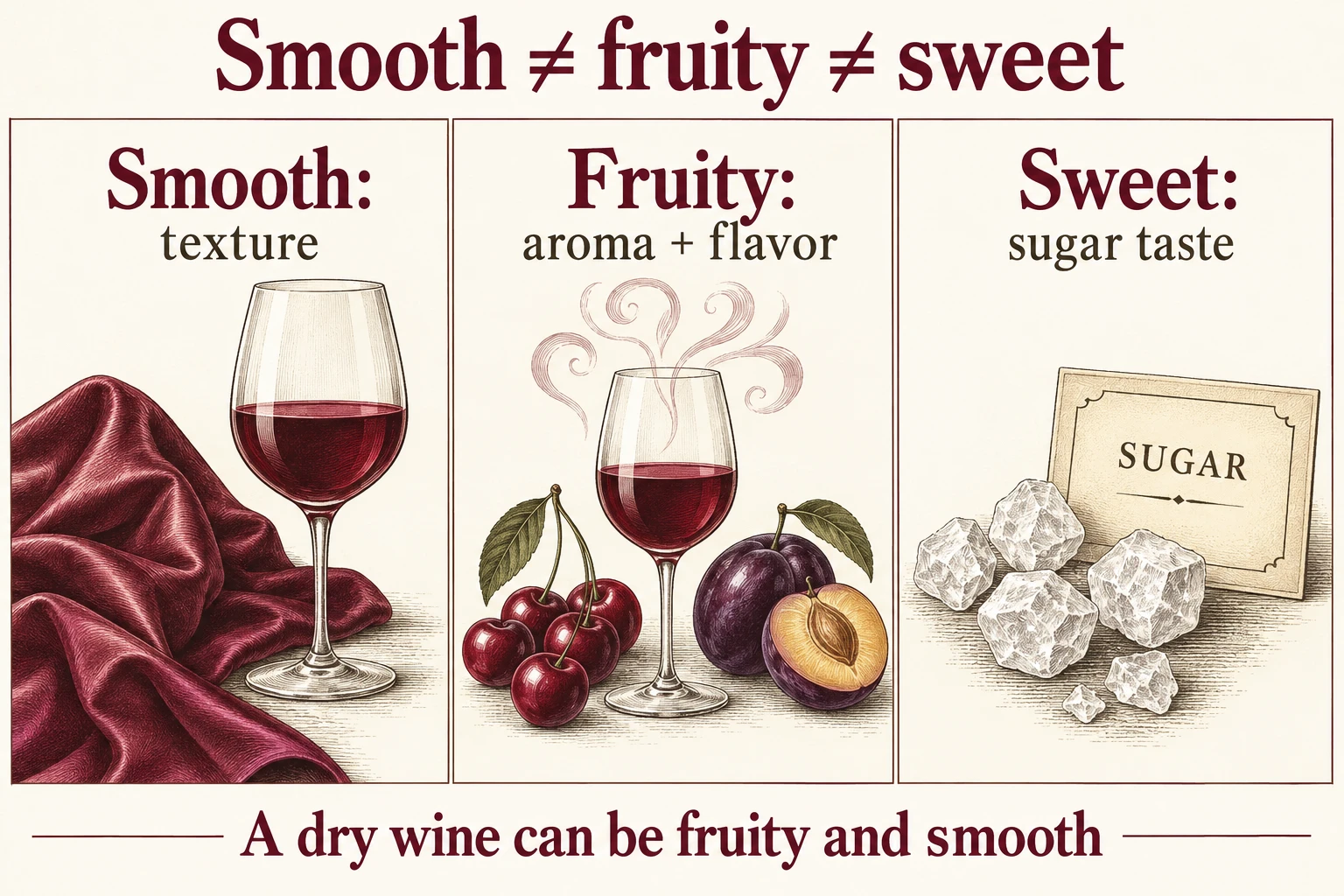
Read the illustration
Smooth describes texture; fruity describes aroma and flavor; sweet refers to sugar taste. A wine may feel smooth and smell fruity while remaining dry. These are separate questions, not interchangeable categories.
“Smooth” is everyday tasting language. It usually means the wine feels easy to drink: the drying grip is gentle, the acidity is not sharp, the alcohol does not burn, and no single element sticks out awkwardly. A smooth wine can still be full-bodied, completely dry, complex, or capable of aging. It simply feels integrated to the person drinking it.
That last phrase matters. One drinker may call a plush, warm Grenache smooth because its tannins feel soft. Another may find the same wine heavy because of its alcohol. Someone sensitive to acidity may prefer round Merlot, while someone sensitive to tannin may find high-acid Gamay far easier. “Smooth” describes a relationship between the wine and the palate, not a laboratory category.
It also does not automatically mean:
- Sweet. Ripe cherry, plum, vanilla, or jam aromas can suggest sweetness even when the wine is technically dry. See the distinction between dry wine and residual sugar.
- Low quality or simple. Fine red wine can feel polished and seamless, while an inexpensive bottle can feel rough or hot.
- Low acid. Acidity can keep a red fresh and food-friendly. Smoothness comes from balance, not from removing freshness.
- Heavily oaked. Oak can add vanilla, toast, spice, and texture, but conspicuous new oak can also make a wine feel more drying or bitter.
- A particular grape. Every major red variety can be made in more than one style.
If texture is the confusing part, start with the broader guide to what wine texture means and return to this page with your preferred sensations in mind.
The five signals behind a smooth red
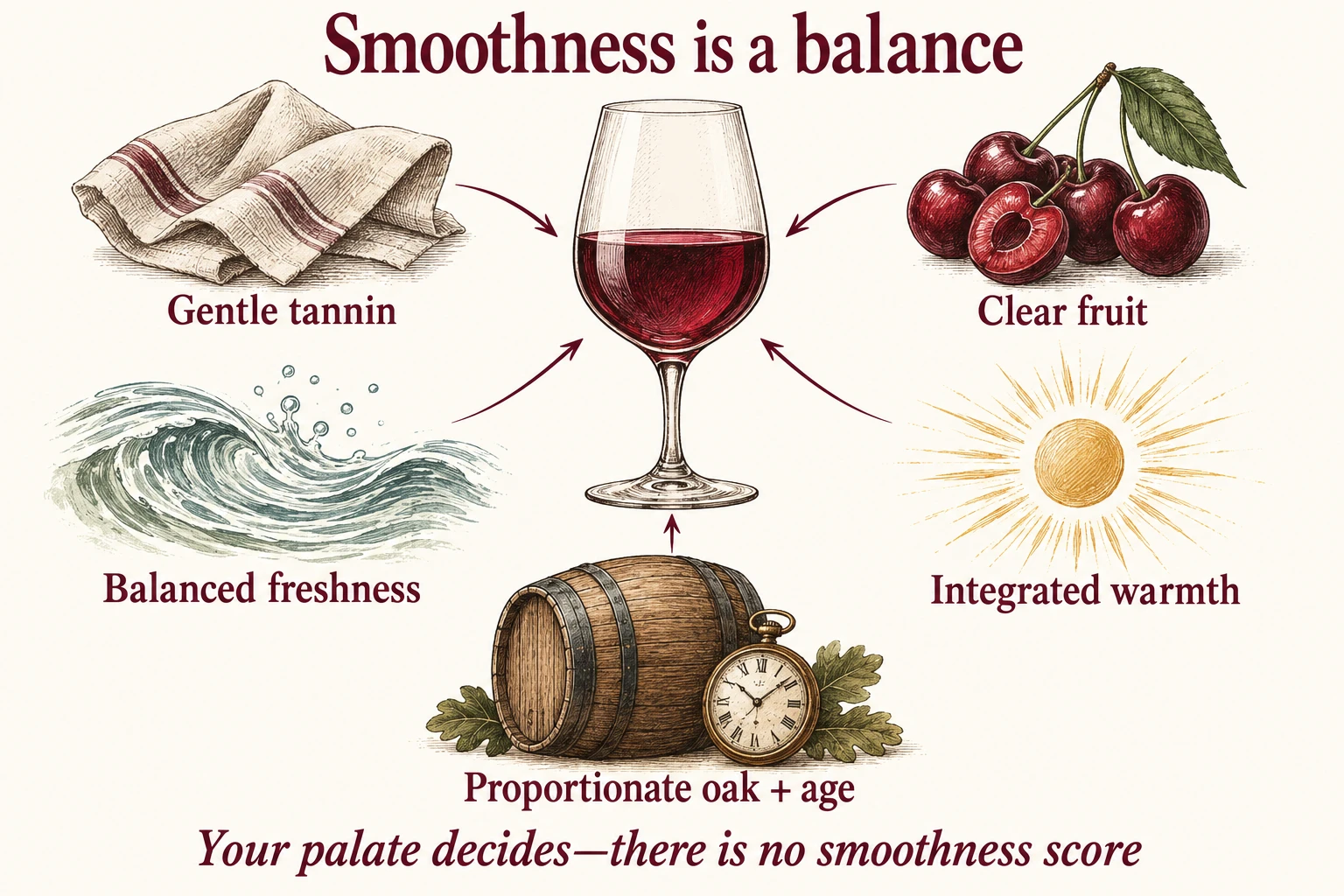
Read the illustration
Gentle tannin, clear fruit, balanced freshness, integrated alcohol warmth, and proportionate oak or age can contribute to a smooth impression. The balance and the drinker matter more than a single grape, price, or score.
| Signal | What to look for | What can make the wine feel less smooth |
|---|---|---|
| Tannin | Soft, supple, fine-grained, silky, polished, or integrated structure | Firm, grippy, chewy, rustic, drying, youthful, or highly extracted tannin |
| Fruit | Clear plum, cherry, strawberry, raspberry, or blackberry character | Thin fruit beneath prominent oak, alcohol, bitterness, or underripeness |
| Acidity | Enough freshness to keep the wine lively and balanced | Sharpness when fruit is slight, or flatness when acidity is too low for the wine’s weight |
| Alcohol | Warmth that supports body without dominating the finish | A hot or burning finish, especially when the wine is served warm |
| Oak and age | Subtle oak and/or bottle age that has integrated with the fruit | Strong new-oak flavor, drying wood tannin, or tired fruit in an old bottle |
1. Tannin is the first texture check
Tannin contributes the drying, gripping sensation that can remind people of over-steeped tea. It comes mainly from grape skins, seeds, stems, and oak. Tannin is not bad; it gives red wine shape and can support aging. But if your definition of smooth is “not mouth-drying,” low-to-moderate or well-integrated tannin should be your first filter.
Words such as silky, supple, velvety, rounded, and fine-grained suggest a gentler texture. Words such as firm, muscular, chewy, grippy, and built to age suggest more structure. Neither vocabulary guarantees quality. It tells you what kind of experience the writer is trying to describe.
2. Fruit needs to remain visible
Fruit does not have to be sweet. It needs to be present enough that tannin, acidity, alcohol, and oak do not feel exposed. Ripe plum and cherry can make Merlot feel round; strawberry and raspberry can make Grenache feel generous; bright cherry can make Gamay feel juicy. When fruit is faint and everything else is loud, the wine may feel severe even if its measured tannin is not unusually high.
3. Acidity should refresh, not jab
Acidity makes wine lively and helps it work with food. A smooth red is not necessarily low in acidity; it is one in which freshness and fruit feel proportional. Pinot Noir, Gamay, and Valpolicella can be light and high in acidity yet still feel graceful. A heavy red with too little freshness may feel soft for the first sip but tiring over a whole meal.
4. Alcohol changes texture and temperature sensitivity
Alcohol can add body and a sense of sweetness or warmth. Too much warmth can read as roughness. A wine served in a hot room will often show more alcohol and less freshness than the same bottle served slightly cool. Do not treat the printed alcohol percentage as a verdict, but use it as one clue when you already know that warm, powerful reds are uncomfortable for you.
5. Oak and bottle age can soften—or dominate
Time in barrel can expose wine to small amounts of oxygen and can help its components knit together. Oak can also add tannin and strong vanilla, toast, smoke, cedar, or coconut flavors. Bottle age may soften youthful structure, but age cannot rescue an unbalanced wine, and older is not automatically smoother. Read the producer’s actual maturation statement instead of treating “Reserva” or an expensive price as proof.
Smooth red-wine styles to start with
The styles below are starting zones, not guarantees. Producer, region, vintage, and winemaking remain decisive.
| Style | Why it may feel approachable | Verify before buying | Useful food direction |
|---|---|---|---|
| Merlot | Plum and cherry fruit with a frequently rounded, medium-bodied shape | Some examples are structured, oak-forward, or blended with firmer grapes | Roast chicken, burgers, mushrooms, meatballs |
| Grenache / Garnacha | Ripe red fruit, spice, and often supple tannin | Warm-region examples may carry noticeable alcohol | Grilled vegetables, pork, lamb, burgers |
| Gamay / Beaujolais | Bright red fruit, light body, modest tannin, and high drinkability | Cru Beaujolais can have more structure than basic examples | Turkey, chicken, charcuterie, soft cheese |
| Pinot Noir | Light-to-medium body, red fruit, and often a silky texture | Origin and oak can change price, ripeness, and structure dramatically | Roast poultry, mushrooms, salmon, mild cheese |
| Valpolicella | Tart cherry, freshness, and usually modest weight | Ripasso and Amarone are richer categories with different texture and alcohol | Pizza, tomato pasta, antipasti |
| Fruit-led Malbec | Plum, violet, and dark fruit can create a plush impression | Malbec ranges from fresh and unoaked to concentrated and oak-matured | Burgers, roast meats, savory stews |
| Soft red blends | Blending can combine fruit, freshness, and structure into a balanced whole | “Red blend” says nothing by itself about sweetness, grapes, or oak | Follow the actual blend and producer notes |
If Malbec is your starting point, use the Malbec guide rather than assuming all Argentine examples are identical. The comparison of Malbec and Merlot is especially useful if your goal is to decide between dark-fruited power and a rounder familiar profile. For blends, see the red-blend buying guide.
How to read a label or shelf card
The front label rarely says “this will feel smooth to you.” Build the answer from several imperfect clues.
Start with style words, not prestige words
Look for soft, supple, juicy, fruit-forward, round, silky, easy-drinking, or ready to drink. Be more cautious with powerful, structured, extracted, firm, massive, long-lived, or needs time if you want a bottle for tonight with minimal grip.
“Premium,” “reserve,” “old vine,” and a heavy bottle are not texture measurements. They may tell you about marketing, regulation, farming, or production cost; they do not settle whether you will enjoy the mouthfeel.
Separate fruit language from sugar
A description of blackberry jam, sweet spice, vanilla, or ripe plum can refer to aroma and flavor rather than sugar. If you want an actually sweet red, look for an explicit sweetness category or residual-sugar information. If you want dry wine that merely feels generous and fruity, do not reject it because the notes sound sweet.
Ask one precise question
In a shop or restaurant, “What is your smoothest red?” can work, but a more specific request works better:
“I want a dry red with soft tannins, obvious fruit, and no hot or heavily oaked finish. What would you choose under my budget?”
That sentence gives the seller four useful filters: dryness, tannin, fruit, and oak/alcohol impact. Add the food and price ceiling, and the recommendation becomes far more useful.
Choose smooth wine for a beginner
For a new red-wine drinker, begin with contrast rather than theory. Taste two modest pours side by side: perhaps Gamay beside Cabernet Sauvignon, or Merlot beside a firmer young red. Notice where your gums feel dry, where the fruit sits, and whether the finish feels warm. The goal is not to identify the grapes blind. It is to learn what you mean by “smooth.”
A beginner-friendly sequence is:
- Start lighter: Gamay, Pinot Noir, or Valpolicella.
- Move rounder: Merlot or Grenache.
- Try fruit-led Malbec: compare an unoaked or gently oaked example with a more structured version.
- Add structure deliberately: Cabernet Sauvignon, Syrah, Nebbiolo, or another firmer style once you know whether tannin is enjoyable.
Price the experiment reasonably. An expensive bottle is poor teaching material if everyone is afraid to say they dislike it.
If the wine does not taste smooth
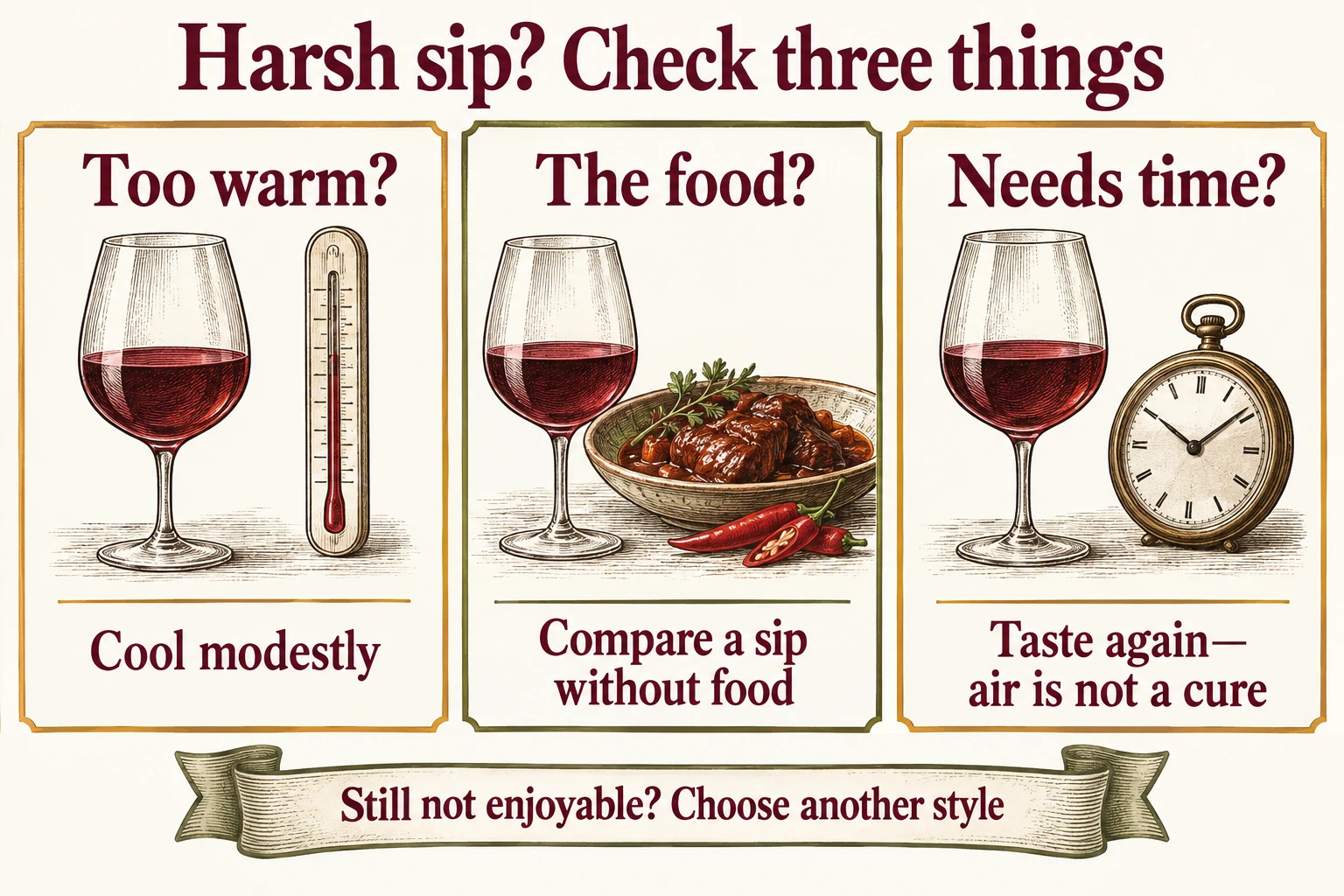
Read the illustration
If a red feels harsh, check whether it is too warm, compare it with and without the food, and taste again after a little time in the glass. Air may help some wines but can tire others; the style may simply not suit you.
Before deciding that the bottle is bad, check the conditions.
It may be too warm
Warm red wine shows alcohol more readily and can feel heavy. Cool the bottle briefly, then taste again. “Room temperature” was never meant to describe a modern kitchen in summer. A light red can be especially refreshing with a modest chill, though over-chilling can mute aroma and make tannin seem firmer.
It may need air—but not always
A young, structured wine may become more expressive after time in the glass or a decanter. Taste first, wait, and compare. Decanting is not a universal smoothing machine: delicate older wines can fade, and an already open fruit-led red may gain little.
The food may be making it harsher
Chile heat can emphasize alcohol and drying sensations. A sweet glaze can make a dry wine seem harder and less fruity. Umami-rich foods can alter how fruit, bitterness, and astringency are perceived. If the wine tastes smooth alone and severe after a bite, change the pairing rather than blaming the bottle.
It may simply be the wrong style for you
There is no prize for forcing yourself to enjoy a texture you dislike. Use the remaining wine in an appropriate recipe only if it is sound and suitable for cooking, share it with someone who enjoys the style, or return to a grape and producer you trust.
Food pairings for smooth red wine
Smooth reds are flexible because they add fruit and savory depth without demanding that every plate be very rich.
| Dish | Smooth-red direction | Why |
|---|---|---|
| Roast chicken | Pinot Noir, Merlot, or Gamay | Moderate weight stays proportionate to the meat |
| Turkey dinner | Gamay, Pinot Noir, or Grenache | Freshness and gentle tannin can handle several sides |
| Classic burger | Merlot, Grenache, fruit-led Malbec | Fruit and moderate structure meet browning and fat |
| Pork tenderloin | Pinot Noir, Grenache, or soft Merlot | The wine does not overwhelm the lean cut |
| Mushroom dishes | Pinot Noir or mature Merlot | Earthy and savory cues can echo the dish |
| Tomato pasta or pizza | Valpolicella or fresh Sangiovese | Acidity and red fruit meet tomato’s sharpness |
| Cheese board | Gamay or a supple red only when the cheeses suit it | Many mixed boards are easier with white or sparkling wine |
Use the dedicated guides when the plate is known: wine with burgers, wine with chicken, wine with turkey, wine and cheese pairings, and wine with pork tenderloin.
A 60-second smooth-red-wine checklist
Before you buy, ask:
- Do I mean low tannin, low acidity, low alcohol heat, or all three?
- Is the wine described as supple and fruit-led, or firm and built to age?
- Is the apparent sweetness real sugar or only ripe-fruit and oak language?
- Does the producer explain oak treatment and maturation?
- Will the food add sweetness, chile, smoke, salt, or umami?
- Can I serve the wine slightly cool and give it a fair glass?
- Am I choosing for my own palate instead of a prestige cue?
If you can answer those questions, “smooth” stops being vague and becomes a usable buying brief.
Questions people ask
What is the smoothest type of red wine?
There is no universal winner. Merlot, Grenache, Gamay, Pinot Noir, Valpolicella, and fruit-led Malbec are useful starting points because many examples emphasize fruit and moderate or gentle tannin. The producer and winemaking style matter as much as the grape.
Is smooth red wine sweet?
Not necessarily. Most familiar table reds are dry. Ripe fruit, vanilla, alcohol, and a full body can create a sweet impression even when little residual sugar remains. Look for an explicit sweetness statement if sugar level matters.
Is Merlot smoother than Malbec?
Merlot is often described as round and plush, while Malbec can bring darker fruit and more structure. Either can be smoother depending on site, ripeness, extraction, oak, age, and serving conditions. Compare the actual bottles rather than treating the grape names as guarantees.
Does expensive red wine taste smoother?
Price does not guarantee softness. Cost can reflect vineyard work, scarcity, oak, aging, reputation, taxes, and distribution. Some expensive wines are deliberately firm when young; some affordable wines are made for immediate, fruit-led drinking.
Should smooth red wine be chilled?
Light and fruit-led reds often benefit from being served slightly cool. Cooling can reduce the impression of alcohol and emphasize freshness, while excessive chilling can mute aroma and make tannin seem firmer. Adjust in small steps.
Does decanting make red wine smoother?
Sometimes. Air can help a young structured wine open, but it cannot correct every imbalance and may tire a delicate older wine. Taste a sample first, then decide whether time in a glass or decanter improves it.
Related guides
- What wine texture means
- The complete Malbec guide
- Malbec versus Pinot Noir
- Malbec versus Merlot
- How to choose a red blend
- Tannin definition
- Acidity definition
- Residual sugar definition
Sources
- The Wine Society, guide to smooth red wines, for its discussion of tannin, oak, and familiar smooth-red styles.
- The Wine Society, guide to soft red wines, for the light-bodied, aromatic route.
- The Wine Collective, red wine for beginners, for beginner selection and serving cues.
- WSJ Wine, guide to dry red wine, for separating dryness, body, and tannin.