Pairing guide
Best Wine With Turkey: Match the Preparation, Sides, and Sauce
Turkey is mild enough for white, red, rosé, sparkling, and skin-contact wine. The full holiday plate—not the bird alone—decides which one belongs at the table.
The short answer: The best wine with turkey usually has bright acidity, enough fruit for the sides, and no more tannin or oak than the plate can absorb. For a classic roast turkey dinner, start with Pinot Noir, Gamay/Beaujolais, fuller Chardonnay, dry or off-dry Riesling, Chenin Blanc, dry rosé, or sparkling wine. Smoked turkey can take more savory weight; fried turkey favors freshness and bubbles; chile, cranberry, and sweet glazes can make an off-dry or fruit-forward wine the better choice.
The complete-plate rule
Turkey breast is lean and mild. Dark meat is richer and more savory. Crisp skin adds salt and browned flavor. Gravy adds fat, stock, and umami. Stuffing may bring herbs, sausage, mushrooms, oysters, fruit, or cornbread. Cranberry sauce adds acidity and usually sweetness. Sweet potatoes, Brussels sprouts, green beans, and pie may all land near the same glass.
That is why there is no single technically perfect “turkey wine.” A successful holiday bottle has to move across the plate without becoming thin beside gravy, bitter beside sweet food, hot beside chile, or drying after several salty bites. Versatility matters more than prestige.
Use four questions:
- How was the turkey cooked? Roasting, smoking, frying, and glazing create different weight and flavor.
- What is the loudest side? Cranberry, sausage stuffing, mushroom gravy, and chile can each redirect the pairing.
- Do you want contrast or echo? Fresh wine can reset a rich bite; a savory wine can echo herbs and browning.
- Who is drinking? A crowd with mixed preferences may be happier with two flexible wines than one ambitious bottle.
Turkey preparation matrix
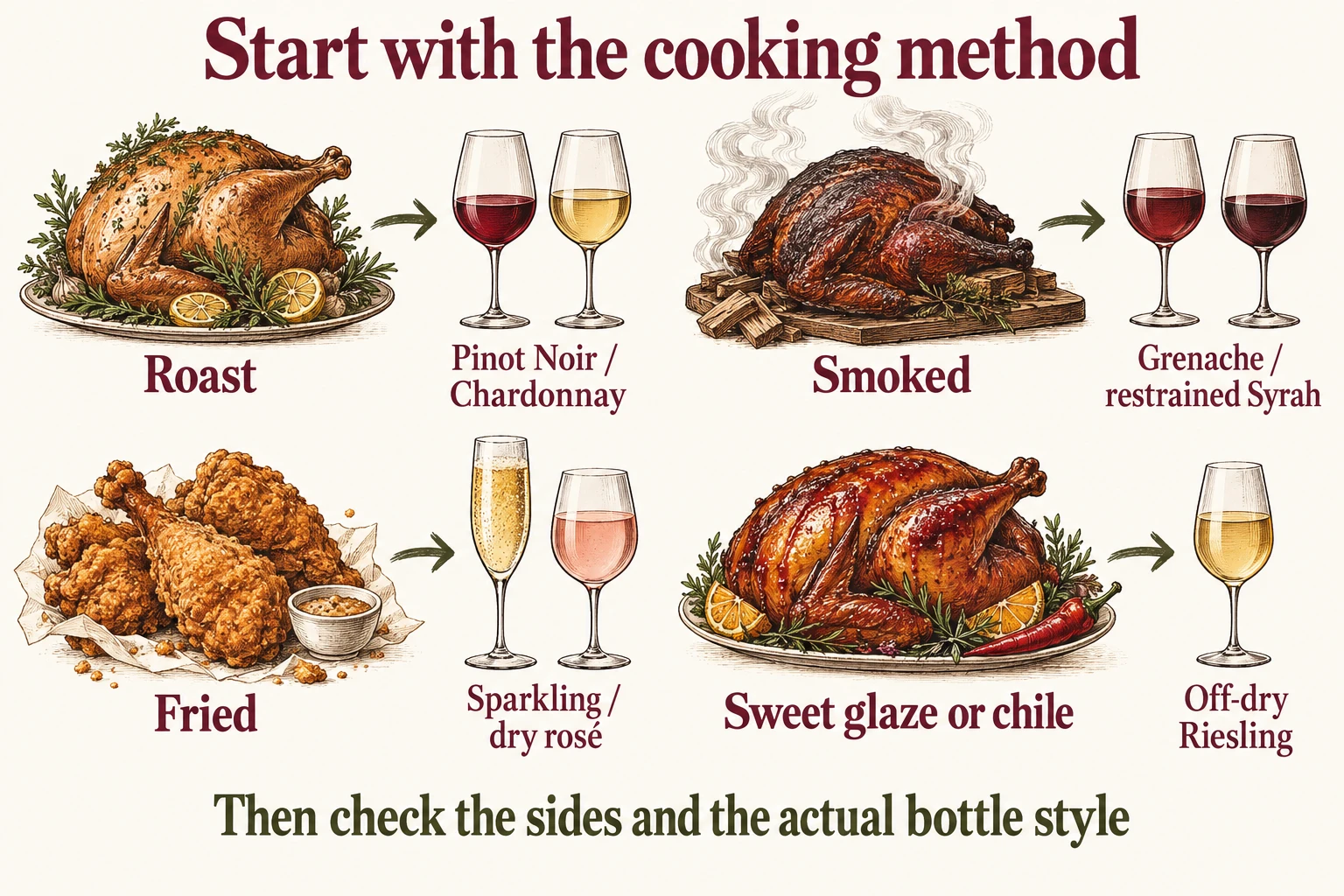
Read the illustration
Roast turkey points to Pinot Noir or Chardonnay; smoked turkey to Grenache or restrained Syrah; fried turkey to sparkling wine or dry rosé; sweet glaze or chile to off-dry Riesling. These are starting styles, not guaranteed matches.
| Turkey preparation | Start with | Why it works | Change direction when… |
|---|---|---|---|
| Classic herb-roasted turkey | Pinot Noir, Gamay, Chardonnay, Chenin Blanc | Moderate weight and freshness fit breast, dark meat, herbs, and gravy | Cranberry or sweet sides dominate; consider off-dry Riesling or rosé |
| Dry-brined or heavily seasoned roast | Chardonnay, dry Riesling, Grenache, Pinot Noir | Fruit and acidity remain visible beside salt and herbs | The seasoning is chile-hot; lower alcohol and tannin impact |
| Smoked turkey | Syrah with restraint, Grenache blend, mature Rioja, richer Chardonnay | Smoke and dark meat can support savory depth | Sweet barbecue glaze dominates; move fruitier or slightly off-dry |
| Deep-fried turkey | Sparkling wine, high-acid Chardonnay, dry rosé | Freshness and bubbles contrast with crisp skin and frying richness | A hot spice rub leads; consider off-dry Riesling or aromatic white |
| Cajun or chile-spiced turkey | Off-dry Riesling, Gewürztraminer, fruity rosé | Aromatic fruit and modest sweetness can feel calmer beside heat | The spice is aromatic but not hot; a dry wine may still work |
| Maple, honey, or fruit-glazed turkey | Off-dry Riesling, Chenin Blanc, fruit-led Grenache | Fruit and possible sweetness keep the wine from seeming austere | The glaze is barely sweet; return to a fresh dry style |
| Turkey roulade or stuffed breast | Match the stuffing: Chardonnay for creamy/herbal; Pinot for mushrooms; Riesling for fruit | The filling contributes more flavor than the lean breast | A rich sauce adds another dominant signal |
| Cold turkey and leftovers | Gamay, Pinot Noir, dry rosé, sparkling wine | Lighter, refreshing styles suit sandwiches and chilled meat | Barbecue sauce, curry, or chile turns leftovers into a new dish |
The table gives wine styles, not guaranteed bottles. “Chardonnay” can mean lean and mineral or rich and oak-shaped. Pinot Noir can be delicate or ripe. Riesling spans bone-dry to sweet. Confirm the actual style before buying.
White, red, rosé, or sparkling?
White wine: often the broadest route
White wine is not merely a choice for turkey breast. A fuller white can meet gravy and stuffing while maintaining freshness across the plate.
Chardonnay works best when its weight fits the meal. A fresh unoaked style can suit simple roast turkey, herbs, and lighter gravy. A richer, barrel-fermented or bottle-aged style can stand beside cream, butter, bread sauce, and deeply roasted flavors. Heavy new oak can feel disconnected when cranberry, chile, or sharp green vegetables lead. The Chardonnay guide helps separate the styles.
Riesling is valuable because it covers dry and off-dry expressions. Dry Riesling can feel precise with herbs, turkey breast, and fresh sides. Off-dry Riesling becomes especially useful when the plate contains cranberry sauce, sweet potatoes, chile, or a sweet glaze. Do not assume sweetness; verify it.
Chenin Blanc can bring acidity, texture, orchard fruit, and varying degrees of sweetness. A dry or just-off-dry example can bridge turkey, stuffing, squash, and fruit-based sides.
Pinot Gris, Pinot Grigio, Sauvignon Blanc, and white Rhône blends can also work, but each needs context. Light Pinot Grigio may be lost beside heavy gravy. Highly herbaceous Sauvignon Blanc can be excellent with green herbs and vegetables but less natural with a sweet, creamy plate. Roussanne- or Viognier-led blends can offer texture and aromatic breadth for richer preparations.
Red wine: keep tannin in proportion
The most reliable red wines with turkey tend to be light to medium in body, fruit-present, and modest in tannic grip.
Pinot Noir is a classic because its red fruit, acidity, and moderate weight can connect roast meat, herbs, mushrooms, and cranberry without overpowering breast meat. It is not automatic: a very delicate Pinot may disappear beside sausage stuffing, while a heavily oaked example may feel hard next to sweet sides.
Gamay and Beaujolais are among the most flexible crowd bottles. Bright fruit, freshness, and typically gentle tannin make them useful across turkey, stuffing, cranberry, and leftovers. Cru Beaujolais can bring more depth while remaining agile.
Grenache and Grenache-led blends offer ripe red fruit and spice. They can suit roast or smoked turkey, especially with rosemary, sage, and browned vegetables. Watch alcohol warmth when chile is present or the dining room is hot.
Mature Rioja, Nebbiolo, or Bordeaux can work when bottle age has softened the structure and the meal is savory and substantial. These are selective choices, not universal upgrades. A young tannic bottle is more likely to dominate turkey than improve it.
If you are choosing between common reds, the comparison of Malbec and Pinot Noir explains why Pinot is usually the lighter turkey route. A supple Malbec may suit smoked dark meat, but turkey does not automatically need a powerful red.
Rosé: the bridge people overlook
Dry rosé can carry red-fruit flavor without the tannic weight of many reds. It is useful for herb-roasted turkey, outdoor celebrations, salty sides, and leftovers. A pale, delicate rosé suits a lighter plate; a darker, more structured rosé can meet gravy, sausage, and roast flavors.
Sparkling wine: not just for the toast
Sparkling wine can remain at the table. Acidity and carbonation provide contrast to fried skin, butter, gravy, and salty appetizers. Brut styles work broadly, while a slightly sweeter sparkling wine may be better when cranberry and sweet sides dominate. Sparkling rosé can bridge fruit, richness, and festive mood in one bottle.
Skin-contact and orange wine: an adventurous middle
Skin-contact white wine can bring the aroma and freshness of a white with some tannic texture and savory depth. That can work with herbs, stuffing, and roasted vegetables. Styles vary dramatically, so it is a poor category to buy blind for a large group. Ask how tannic, oxidative, or funky the particular bottle tastes.
How the sides change the wine
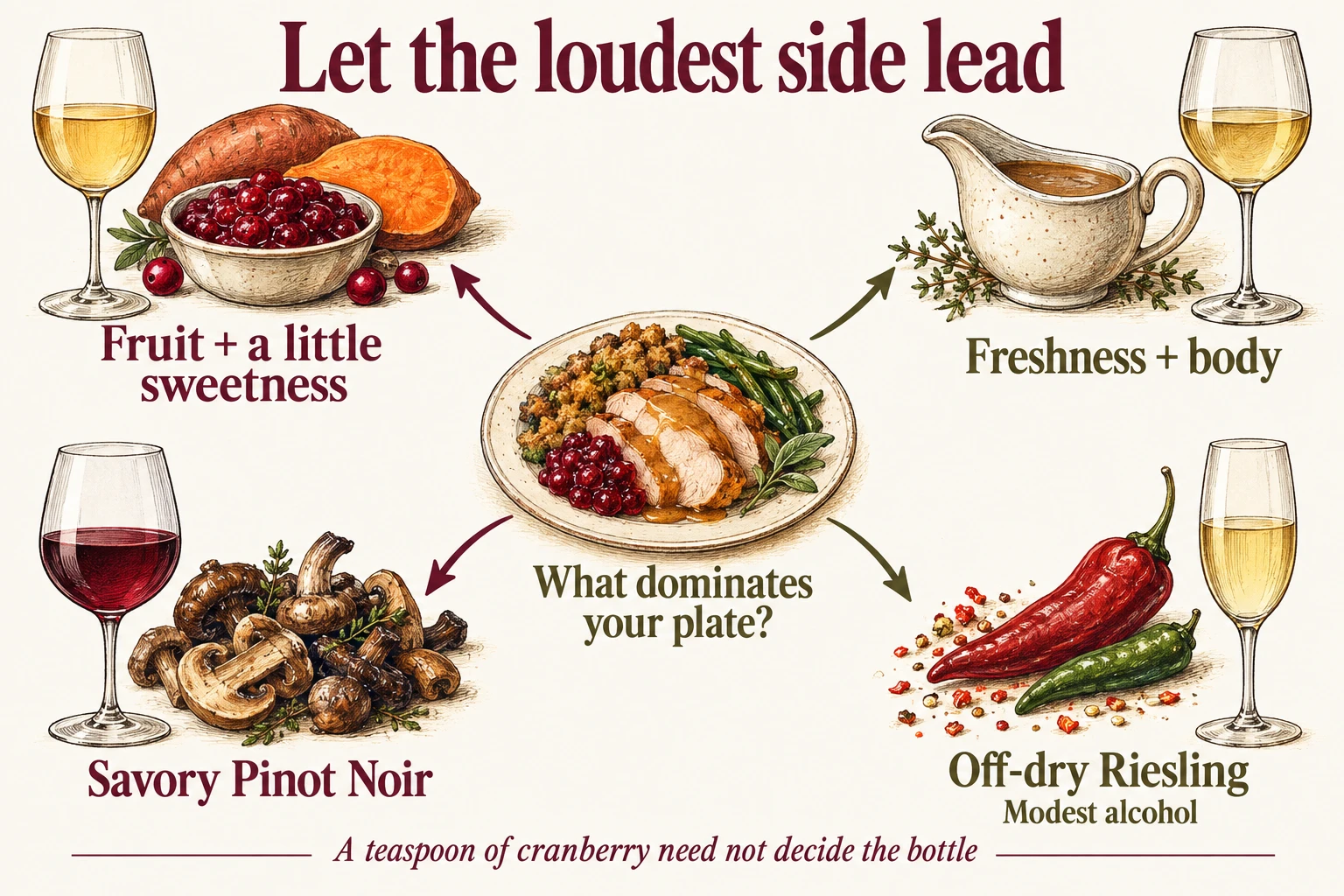
Read the illustration
Cranberry and sweet potatoes suggest fruit or a little sweetness; creamy gravy suggests freshness with enough body; mushrooms suggest a savory Pinot Noir; chile suggests off-dry Riesling with modest alcohol. Match the dominant flavor, not every garnish.
Cranberry sauce
Cranberry contributes sharp fruit and, in most recipes, sugar. It can make a dry, firm wine seem less fruity. Choose a red with generous fruit, a rosé, or a white with a small amount of residual sugar. If cranberry is only a teaspoon on the edge of the plate, it should not control the whole bottle choice.
Gravy
Gravy raises richness and savory intensity. Fuller Chardonnay, Pinot Noir, mature Rioja, or a textured Chenin can stay present. Mushroom gravy pushes the match toward earthy Pinot Noir or another savory medium-bodied red; peppery gravy can support a wine with spice, provided alcohol and tannin remain proportionate.
Stuffing or dressing
- Herb and bread stuffing: Chardonnay, Pinot Noir, Gamay, Grenache.
- Sausage stuffing: a more substantial Pinot, Grenache blend, Syrah with restraint, or richer white.
- Mushroom stuffing: Pinot Noir, mature savory red, or textured Chardonnay.
- Cornbread stuffing: Chenin Blanc, Chardonnay, Gamay, or fruit-led Grenache.
- Fruit and nut stuffing: off-dry Riesling, Chenin Blanc, or fruit-forward red with modest tannin.
- Oyster stuffing: sparkling wine, Chardonnay, or a saline, high-acid white.
Sweet potatoes, squash, and maple-glazed vegetables
Actual sweetness raises the difficulty for dry tannic reds. Choose a fruit-present style, and consider a small amount of wine sweetness if these sides occupy much of the plate. Baking spice can connect with Grenache, Gewürztraminer, or gently oak-influenced Chardonnay, but sweetness still has the final vote.
Brussels sprouts, green beans, and bitter greens
Green and bitter flavors can make heavily oaked or tannic wine feel more severe. Fresh white wine, sparkling wine, rosé, Gamay, or light Pinot Noir is safer. Bacon, cream, or sweetness added to the vegetable changes the direction again.
Macaroni and cheese, mashed potatoes, and creamy casseroles
Creamy sides welcome freshness. Chardonnay is a familiar choice, but sparkling wine, Chenin Blanc, and dry rosé can be equally useful. Do not confuse “rich food” with “biggest wine”; contrast is often more refreshing over a long meal.
A one-bottle, two-bottle, or three-bottle plan
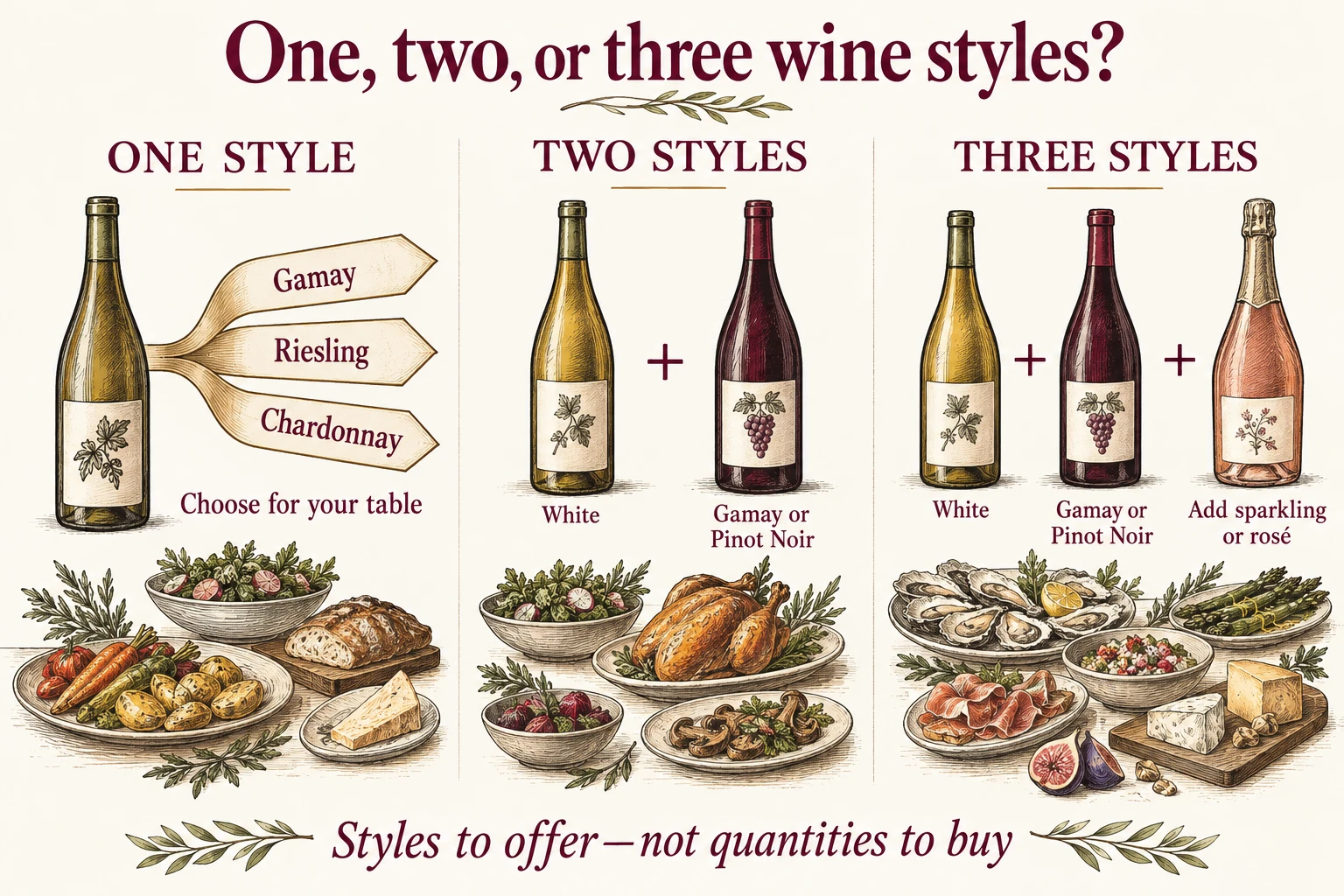
Read the illustration
One style: choose a versatile Gamay, Riesling, or Chardonnay to fit the meal. Two styles: pair a white with Gamay or Pinot Noir. Three styles: add sparkling wine or rosé. These are choices of style, not bottle quantities per guest.
If you want one bottle style
Choose Gamay/Beaujolais, Pinot Noir, dry-to-off-dry Riesling, or balanced Chardonnay based on your group. Gamay is the easiest red compromise; Riesling is the most adaptable when sweetness or spice is significant; Chardonnay is familiar and useful when the meal is creamy and savory.
One bottle cannot optimize every bite. The goal is to avoid a serious clash, not to win a pairing contest with eleven side dishes.
If you want two styles
Serve one white and one red:
- White: Chardonnay, Riesling, or Chenin Blanc.
- Red: Gamay or Pinot Noir.
This covers most preferences without creating a tasting exam at dinner. Put both on the table and let guests move between them.
If you want three styles
Add sparkling wine or rosé. Sparkling can begin with appetizers and remain for fried, salty, or creamy bites. Rosé can handle the middle ground and may become the surprise favorite.
Common turkey-pairing mistakes
Buying for the turkey and ignoring the table
The mild meat is rarely the hardest element. Inventory the sweet, spicy, creamy, bitter, smoky, and umami-rich components before shopping.
Choosing a young, highly tannic red because the meal is important
Prestige does not equal suitability. A structured young red may dominate breast meat and feel harder beside sweet sides. Save it for a dish with enough concentration and savory weight.
Serving every red too warm
A crowded holiday kitchen can become warm. Red wine left beside the stove may show more alcohol and less freshness. Keep lighter reds modestly cool and let them warm in the glass.
Assuming all Riesling is sweet or all Chardonnay is oaky
Both grapes cover wide stylistic ranges. Read the producer’s description and ask for the actual sweetness and maturation style.
Opening the rarest bottle for a distracted crowd
Holiday dinner is noisy, generous, and full of competing flavors. A versatile bottle with clear fruit may provide more pleasure than a subtle wine that needs quiet attention.
The final turkey-wine checklist
Before checkout, confirm:
- Roast, smoke, fry, glaze, or spice?
- Which side is sweetest?
- Is there chile heat?
- Is the gravy light, creamy, mushroom-heavy, or peppery?
- Does the wine have enough acidity for a long, rich meal?
- Is red-wine tannin modest enough for breast meat and sweet sides?
- Does the group prefer red, white, or a choice?
- Will you serve the bottle at a sensible temperature?
Questions people ask
What is the best red wine with turkey?
Pinot Noir and Gamay/Beaujolais are the most flexible starting points because they commonly combine red fruit, freshness, moderate body, and gentle tannin. Grenache can work with a richer roast or smoked preparation. Mature Rioja and other aged reds are selective options for a deeply savory meal.
What is the best white wine with turkey?
Balanced Chardonnay is the classic choice, especially with gravy and creamy sides. Dry or off-dry Riesling is more adaptable when cranberry, sweetness, or chile appears. Chenin Blanc is another flexible option because it can combine texture, acidity, and orchard fruit.
Does Malbec go with turkey?
It can, especially a fruit-led, supple style with smoked turkey, dark meat, or savory stuffing. A concentrated, high-alcohol, oak-heavy Malbec may overpower simple breast meat and feel harder beside cranberry or sweet potatoes. The actual style matters.
Is Pinot Noir or Chardonnay better with turkey?
Neither is universally better. Pinot Noir is excellent with roast flavors, mushrooms, herbs, and guests who prefer red. Chardonnay is excellent with breast meat, gravy, butter, cream, and guests who prefer white. Serving both is often the best holiday answer.
What wine goes with smoked turkey?
Try Grenache, restrained Syrah, mature Rioja, fuller Pinot Noir, or a textured Chardonnay. If the smoke comes with sweet barbecue sauce, move toward a fruitier red, rosé, or off-dry white.
What wine goes with fried turkey?
Sparkling wine, dry rosé, high-acid Chardonnay, or Riesling. Fried skin benefits from freshness and contrast. If the seasoning is hot, an off-dry aromatic white can feel more comfortable than a high-alcohol red.
What wine should I serve with turkey leftovers?
Match the new dish. Gamay, Pinot Noir, rosé, and sparkling wine work with simple cold turkey or sandwiches. Curry, barbecue sauce, cranberry relish, and chile turn the leftover into a different pairing problem.
Related guides
- What wine goes with chicken
- How to choose a smooth red wine
- Wine and cheese pairings
- Malbec versus Pinot Noir
- Recommended Chardonnay styles
- Best wine with pasta
Sources
- Decanter, wine with turkey, for its treatment of red, white, rosé, orange, and bottle-aged options.
- Cooking Chat, tested turkey wine pairings, for preparation- and testing-led variety.
- The Real Review, turkey and Pinot Noir, for the white-meat, dark-meat, and stuffing crossover.
- Nepenthe, Christmas dinner pairings, for a whole-menu rather than single-protein view.