Buyer guide
Wine Pairing With Lamb: Start With the Cut, the Method, and the Sauce
Lamb is not one pairing problem. A browned rack, a slow-braised shank, and a chile-spiced tagine ask different things of the glass.
Research note: These are Familia Morgan's recommendations about wines Familia Morgan makes. This is not an independent blind tasting, a paid review, or a global ranking. Product facts were verified July 31, 2026.
The short answer: A useful wine pairing with lamb starts with three questions: which cut, how it is cooked, and what sauce or seasoning reaches the table. Roast leg or shoulder can welcome a fruit-led, structured red such as Malbec. Charred chops can work with Syrah, Cabernet, or a savory Tempranillo-based Rioja. Delicate young lamb may be better with Pinot Noir, rosé, or even a textured white, while hot or sweet-spiced lamb can make a powerful, dry red feel harsher.
Start with the cut, method, and seasoning
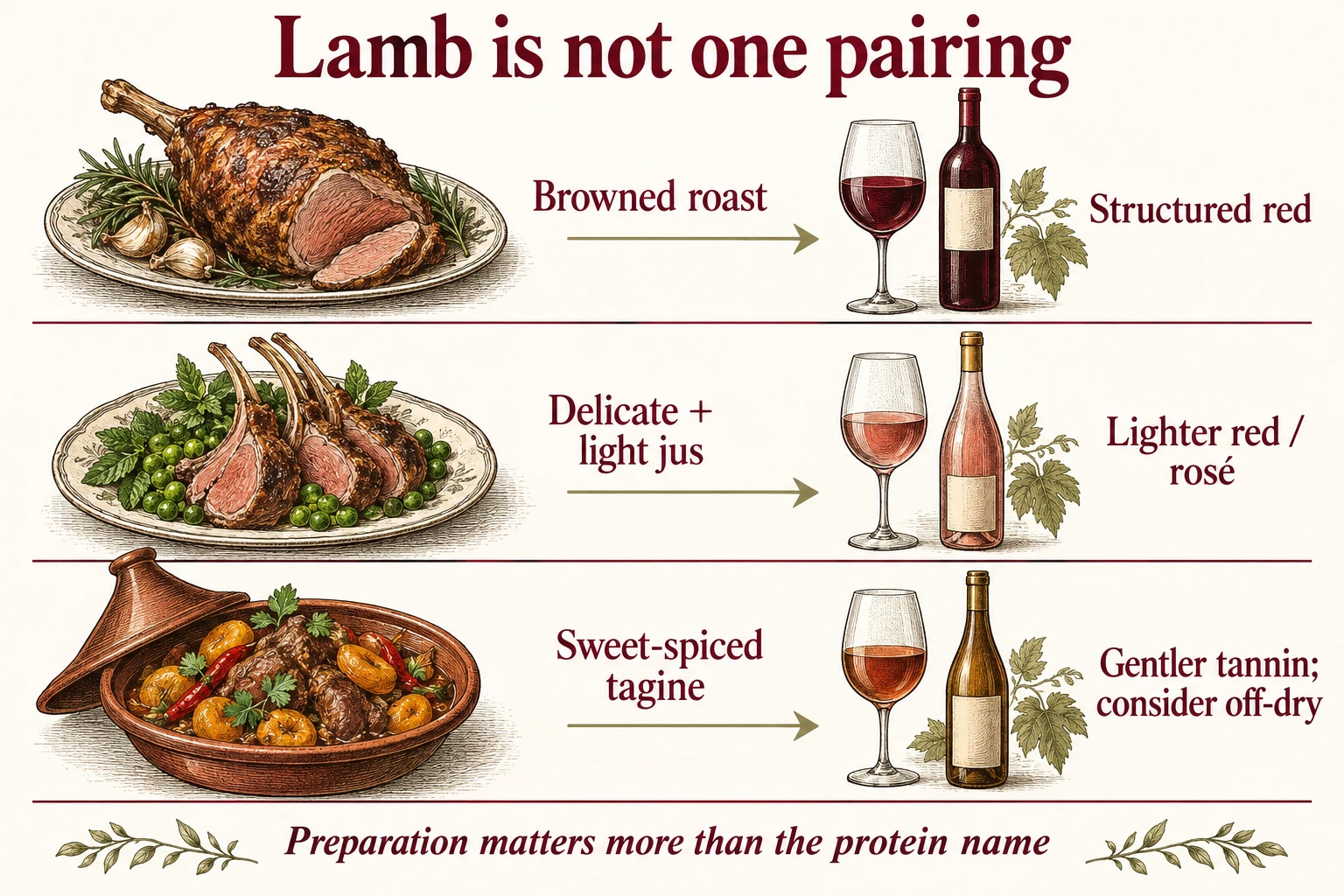
Read the illustration
Deeply browned roast lamb can suit a structured red, delicate lamb with light jus can suit a lighter red or rosé, and sweet-spiced tagine can call for gentler tannin and possibly an off-dry white.
Begin with the plate, not a grape-name reflex. A rack cooked pink has less time-derived richness than a shoulder braised for hours. Grilling adds char. A tomato braise adds acidity; olives and feta add salt; rosemary and garlic add aromatic intensity; dates or apricots add sweetness; chile adds heat. The best candidate is the wine style that stays coherent beside that whole arrangement.
| Cut or dish | Method | Dominant seasoning | Start with | Adjustment to consider |
|---|---|---|---|---|
| Leg or shoulder | Roasted or slow-roasted | Garlic, rosemary, browned exterior | Malbec, Cabernet blend, or Rioja Reserva | Choose less oak influence if the herbs and meat are delicate rather than deeply browned. |
| Rack or chops | Seared or grilled | Char, pepper, herbs | Syrah, Cabernet Sauvignon, or fruit-led Malbec | A lighter red can be more graceful when the chops are served pink with a light jus. |
| Shank or lamb stew | Long braise | Stock, root vegetables, tomato, or wine | Malbec, Rioja, or a savory red blend | Let the braising liquid decide: tomato favors freshness; mushrooms favor savory character. |
| Kofta | Grilled or pan-seared | Cumin, coriander, garlic, yogurt | Fresh Grenache blend, lighter Syrah, or dry rosé | Yogurt and herbs can reward freshness more than oak or heavy tannic grip. |
| Tagine or curry | Slow-cooked | Warm spice, chile, dried fruit | Juicy low-tannin red, rosé, or aromatic white | As heat and sweetness rise, lower alcohol impact and a little wine sweetness can become more comfortable. |
| Delicate young lamb | Quick roast or gentle cook | Peas, mint, light jus | Pinot Noir, restrained red, rosé, or textured white | A dark, oak-matured red may overpower the dish even if it suits heavier lamb. |
This matrix is a set of starting points, not a promise. “Lamb” covers different ages, cuts, fat levels, preparations, and cuisines. The diner matters too: someone who enjoys tannic dryness may choose differently from someone who wants a softer-feeling glass.
Why preparation changes the match
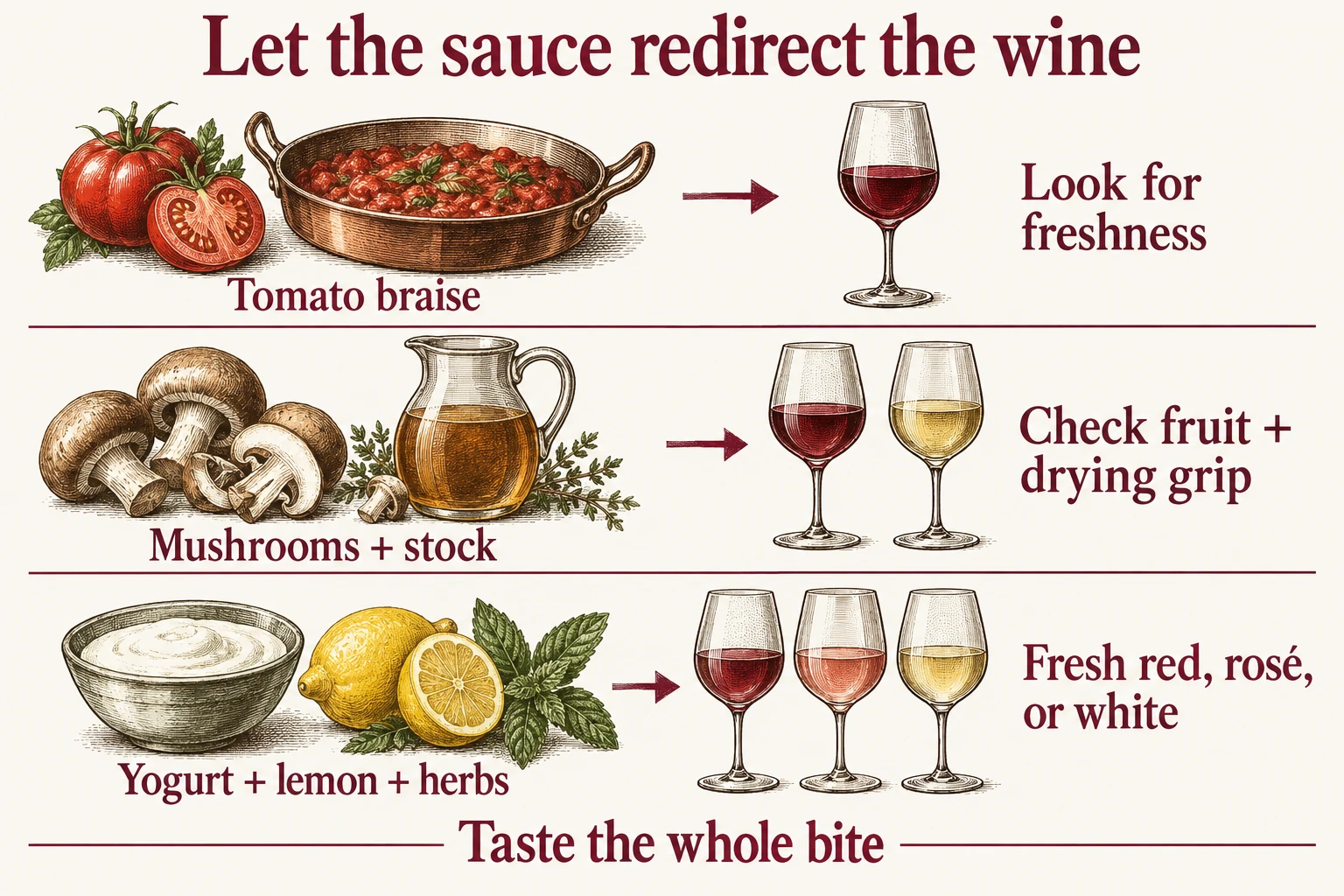
Read the illustration
Tomato braising liquid favors freshness; mushrooms and stock call for attention to savory intensity and drying grip; yogurt, lemon and herbs may favor a fresh red, rosé or white.
Browning raises the dish’s intensity
Roasting and grilling create browned, savory flavors at the surface. A red with ample fruit and some structural presence can stand beside them. That does not mean tannin chemically “cuts” fat or breaks it down. Tannin contributes a drying sensation; salt, fat, protein, and sauce can change how that sensation is perceived. The practical test is balance: does the wine still taste like itself after a bite?
Braising shifts attention to the liquid
With shank, shoulder, or stew, the sauce can matter more than the cut. Tomato and wine reductions can make a flat-feeling bottle seem dull. Mushrooms and long-cooked stock add umami, which can reduce perceived fruit and emphasize bitterness or drying sensations in some wines. A braise sweetened with dried fruit moves the target again, because a dry red may seem less fruity beside a sweeter dish.
If your lamb is becoming a deep stew, the separate guide to the best red wine with beef stew explains the important difference between wine for a pot and wine for a glass. The protein changes, but the two-decision method still helps.
Sauce can reverse the obvious answer
Mint sauce with noticeable sugar, a pomegranate glaze, or a chile-forward curry can make a firm, high-impact red feel severe. Yogurt, lemon, and fresh herbs can instead favor a fresher red, rosé, or white. A classic red is not a duty. If a white or rosé makes the complete plate more refreshing, it is the better pairing for that diner.
Choose the style before the bottle
Malbec: useful range, not one fixed profile
Malbec can range from fresh and red-fruited to darker and oak-shaped. A mature, fruit-present example can be a strong starting point for roast lamb, browned shoulder, or a deep braise. A fresher, unoaked expression may feel more agile with grilled kofta or tomato-led stew. Our Malbec guide explains how origin and cellar choices complicate the single word on the label.
Do not infer sweetness from ripe fruit aromas. Fruit-led wine can still be dry. Likewise, “Reserva” on an Argentine label is not by itself proof of oak treatment, superior quality, or one particular flavor; look for the producer’s actual maturation statement.
Cabernet Sauvignon and Cabernet-led blends
Cabernet can bring dark-fruit character and a firmer drying structure, making it a plausible partner for a well-browned leg, substantial shoulder, or beefier-tasting lamb preparation. It may feel too forceful with gently cooked young lamb or a light herb jus. If you are deciding between familiar red grapes, the Malbec comparison guide keeps those style differences conditional rather than declaring a universal winner.
Syrah
Syrah styles may show dark fruit, pepper, smoke, or savory notes, though region and winemaking change the result. Those cues can be appealing with grilled chops, black pepper, or smoke. With a sweet glaze or significant chile heat, however, a high-alcohol or firmly tannic example can amplify warmth and drying sensations. A softer, juicier style may be more comfortable.
Rioja and other Tempranillo-based reds
Rioja covers young, fruit-led wines as well as longer-aged, savory examples. A mature style can be attractive with roast lamb, especially when the plate includes garlic, herbs, or browned potatoes. Yet the region name alone does not specify the final balance. Check the aging category and producer information rather than assuming every Rioja is heavily oaked.
Pinot Noir, rosé, and white wine
Pinot Noir can be a graceful choice for rack, loin, or young lamb without a dense sauce. Dry rosé can handle herbs, salt, and outdoor grilling without adding heavy structure. Textured Chardonnay or another substantial white can suit gently cooked lamb, creamy sides, or a lemon-herb preparation. These are not consolation choices; for a delicate plate, they can be more precise than a powerful red.
What changes the answer
Before buying, make four final checks:
- Taste the sauce. Sweetness, tomato, yogurt, olives, or chile can outweigh the meat’s richness.
- Estimate the char. Deep grilling can welcome smoke, dark fruit, and structure; a gentle roast may not.
- Notice serving temperature. A slightly cool red can feel fresher at the table than one served in a hot room. Avoid over-chilling, which can mute aroma and emphasize firmness.
- Respect the people eating. Pairing is conditional. A guest’s preference for rosé or lighter red is better evidence than a rule copied from a chart.
When Malbec Reserva is not the better choice
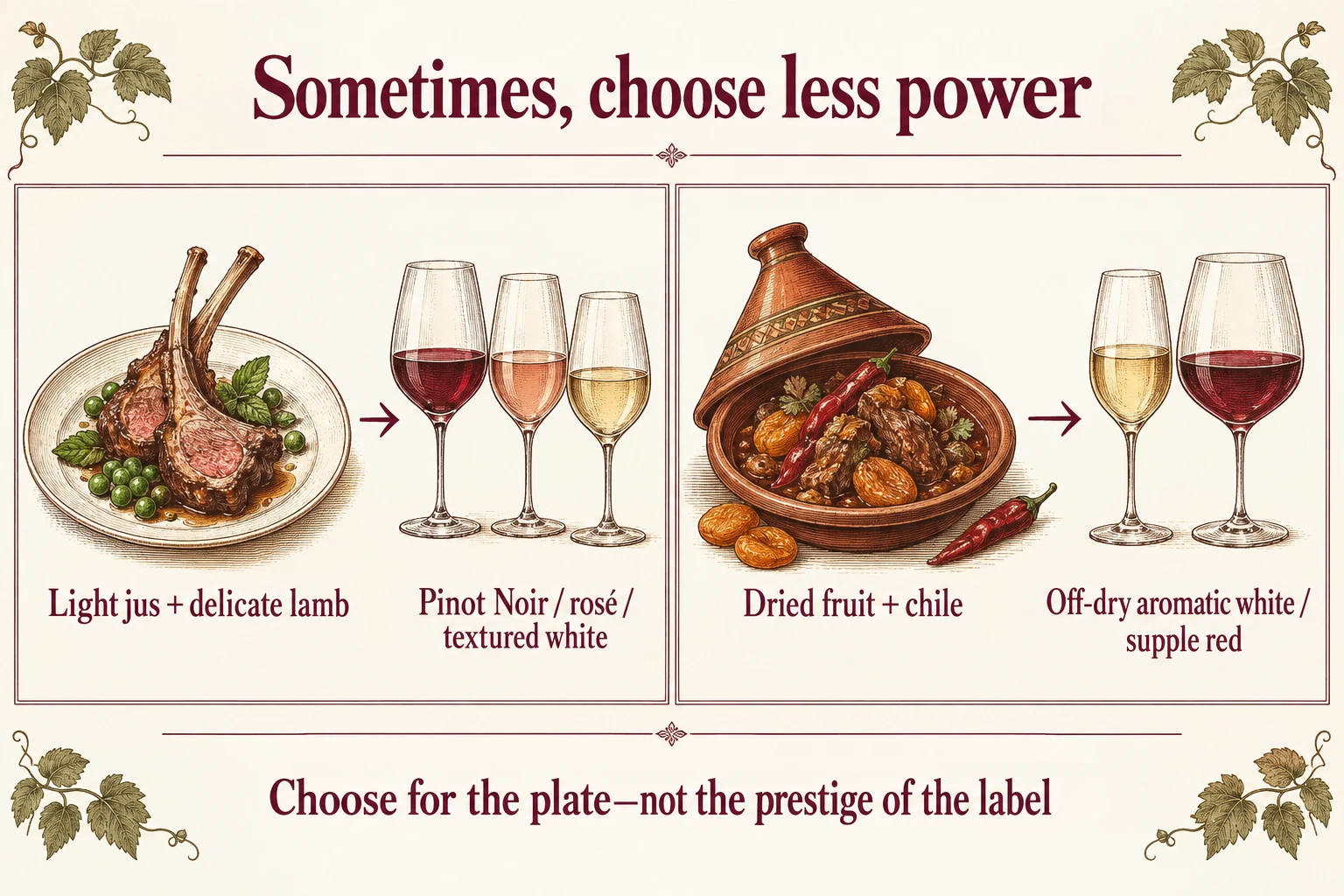
Read the illustration
A dark oak-matured red may overwhelm delicate lamb with peas, mint and light jus. A tagine dominated by dried-fruit sweetness or chile may be more comfortable with an off-dry aromatic white or supple low-tannin red.
Skip our Reserva for a very delicate plate. Spring lamb with peas, mint, and a light jus can be more articulate beside Pinot Noir, dry rosé, or a textured white. For a tagine with obvious dried-fruit sweetness and chile heat, an off-dry aromatic white or supple low-tannin red may be more comfortable. That recommendation may cost us a sale, but it is more useful than forcing every lamb dish toward the wine we make.
Our Red Blend Reserva is also not an automatic upgrade. Its documented smoke, spice, vanilla, and oak maturation can make sense with char and deeper seasoning, but it may add more flavor than a simple rack needs. Choose it because those cues fit the plate, not because “Reserva” sounds more prestigious.
Related decisions
- For pork rather than lamb, use the pork-chop pairing guide and let the method and sauce decide between white and red.
- Read the Malbec guide before treating all Malbec as one style.
- Compare Malbec with other familiar red wines when the table has mixed preferences.
- See how Mendoza’s regions differ without turning geography into a flavor guarantee.
- Learn what altitude can and cannot change before using elevation as a buying shortcut.
- For Argentine beef cookery rather than lamb, use the steak and chimichurri recipe or the tira de asado guide.
Questions shoppers ask
Is red wine always best with lamb?
No. Red wine is a familiar starting point for roasted, grilled, or braised lamb, but delicate lamb, lemon-herb preparations, creamy sauces, sweet spice, and chile can favor rosé or white wine. The complete preparation matters more than tradition alone.
Does Malbec pair with lamb chops?
It can, especially when the chops are well browned or grilled and the Malbec has enough fruit to remain present. For small pink chops with a light jus, a fresher or lighter red may feel more proportionate than a dark, oak-matured example.
Should lamb wine be decanted?
There is no rule based on lamb. Decanting depends on the bottle’s age, condition, structure, and how it tastes after opening. Pour a sample first. A broad decanter can also accelerate change, so more time is not automatically better.
Sources and methodology
This guide checks conditional pairing recommendations against established wine education, then narrows them with verified live-product facts. The result is a set of starting points rather than a score, bottle ranking, or guarantee of personal preference.
- WSET, A guide to Easter food and wine pairings, for its roast-lamb example and discussion of salt and sauce acidity.
- WSET, how to pair wine with your favourite takeaway meals, for umami and its possible effect on fruit, bitterness, and tannic sensations.
- WSET, winter wine and food matching, for conditional effects of salt, fat, acidity, and sweetness.
- WSET, how to pair drinks with spice, for the ways chile heat can change perceived alcohol, tannin, and sweetness.
- Wines of Argentina, Malbec pairing, for Argentine industry guidance on matching fresh and oak-matured Malbec styles to food.
- Familia Morgan, 2020 Malbec Reserva and 2020 Red Blend Reserva, checked July 31, 2026 for the product details stated here.
Price, availability, shipping eligibility, taxes, and final terms are confirmed at checkout.