Buyer guide
The Best Wine With Pizza: Sauce First, Toppings Second, Heat Last
A sauce-first field guide for choosing the bottle before the pizza box arrives.
Research note: These are Familia Morgan's recommendations about wines Familia Morgan makes. This is not an independent blind tasting, a paid review, or a global ranking. Product facts were verified July 31, 2026.
The short answer: The best wine with pizza follows the sauce first, the weight and salt of the toppings second, and chile heat or sweetness last. Tomato-and-cheese pizza often welcomes a fresh, fruit-led red. A white pizza can make a fresh white the clearer choice. Sweet barbecue sauce, pineapple, hot honey, or a serious dose of chile can overrule both answers.
Choose by sauce before you choose by grape
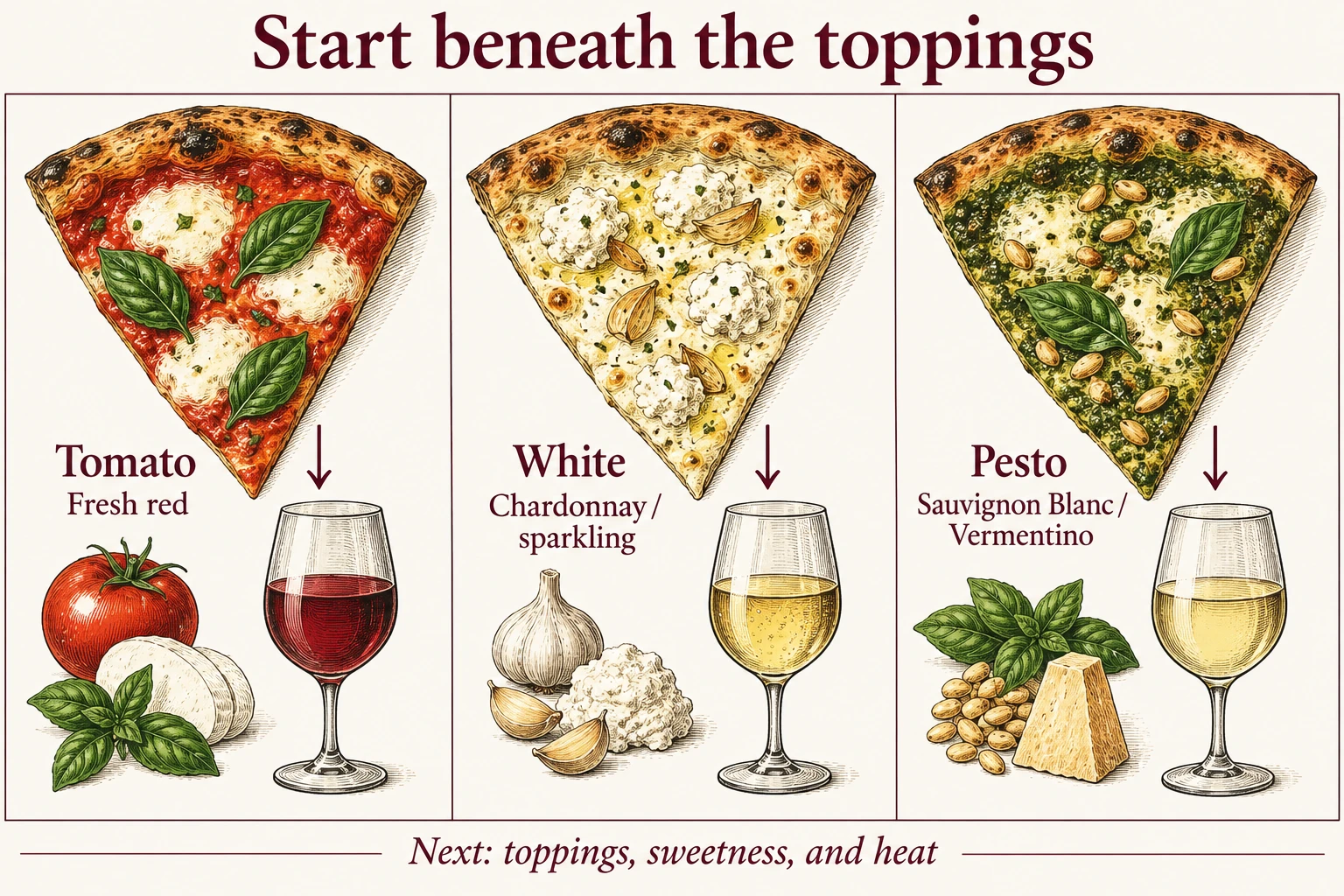
Read the illustration
Tomato pizza suggests a fresh red, white pizza suggests fresh Chardonnay or sparkling wine, and pesto pizza suggests Sauvignon Blanc or Vermentino. Toppings and heat can alter those starting points.
Crust is the foundation, but sauce usually creates the sharper wine decision. Tomato brings its own acidity. An acidic bite can make a wine that lacks enough freshness seem flatter than it did alone, so taste the finished slice rather than trusting a grape-name rule. That principle does not prove that any specific bottle is high in acidity; it only explains what to watch for at the table.
For a classic cheese or Margherita pizza, begin with a fresh red whose fruit remains clear beside tomato, mozzarella, salt, and browned crust. Barbera, Sangiovese, a fruit-led red blend, or a lively rosé are useful style directions. This is a starting set, not a ranking. Basil, char, cheese quantity, and the actual sweetness of the tomatoes can move the answer.
White pizza removes the tomato problem and adds another one: richness. Ricotta, mozzarella, béchamel, garlic oil, or cream can make a heavy wine feel tiring. A fresh Chardonnay, another clean white, or sparkling wine can supply contrast. If the white pizza includes mushrooms, browned onions, or roast chicken, a light red can also work; color alone does not settle the pairing.
Pesto and green-herb pizzas usually ask for freshness and herbal compatibility rather than dark fruit or noticeable oak. Sauvignon Blanc, Vermentino, or another fresh white may be more convincing than either of our featured wines. A barbecue base is different again. Its smoke can welcome red fruit and savory notes, but meaningful sauce sweetness may call for a wine with some sweetness of its own.
Let the toppings change intensity, not erase the sauce
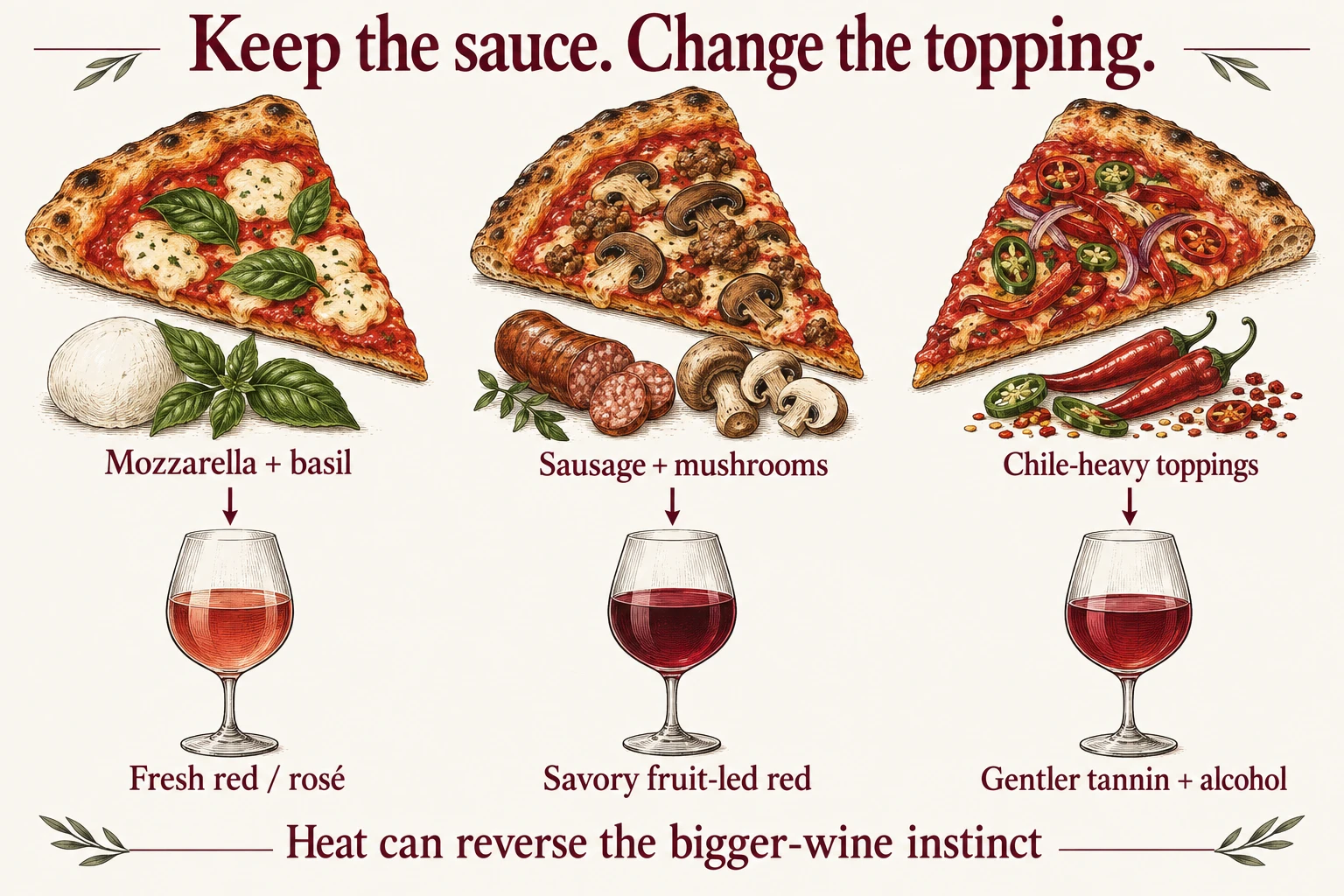
Read the illustration
On a tomato base, light mozzarella and basil can suit a fresh red or rosé; sausage and roast mushrooms can suit a red with more savory presence; chile-heavy toppings call for gentler tannin and alcohol rather than more power.
Once the sauce sets a direction, toppings tell you how much presence the wine needs. Pepperoni, sausage, bacon, and olives add salt, fat, spice, and sometimes smoke. Salt can make a wine’s drying or bitter sensations seem softer, while umami-rich foods can make fruit seem less obvious and bitterness more apparent. Those effects vary by wine and diner, which is why “pepperoni always needs one grape” is too rigid.
With a tomato-and-pepperoni pizza, a fruit-led red is a practical first move. With sausage, mushroom, and a darkly blistered crust, savory or smoky notes may feel more at home. Yet a chile-heavy sausage can send the decision in the opposite direction: high alcohol and strong tannic grip can feel more forceful with heat. Our tannin glossary explains the drying sensation without claiming that tannin “cuts” or breaks down fat.
Mushrooms, eggplant, peppers, onions, and olives do not make one generic “vegetable pizza.” Roasted mushrooms and eggplant create deeper browned flavors; fresh peppers, artichokes, or herbs can keep the slice lighter. A fruit-led red can suit the first group, while rosé or white may be more agile with the second. If you are choosing among red styles, the red-wine comparison guide shows how Malbec, Cabernet Sauvignon, Bonarda, Syrah, and Pinot Noir differ without pretending every bottle tastes alike.
Chicken follows its sauce. Roast chicken on a white garlic pizza points toward a fresh white. Chicken on tomato with mushrooms can accept a red. Buffalo chicken brings vinegar and chile, so an off-dry aromatic white, off-dry rosé, or lightly sweet sparkling wine may be kinder than a firm red. Seafood pizza likewise usually favors a fresh white or sparkling style, especially when the toppings are delicate.
Cheese quantity matters, but cheese name alone is not the whole answer. A restrained Margherita and a four-cheese pie may share mozzarella yet present very different salt and richness. Blue cheese can introduce intense salt and tang; a sweet counterpoint can be more useful there than another layer of tannin.
Let heat and sweetness have the final vote
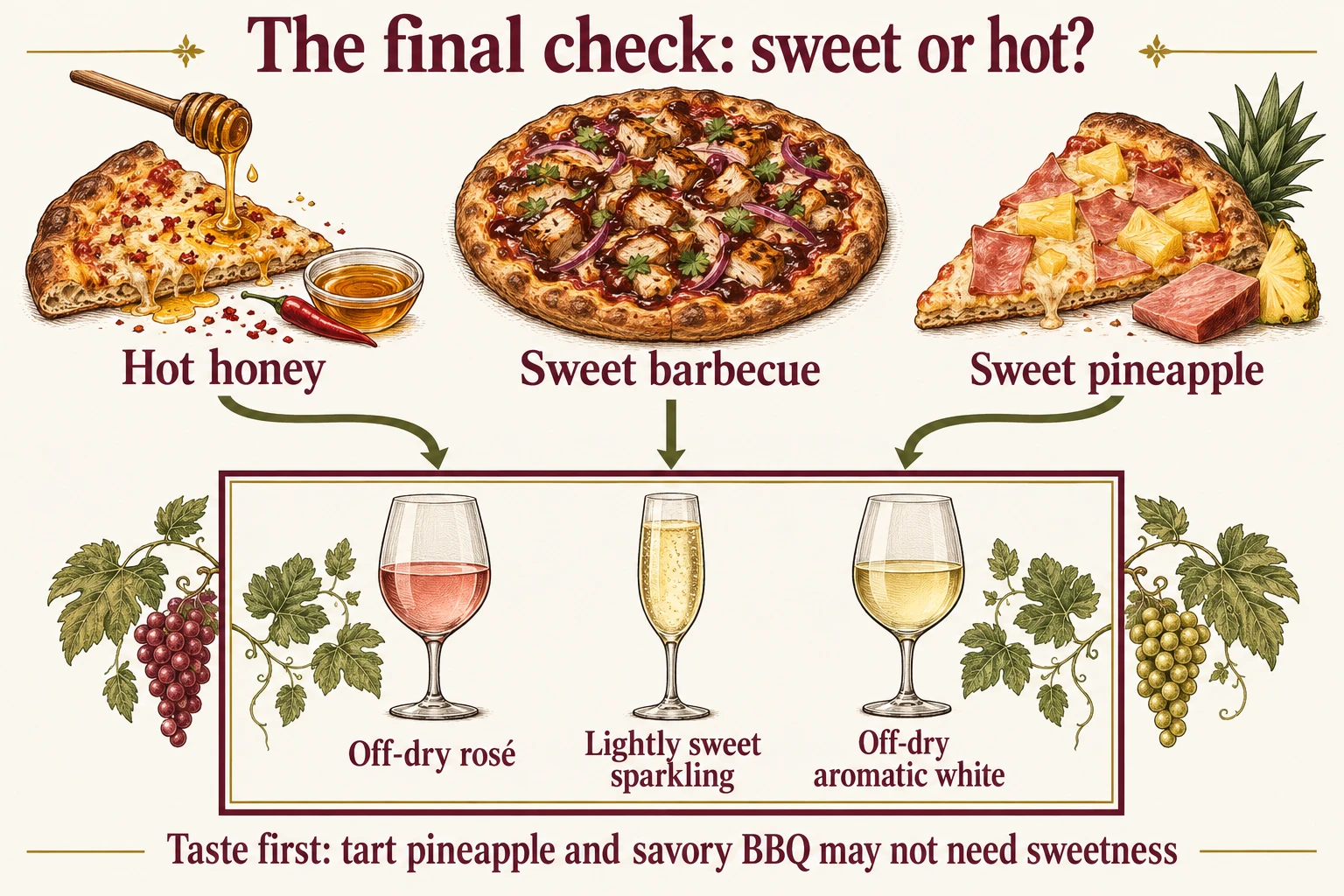
Read the illustration
Hot honey brings sweetness and chile; barbecue sauce may be sweet as well as smoky; pineapple may be tart or strongly sweet. When sweetness or heat dominates, consider off-dry rosé, lightly sweet sparkling wine, or an off-dry aromatic white.
Hot honey, pickled chiles, chile oil, spicy sausage, and jalapeño can turn a sensible red pairing into a severe one. Chile heat can increase the perception of alcohol, bitterness, and tannic dryness. If heat is a leading flavor rather than a garnish, look toward a lower-alcohol style or a wine with some sweetness; because we have not verified those attributes for the two bottles below, we do not present them as automatic spicy-pizza solutions.
Sweetness creates a separate checkpoint. Barbecue chicken pizza, a sweet tomato sauce, pineapple, balsamic glaze, or generous hot honey can make a dry wine seem less fruity and more austere. An off-dry rosé, lightly sweet sparkling wine, or off-dry aromatic white can be the better purchase. A dry fruity rosé is not automatically sweeter than the food. Lambrusco is also worth considering, but check the label because it ranges from dry to sweet.
Hawaiian pizza is therefore not solved by “ham means red” or “pineapple means white.” Ask whether the pineapple reads tart or candied, whether the ham is smoky and salty, and whether the sauce is sweet. An off-dry rosé or lightly sweet sparkling style is often the most flexible middle route when sweetness is pronounced. The right answer is the one that still tastes balanced after the whole bite, not the one that wins an abstract variety contest.
For a calmer meal, serve red wine slightly cooler than a warm room and white wine cool rather than numbingly cold. Temperature changes perception, but it cannot repair a fundamental sweetness or heat mismatch. Open the bottle, taste it, taste the slice, then adjust at the next pour.
Use the pizza grid: sauce × topping weight × heat
The grid is a shortlist, not an automatic bottle picker. It deliberately resolves to a style before a product. Start at the left, then move right only when the pizza really contains that condition.
| Pizza base | Topping weight | Heat or sweetness | Style to try first | Reason to change course |
|---|---|---|---|---|
| Tomato + cheese | Light: mozzarella, basil, restrained char | Low | Fresh, fruit-led red; rosé is a flexible alternative | Move to white if delicate herbs and fresh cheese are the whole story |
| Tomato + cured meat | Medium to robust: pepperoni, sausage, olives | Low to medium | Fruit-led red blend, Barbera, or Sangiovese style | Choose gentler grip or lower alcohol when chile becomes prominent |
| Tomato + vegetables | Depends on roast: mushroom and eggplant are deeper than fresh peppers | Low | Light red, rosé, or fresh white according to roast intensity | Pesto or strong green herbs often favor an herbal white |
| White + chicken | Creamy or garlicky, medium weight | Low | Fresh Chardonnay or another clean white | A deeply browned mushroom version can welcome a light red |
| Barbecue sauce | Chicken, pork, smoked cheese, or onion | Check the sauce itself | Fruit-led red when savory; off-dry style when clearly sweet | A sticky or hot glaze can make a firm dry red feel harsher |
| Hot honey / Hawaiian | Sweet-salty toppings | Medium to high sweetness or heat | Off-dry rosé, lightly sweet sparkling, or off-dry aromatic white | A dry fruity rosé is not automatically sweeter than the food |
What changes the answer at your table
The same named pizza can change from one restaurant to another. Before buying, check these five variables:
- How sweet is the sauce? Some tomato sauces are savory and sharp; others contain enough sugar to dominate a dry wine.
- What is browned or smoked? Charred crust, roast mushroom, pepperoni, and smoked cheese can make subtle smoke in a red feel connected rather than random.
- How much chile is present? A few flakes are not the same as chile oil, spicy sausage, jalapeño, and hot honey together.
- Is the pizza light or overloaded? More toppings do not always mean a “bigger” wine, especially when vinegar, herbs, or chile are involved.
- What do the people drinking it enjoy? A technically neat pairing fails if the table does not want that style. Our recommended Chardonnay guide begins with preference rather than a score.
When neither of our wines is the right pizza bottle
Choose something else without apology when the food asks for it. A hot-honey or jalapeño-heavy pizza can be friendlier to an off-dry aromatic white or a gentler sparkling style. A pesto pizza may prefer an herbal white. A delicate clam pie can make a red blend feel misplaced. A very sweet barbecue sauce may need a wine with enough sweetness to avoid seeming severe.
There is also no obligation to open wine. Beer, sparkling water with citrus, or a nonalcoholic drink can handle salt and chile very well. If the group wants one bottle across radically different pies, sparkling rosé is often a more flexible compromise than forcing one red or white to cover everything.
If the table is comparing red blends on their own merits, continue to how to choose a red blend. For white-wine shoppers who specifically want a verified no-oak route, use the unoaked Chardonnay guide. And if pizza becomes pasta tomorrow, restart with the sauce in our wine-with-pasta guide rather than carrying over the bottle by habit.
Pizza pairing questions, answered plainly
Is red or white wine better with pizza?
Neither color wins in the abstract. Tomato, cured meat, mushroom, and char often point toward a fresh red. White sauce, roast chicken, herbs, and delicate seafood often point toward white. Sweetness and chile can make rosé, sparkling, or off-dry wine the better answer.
Does Cabernet Sauvignon go with pizza?
It can, particularly when the pizza has enough meat, roast, salt, or smoke to meet it. Cabernet styles vary, and a light Margherita may not want the same structure as sausage and mushroom. “Cabernet-based” also does not reveal the complete blend or guarantee a sensory profile; use the producer’s actual tasting and cellar information.
What wine goes with pepperoni pizza?
A fruit-led red is a sound first try because pepperoni contributes salt, fat, spice, and browned flavor. If the pepperoni is genuinely hot, favor gentler tannic grip and alcohol or consider an off-dry alternative. Taste the slice with the wine before declaring the match.
What is the best wine for white pizza?
A fresh Chardonnay or another clean white is a useful start with ricotta, mozzarella, garlic, cream, or roast chicken. Mushroom and deep browning can make a light red reasonable. If blue cheese or sweet onion dominates, reassess salt and sweetness rather than following the color of the sauce.
Sources and methodology
This guide relies on established wine-education sources and Familia Morgan’s live product records checked July 31, 2026. Pairings are treated as conditional sensory hypotheses, not laboratory outcomes or guarantees.
- WSET, “How to pair wine with your favourite takeaway meals”, for tomato, pizza, fat, umami, and structured-red considerations.
- WSET, “Winter wine and food matching”, for salt, acidity, sweetness, and intensity principles.
- WSET, guidance on pairing drinks with spice, for conditional chile, alcohol, tannin, and sweetness guidance.
- Familia Morgan’s current product records for the 2024 Nine Queens Red Blend and Chardonnay, verified July 31, 2026; current detail and checkout links are resolved by the product bridge rather than hard-coded into this article.