Buyer guide
Wine With Brisket: Choose for Point, Flat, Smoke, or Braise
A moist slice of flat, a rich piece of point, and a tomato-braised brisket need different things from the glass. Start with the texture you are serving.
Research note: These are Familia Morgan's recommendations about wines Familia Morgan makes, not an independent blind tasting or global ranking. Product style records were verified July 31, 2026; public catalog prices and availability were checked October 13, 2026.
For savory smoked brisket, start with a fruit-present Malbec, Syrah, or balanced red blend. A rich slice of point can welcome more structure; a lean slice of flat usually gives you a reason to seek a gentler finish. For braised brisket, choose the wine for the finished gravy and tenderness, with fresher reds worth considering when tomato leads.
The best wine with brisket is the one that still tastes good with the slice on your plate. Long cooking does not automatically call for a bigger wine. Sticky glaze, chile, a dry reheated slice, or diners who prefer white wine can all change the recommendation.
Start with point or flat
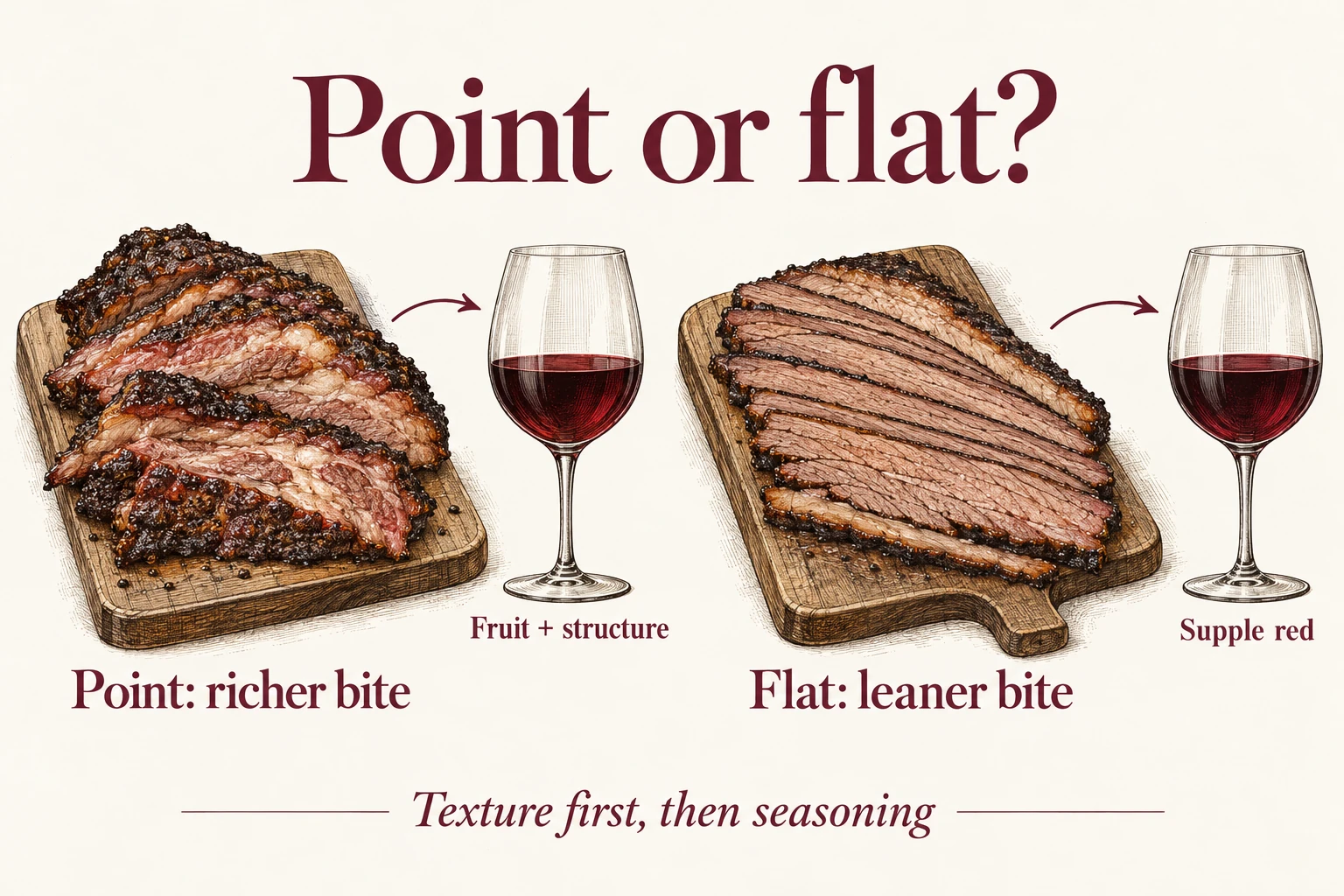
Whole brisket includes two portions that can feel quite different at the table. The flat is the leaner portion, often served in neat slices. The point is less lean and can give a richer bite. The primary cut references from Beef. It’s What’s For Dinner for flat and point establish that distinction and identify both as suitable for long, slow cooking methods.
For pairing, that is more useful than treating the entire brisket as uniformly fatty. A platter may contain bark-heavy point pieces, moist flat slices, and an exposed edge that has become drier. The bottle should work with the portion you expect people to eat most.
Flat: keep the finish comfortable
For lean, tender flat, we would start with a supple Malbec, Merlot, or other fruit-led red with restrained drying grip. A lighter red can also work when the smoke and seasoning are gentle.
The point is not that flat requires low tannin by definition. It is a practical tasting check: does the next sip make the lean slice feel pleasant, or does mouth-drying grip become the dominant sensation? Choose the wine that keeps the meal enjoyable.
Point: allow richness without demanding power
For a rich, savory point slice, consider Malbec, Syrah, Cabernet-led blends, or another red with fruit and structure. If you already like an oak-matured style, this can be a good occasion to try it.
Keep freshness in the decision. A large wine that becomes tiring after two bites is less useful than a more moderate one you want to keep drinking. Fat does not require maximum tannin, and tannin does not literally dissolve the fat in the brisket.
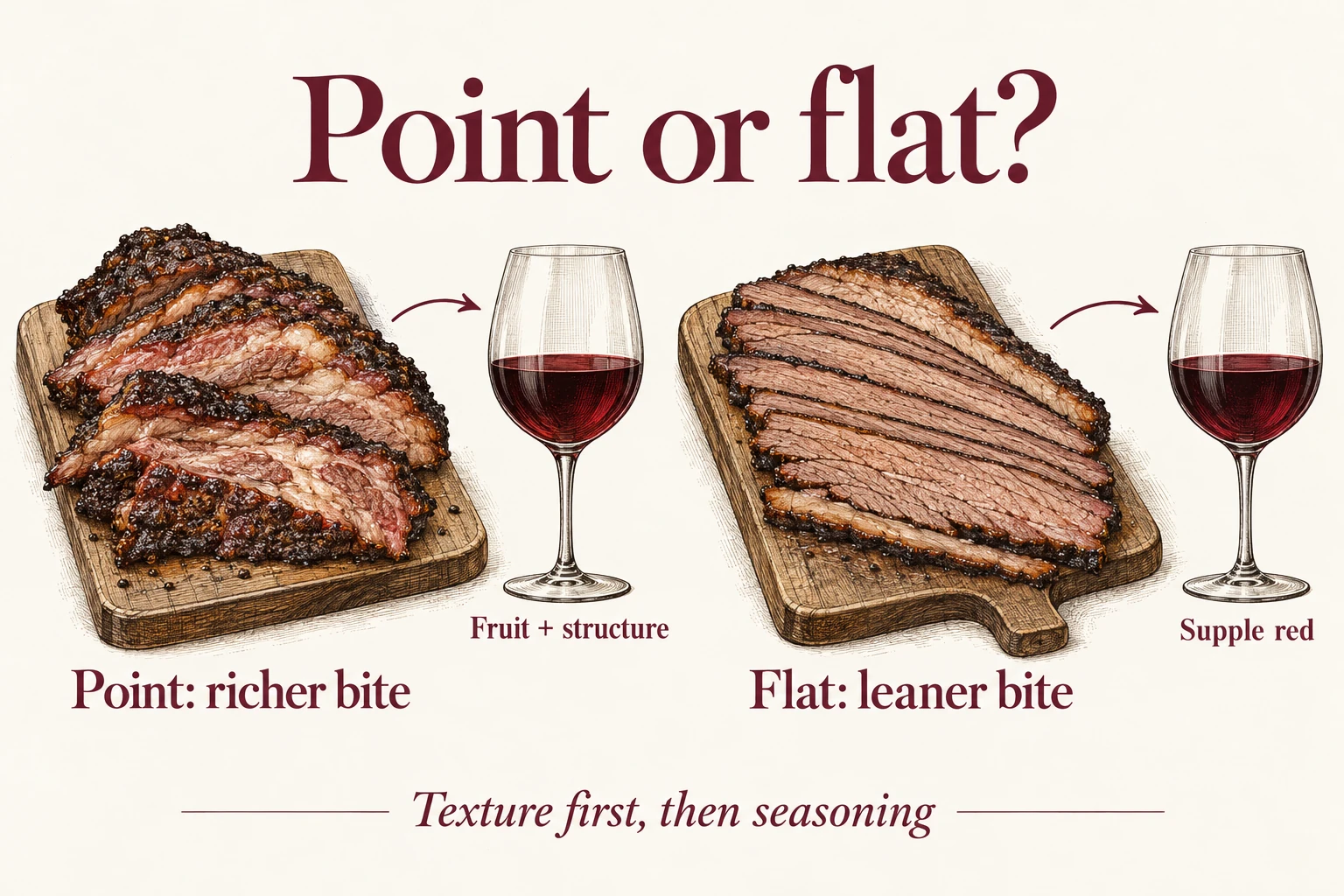
Read the illustration
Point is the richer portion: consider fruit and structure. Flat is the leaner portion: consider a supple red. These are starting directions; the finished texture and seasoning decide the match.
| Brisket on the plate | Wine starting point | Why we would start there | Reconsider when |
|---|---|---|---|
| Moist smoked flat, savory rub | Supple Malbec, Merlot, or gentle Syrah | Fruit and a comfortable finish leave room for lean slices. | The bark is very hot, sweet, or intensely smoky. |
| Rich smoked point, salt and pepper | Malbec, Syrah, or Cabernet-led blend with fruit and structure | A substantial wine can accompany a richer bite. | The wine feels drying or overpowering despite the richness. |
| Braised slices, onion or stock gravy | Rounded Malbec, Merlot, or restrained savory red | Tender meat and gravy need balance rather than maximum weight. | A strongly sweet braise changes the wine preference. |
| Tomato-braised brisket | Fresh Sangiovese, Barbera, or a lively fruit-led red | Freshness is worth testing against the tomato-led sauce. | Sugar or dried fruit is more prominent than tomato acidity. |
| Dry slice or lean reheated leftovers | Gentler red, chosen after tasting with the serving juices | More tannin cannot repair the meat texture. | The slice needs a serving adjustment before a wine adjustment. |
| Sweet burnt ends, hot glaze, or sugary sauce | A wine with suitable sweetness, gentle rosé, or another drink | The glaze and heat may outweigh the original cut. | A dry red loses fruit or makes the bite feel harsher. |
Choose wine for smoked brisket
Begin with an unsauced bite of the actual cut. Notice whether it is moist or dry, how much bark comes with it, and whether smoke is a background aroma or the main experience. Then try the wine with any sauce you intend to use.
Our first red-wine group is Malbec, Syrah, and balanced red blends. This is a set of style options, not a ranking. Choose Malbec when its disclosed fruit and oak profile appeals; Syrah when you want the particular wine’s savory or peppery character; a blend when its documented composition and style fit the plate. The Malbec–Syrah comparison can help if those are the two bottles you are considering.
Salt-and-pepper brisket
Without a sweet coating, the choice can stay close to the beef, bark, and wine texture. For flat, ask for a supple red with recognizable fruit. For point, a more structured example is an option if you enjoy that feel.
Salt can make some of a wine’s harder sensations seem gentler, but the total seasoning still matters. Taste the finished bite rather than assuming the rub makes every firm red suitable. WSET’s pairing principles describe how food changes wine perception.
Smoke is only part of the decision
An oak-influenced wine can offer a flavor connection, but we would not automatically add more oak to heavily smoked beef. Try a fruit-led contrast when the brisket already has plenty of smoke.
Black pepper and chile also need separate attention. A peppery crust is different from a rub dominated by cayenne. WSET’s spice guidance distinguishes kinds of spice and explains why alcohol and tannin can become uncomfortable with strong heat. If chile takes over, consider a lower-alcohol, suitably sweet style or another drink rather than insisting on a powerful dry red.
For a deeper discussion of barbecue sauce, smoke, and heat across preparations, use our BBQ-ribs wine guide. Here, the additional brisket decision is the cut and the juiciness of the slice.
Choose wine to drink with braised brisket
A covered braise brings a different plate to the table: tender slices or pieces with a sauce that may be based on onions, stock, tomato, wine, or sweeter ingredients. Smoke need not be part of the dish at all.
For an onion-and-stock gravy, we would begin with rounded Malbec or Merlot, keeping the wine’s oak and drying grip in proportion to the meat. A savory, restrained Tempranillo can also be worth trying. There is no requirement to choose a heavier wine simply because the brisket cooked for a long time.
For a tomato-led braise, try Sangiovese, Barbera, or another red that tastes lively with the sauce. WSET’s tomato-pairing guidance supports freshness as a useful starting point. If the recipe has substantial sugar or dried fruit, taste for that too; “tomato-based” does not tell you whether the finished sauce is mostly tangy or sweet.
For a mushroom-rich braise, a supple Pinot Noir or savory red can be more appealing than a heavily extracted bottle. That is our style suggestion, not proof that earthy flavors always pair together. Begin with the wine you like and test it with the gravy.
The beef-stew wine guide handles that cooking-versus-drinking question in detail. This page stays focused on choosing a glass for the finished brisket.
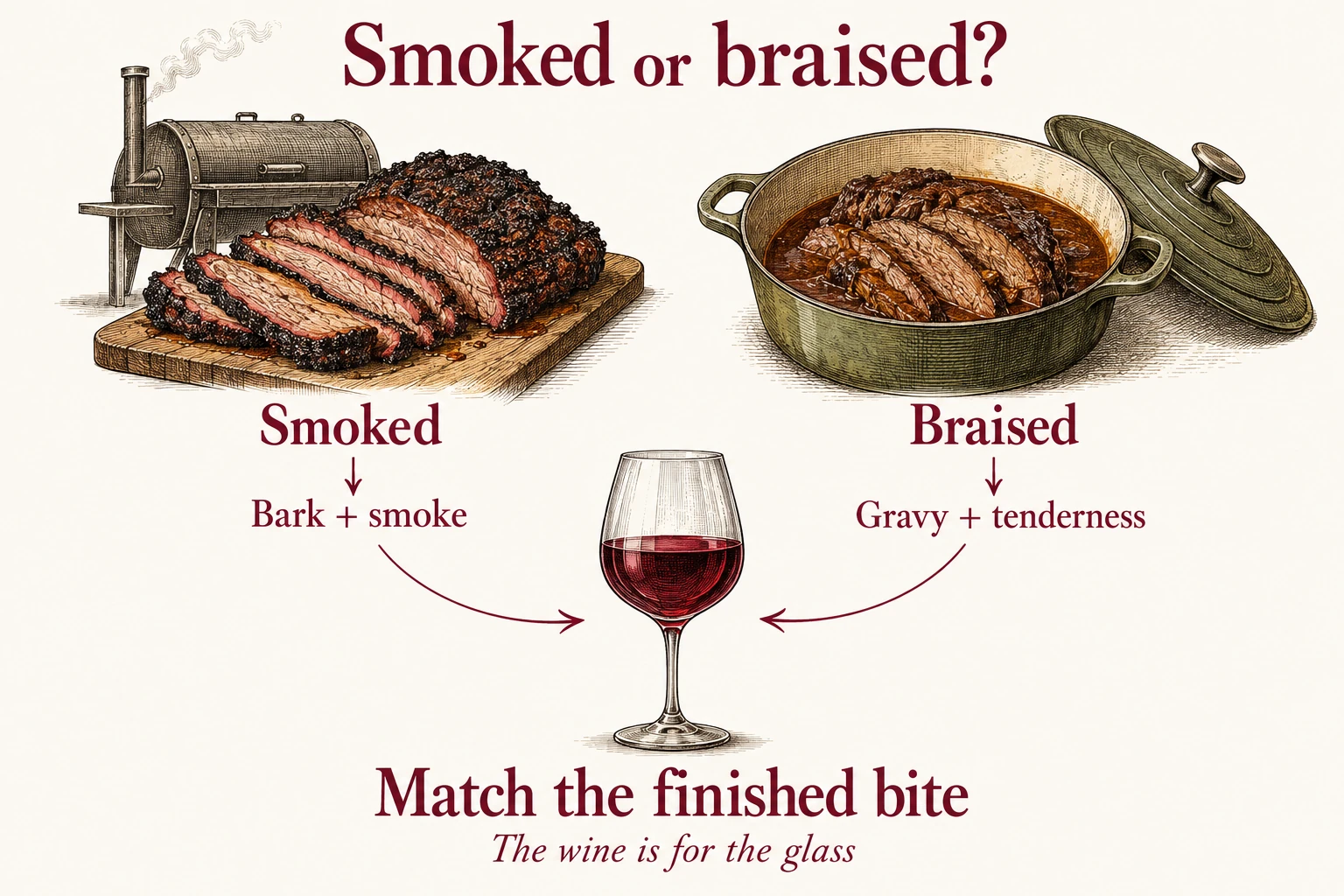
Read the illustration
For smoked brisket, check bark and smoke. For braised brisket, check gravy and tenderness. Match the finished bite; the wine recommendation is for the glass.
Check the brisket you are serving
A wine chosen while the brisket was cooking is still a provisional choice. The platter is the final test.
Tender is not the same as juicy
A slice can pull apart easily and still feel dry. For that plate, adding a more assertive wine rarely helps our enjoyment. Try the slice with its serving juices first and choose a gentler wine if the firmer one makes the mouth-drying sensation more noticeable.
Wine cannot restore moisture to meat. If the brisket needs more of its own jus or a suitable sauce at service, handle that food decision before treating the wine as the solution. Reheated flat may need a different glass from the rich point pieces served the night before.
Sliced brisket, sandwiches, and burnt ends
Sliced brisket with sauce on the side keeps the wine choice flexible. A sandwich adds bread, pickles, slaw, and possibly a sweet dressing; taste it assembled. Those ingredients can matter more than whether yesterday’s slice paired beautifully with Malbec.
Sauced burnt ends deserve a separate check. Their richness may suggest a substantial red, but a sticky coating can make that wine taste less fruity and more severe. WSET’s winter-pairing explanation covers how sweetness in food changes the sip. A wine with suitable sweetness or a nonalcoholic drink may be the better choice.
A practical serving sequence
- Identify the portion: mostly point, mostly flat, or a mixed platter
- Taste for texture: moist and tender, rich and soft, or noticeably dry
- Add the accompaniments: use the amount of gravy, glaze, pickles, or sauce people will actually eat
- Try a small pour: decide whether the wine remains enjoyable with that complete bite
- Change one thing if needed: a gentler wine, a less dominant sauce portion, or a different drink can be enough
A long cook is a reason to pay attention at service, not a reason to spend more on the bottle.
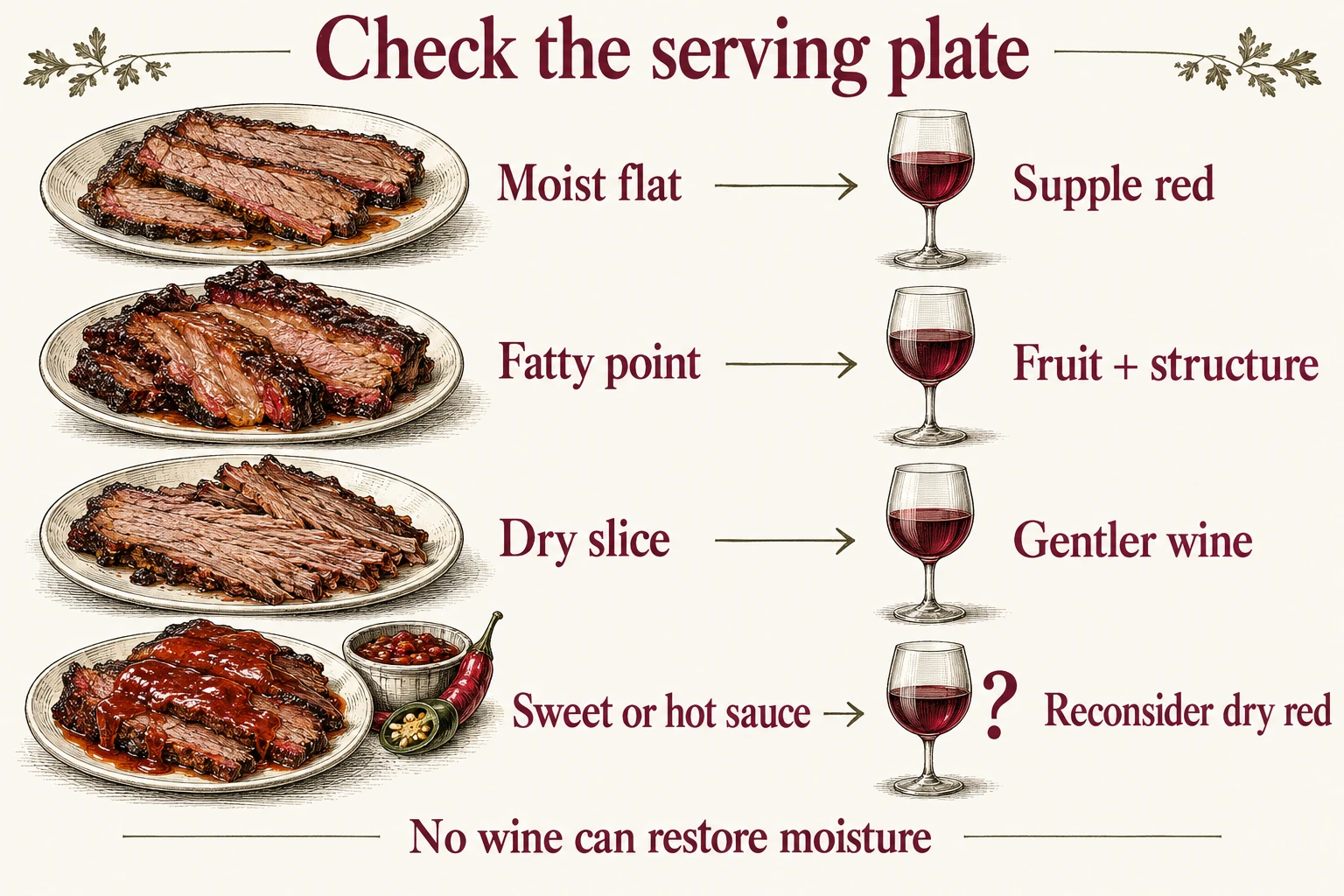
Read the illustration
Moist flat: try a supple red. Fatty point: try fruit and structure. Dry slice: consider a gentler wine and address the serving texture. Sweet or hot sauce: reconsider a dry red. Wine cannot restore moisture.
Two options from our range
The public catalog checked October 13, 2026 listed Nine Queens Malbec at $20 and Red Blend Reserva at $55. Those prices are dated observations. Choosing the blend is a choice of disclosed composition and oak influence, not a promise of a better pairing or a need to spend more.
Our recommendation is an application of the documented styles, not a claim that either product listing specifically names brisket. If your preferred bottle comes from another producer, use the same cut, method, and serving checks.
Brisket wine questions
Is Malbec good with smoked brisket?
It can be, especially with savory seasoning and a bottle whose fruit and texture you enjoy. Check the slice: a lean flat and a rich point can favor different Malbec styles. Sweet glaze or hot sauce can make another wine more useful.
Is Cabernet too tannic for brisket?
Not automatically. A rich, well-seasoned bite may work with a structured Cabernet or Cabernet-led blend. A dry, lean slice may be less comfortable with that same bottle. Buy for the actual wine’s feel rather than assuming all Cabernet behaves alike.
What wine goes with braised brisket?
Start with rounded Malbec or Merlot for savory onion-and-stock gravy. For tomato-led sauce, try a fresher red such as Sangiovese or Barbera. If dried fruit or sugar leads, reconsider how dry you want the wine to be.
Does smoked brisket need a smoky wine?
No. A little flavor similarity can be appealing, but fruit contrast can be just as useful. Heavy smoke in the meat is a good reason to test a less oak-dominant bottle before adding another strong smoky impression.
Can I use the same wine in the braise and in the glass?
Yes, if it suits the recipe and you want to spend that amount. It is optional. Choose a sound, recipe-appropriate cooking wine and a drinking wine that suits the finished brisket; the featured wines here are drinking recommendations.
What if the table does not want red wine?
Choose something the guests enjoy. A fresh white, rosé, sparkling wine, beer, or an appealing nonalcoholic drink can be a better dinner choice than a red everyone finds too forceful. Taste with the actual sauce rather than treating beef as a restriction.
Related decisions and sources
For sliced roast beef without a long braise or smoke, see wine with prime rib. For individual grilled cuts, use the steak wine guide. For choosing a blend on its disclosed ingredients, read how to choose a red blend.
The primary cut and wine-education sources are linked beside the relevant claims. Our specific pairings are editorial recommendations, with no invented tasting scores or universal rankings. Product facts come from the Nine Queens Malbec listing, 2020 Red Blend Reserva listing, and dated Familia Morgan product records. Catalog prices and public availability were checked October 13, 2026; final purchase terms remain those displayed at checkout.