Buyer guide
The Best Wine With BBQ Ribs: Sauce, Smoke, and Heat Decide It
An American barbecue field note for matching the rib, sauce, smoke, and chile before the bottle.
Research note: These are Familia Morgan's recommendations about wines Familia Morgan makes. This is not an independent blind tasting, a paid review, or a global ranking. Product facts were verified July 31, 2026.
The short answer: The best wine with BBQ ribs depends on four checks: pork or beef, dry rub or wet sauce, smoke level, and chile heat. A savory, moderately smoked beef rib can welcome a structured oak-matured red. Sticky-sweet pork ribs or a fiery glaze may be better with a fruit-forward, lower-alcohol, or lightly sweet style. The sauce can matter more than the meat.
This page is specifically about American sauced or smoked barbecue ribs. It does not redefine Argentine asado, and it does not treat tira de asado as another name for sticky baby backs. For the Argentine fire-cooking tradition, go directly to the asado wine-pairing guide or the tested tira de asado recipe.
Choose the rib before the bottle
“Ribs” can describe plates with very different proportions of meat, fat, bark, sauce, and smoke. Begin with the cut and cooking method, then let the finished surface refine the choice.
Pork baby back ribs come from the loin-side rib section. A sticky glaze—not the cut itself—raises sweetness. A fruit-led red, rosé, or even an off-dry style can be more useful than a highly tannic bottle when the glaze is sticky. If the rack is only lightly seasoned and smoke is restrained, a lighter red or fuller white may be enough.
St. Louis-cut pork ribs come from the spare-rib section and are trimmed into a rectangular rack. Their meat, fat, bark, and smoke can support more wine presence, but sauce remains decisive. A dry-rubbed rack can work with a savory red. A vinegar-pepper mop can favor freshness and restraint. A thick sweet tomato glaze can make a dry, oak-forward red seem harder and less fruity.
Beef ribs generally deliver more beef intensity and can carry black pepper, char, and long smoke. A structured red is a reasonable starting style when the seasoning is savory and the sauce is not very sweet. That is still not permission to buy the most tannic or alcoholic bottle available. Salt, rendered fat, smoke, serving temperature, and sauce all change perception.
Cooking texture matters too. “Fall-off-the-bone” tenderness does not automatically require a bigger wine; it may simply mean a softer texture and more sauce exposure. A drier rib with pronounced bark creates a different bite. Use our best-wine-with-steak guide for beef steaks and the pork-chop wine-pairing guide for chops, not as substitutes for this sauce-led rib decision.
Read barbecue sauce as a wine ingredient
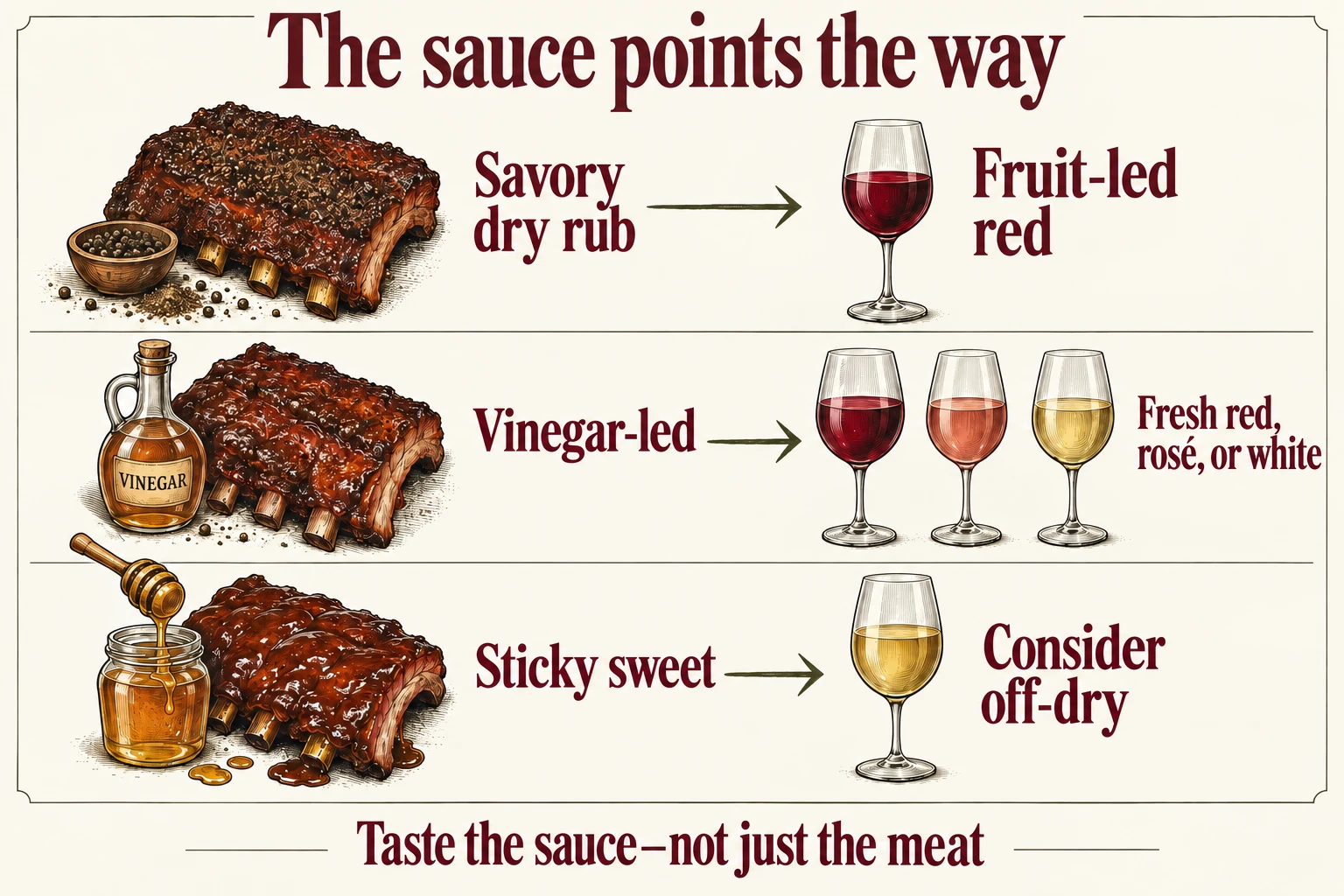
Read the illustration
Savory dry rub suggests a fruit-led red; vinegar-led sauce suggests freshness in red, rosé, or white; sticky sweet glaze suggests an off-dry style. Taste the actual sauce before choosing.
Barbecue sauce is not one flavor. Treat it as part of the dish, not decoration added after the “meat wine” has already been selected.
Dry rub keeps the decision close to meat, browned crust, pepper, herbs, and smoke. A savory red blend, Malbec, Syrah, or Zinfandel-style red can be useful, depending on intensity and alcohol. If the rub is salty and peppery but not hot, an oak-matured red can make sense. If cayenne is prominent, strong alcohol and tannic dryness may feel more severe.
Tomato-based sauce adds acidity and often sweetness. Acidic food can make a wine with insufficient freshness seem flat, while a sweet sauce can make a dry wine seem drier, more bitter, and less fruity. A savory tomato mop and a candy-like glaze therefore should not receive the same bottle recommendation. Ask how the sauce tastes, not which regional label appears on the menu.
Vinegar-led sauce brings sharpness to the foreground. A fresh red, rosé, or white can be more flexible than a heavily oaked wine. With Carolina-style pulled or chopped pork the pairing may move even lighter, but whole ribs with bark and smoke can still support red. The proportion of sauce to meat decides how far the move should go.
Sticky-sweet glaze is the clearest warning against an automatic dry red. If molasses, brown sugar, honey, fruit preserves, or a sweet bottled sauce dominates, consider an off-dry red, rosé, or aromatic white. A wine should generally not seem dramatically less sweet than a very sweet dish. Because our Reserva wines are not documented here as sweet or lower in alcohol, we do not market them as guaranteed answers for that setup.
Mustard sauce combines tang, spice, and sometimes sugar. A fresh white, rosé, or gentle red may work better than an assertively oaked red. Taste for sweetness first; yellow color does not tell you how the sauce will behave with wine.
Smoke and chile can change a sensible match
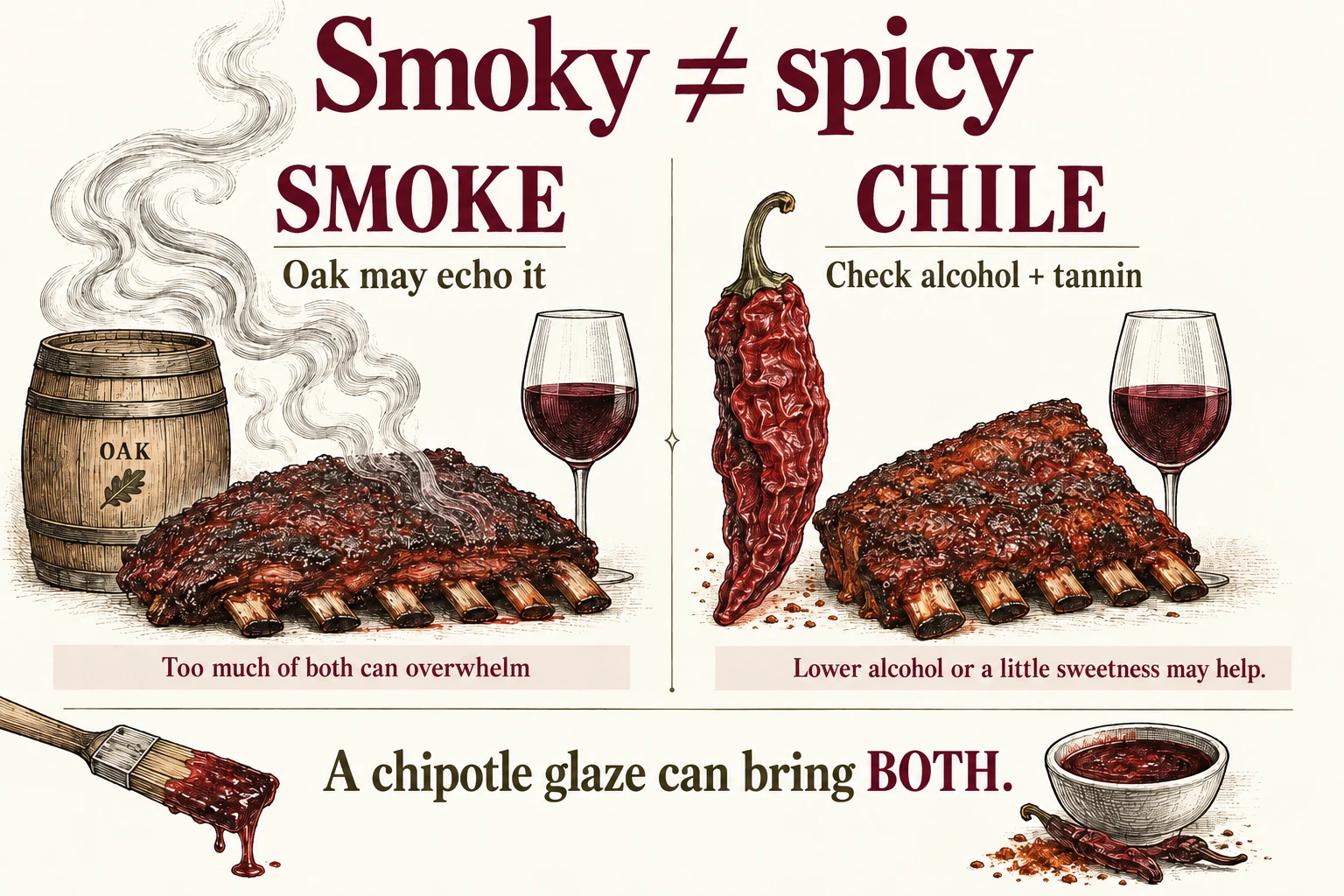
Read the illustration
Moderate smoke may work with an oak-influenced red, but heavy smoke plus heavy oak can overwhelm. Chile heat calls for checking alcohol, tannin, and sweetness; smoky and spicy are not the same.
Smoke can create a bridge to a wine with documented smoke, spice, vanilla, or oak influence, but similarity is not automatically harmony. Heavy smoke plus heavily toasted oak can become tiring. Moderate smoke with fruit still visible often gives the wine and ribs room to converse.
Chile is more likely to veto a bottle. Capsaicin can make alcohol feel hotter and tannic bitterness or dryness more prominent. A glaze with chipotle may deliver both smoke and heat, so “smoky wine with smoky food” solves only half the problem. With serious heat, consider lower-alcohol or slightly sweet styles and serve the wine cool. Do not claim either attribute without checking the individual bottle.
Salt and fat also shape the sip. Salt can soften the perception of bitterness, acidity, and tannic dryness for many tasters. Fat changes texture and can make freshness welcome, but tannin does not literally cut or dissolve fat. The tannin definition is useful here because it separates a sensory description from a kitchen myth.
Service is the last calibration. A warm red may show more alcohol beside a hot, spicy plate. Slightly cool—not icy—service can help, and water belongs on the table. Decanting can change aroma and texture, but it cannot turn a dry red into the right partner for a very sweet glaze.
Use the smoke and sauce scale
Read each row from the rib outward. The table resolves to styles, not bottles, so it remains useful when the recipe or inventory changes.
| Rib setup | Sauce or rub | Smoke and heat | Style to try first | Reason to reconsider |
|---|---|---|---|---|
| Baby backs | Dry rub or restrained savory glaze | Low to moderate smoke; low heat | Fruit-led red, rosé, or supple savory red | A delicate rack can be overwhelmed by heavy oak or grip |
| Baby backs | Sticky sweet tomato, honey, or fruit glaze | Any smoke; low heat | Off-dry red, rosé, or aromatic white | A dry red may seem harder and less fruity than it did alone |
| St. Louis pork ribs | Peppery dry rub or savory tomato mop | Moderate smoke; low heat | Savory red blend, Malbec, or Syrah style | Move lighter when vinegar is sharp or sauce is sparse |
| St. Louis pork ribs | Vinegar-led sauce | Low to moderate smoke | Fresh red, rosé, or textured white | Strong oak can feel disconnected from the sharp sauce |
| Beef ribs | Salt, pepper, bark; little sweetness | Moderate to deep smoke; low heat | Structured red blend, Malbec, Cabernet, or Syrah style | Very heavy smoke plus oak can become tiring |
| Any rib | Chipotle, cayenne, hot glaze, or hot honey | Medium to high heat | Lower-alcohol or lightly sweet red, rosé, or aromatic white | Heat can heighten alcohol, bitterness, and tannic dryness |
What changes the answer before checkout
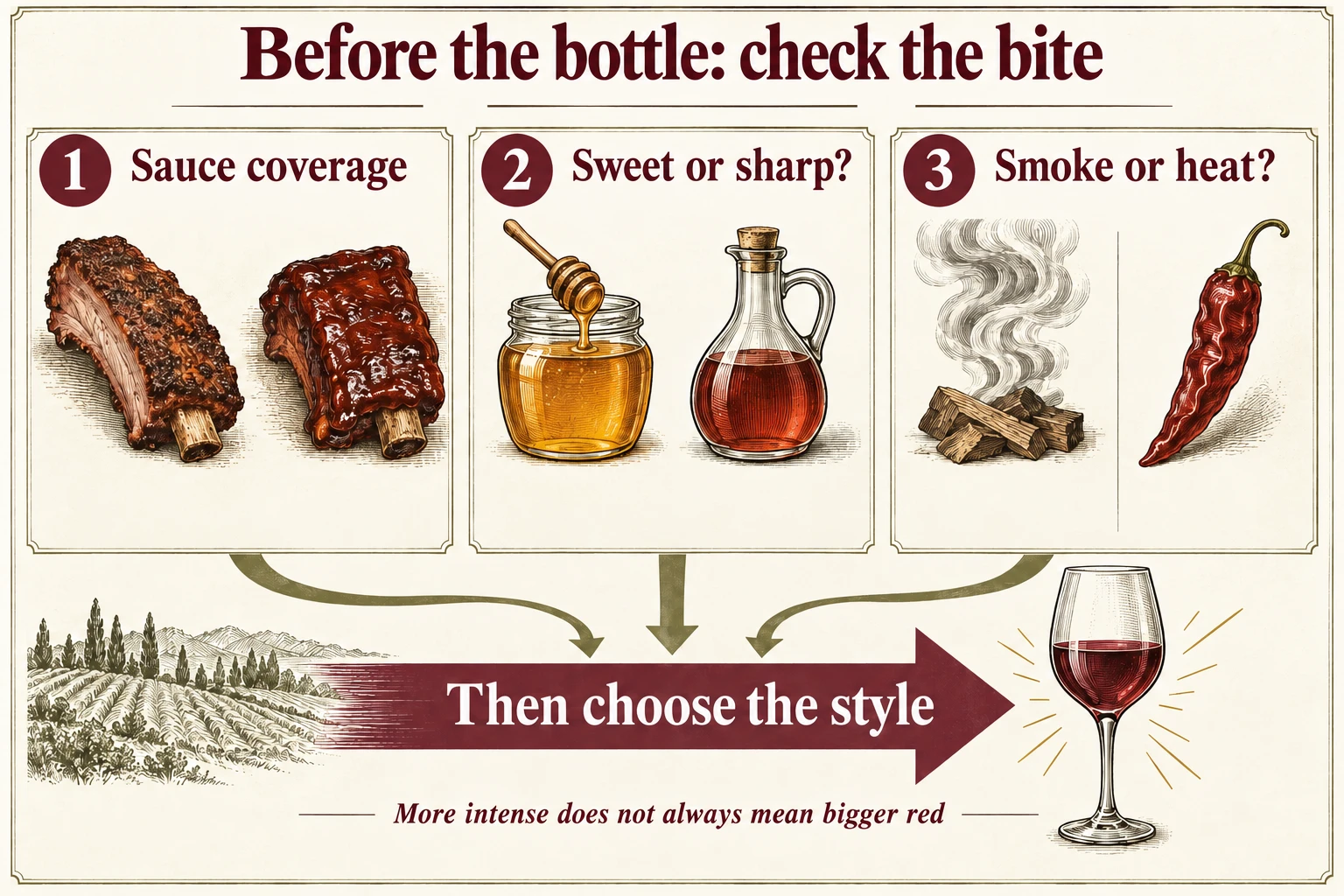
Read the illustration
Before choosing wine, check how much sauce coats the rib, whether the sauce is sweet or sharp, and whether the bite is smoky or chile-hot. More intense food does not automatically call for a bigger red.
Run a final plate audit instead of buying from the meat name alone:
- Taste the sauce cold and warm. Warmth can change how sweet, sharp, or hot it seems.
- Estimate sauce coverage. A lacquered rack behaves differently from dry bark with sauce on the side.
- Name the smoke. A mild charcoal note is not the same as hours of assertive hickory or mesquite.
- Separate pepper from chile. Black pepper contributes aroma and pungency; capsaicin heat creates a different wine problem.
- Ask what the group actually likes. Some diners want an oak-matured red with smoke; others will find that combination exhausting.
When our Reserva reds are not the best choice
Skip both featured wines when sweetness or chile leads the plate. A lightly sweet aromatic white, off-dry rosé, or gentler red can be a better partner for sticky baby backs. With a sharp vinegar sauce, choose freshness and restraint rather than assuming oak will help. With extreme smoke, a simpler fruit-led wine may be more refreshing than layering smoke on smoke.
Skip wine entirely if the group wants cold beer, cider, iced tea, or sparkling water. The purpose of pairing is to make dinner more enjoyable, not to defend a bottle choice. Nonalcoholic options also remove the alcohol-and-chile interaction.
And keep the cultural boundary clear: chimichurri-seasoned tira de asado is not American barbecue sauce on another cut. Read the Argentine asado guide for the whole fire-to-table sequence and the tira de asado recipe for its cut and cooking method. If the food is a braised lamb shoulder rather than ribs, start again with the lamb wine-pairing guide.
For a deeper buying decision between Malbec styles, use the Malbec guide. If the word “blend” is the part you want to understand before purchase, the red-blend buyer guide explains how to separate disclosed composition from what remains unknown.
BBQ-rib pairing questions, answered plainly
Is Malbec good with BBQ ribs?
It can be, especially with beef ribs, savory dry rub, browned bark, or a tomato sauce that is not very sweet or hot. Malbec styles differ. Fresh unoaked examples and oak-matured Reserva examples should not be treated as interchangeable. Sauce sweetness and chile can make a different style preferable.
What wine goes with pork ribs?
Begin with the preparation. Dry-rubbed or savory St. Louis ribs can work with a fruit-led red. Lightly seasoned baby backs can accept rosé or white. Sticky-sweet glazed ribs often benefit from a wine with some sweetness, while vinegar-led sauce can reward freshness and restraint.
What red wine works with beef ribs?
A structured red blend, Malbec, Cabernet Sauvignon, or Syrah style is a reasonable starting group when the ribs are savory, peppery, and not very sweet. Select the actual bottle by its fruit, oak, alcohol, tannic feel, and serving temperature rather than the grape name alone.
Does smoky wine always pair with smoked ribs?
No. Moderate similarity can feel connected, but deep smoke in both food and wine can become monotonous or tiring. Preserve contrast and fruit. If the bark is extremely smoky, a simpler, fresher style may be the more useful pour.
Should red wine be served at room temperature with ribs?
“Room temperature” can be too warm in a summer kitchen or at an outdoor cookout. Slightly cool service can keep alcohol from feeling as prominent, especially near chile heat. Follow the producer’s serving guidance and adjust to the weather and the people drinking.
Choosing for brisket instead?
Brisket adds a decision that this ribs guide does not cover: a richer point, a leaner flat, and the moisture of the slice at service. The separate wine-with-brisket guide follows those differences through smoking, braising, and reheating before returning to the sauce.
Sources and methodology
This guide combines established wine-education principles with Familia Morgan product records verified on July 31, 2026. It distinguishes among the cut, sauce, smoke, and chile heat because each can change the pairing. The recommendations remain conditional because recipes, bottles, and sensory preferences vary.
- WSET, “How to pair wine with your favourite takeaway meals”, for umami and its possible effect on fruit, bitterness, and tannic sensations.
- WSET, “Winter wine and food matching”, for salt, fat, acidity, sweetness, and intensity principles.
- WSET, guidance on pairing drinks with spice, for the interaction among chile, alcohol, tannin, and sweetness.
- Familia Morgan, 2020 Red Blend Reserva and 2020 Malbec Reserva, checked July 31, 2026 for the product and pairing details stated here.
Price, availability, shipping eligibility, taxes, and final terms are confirmed at checkout.