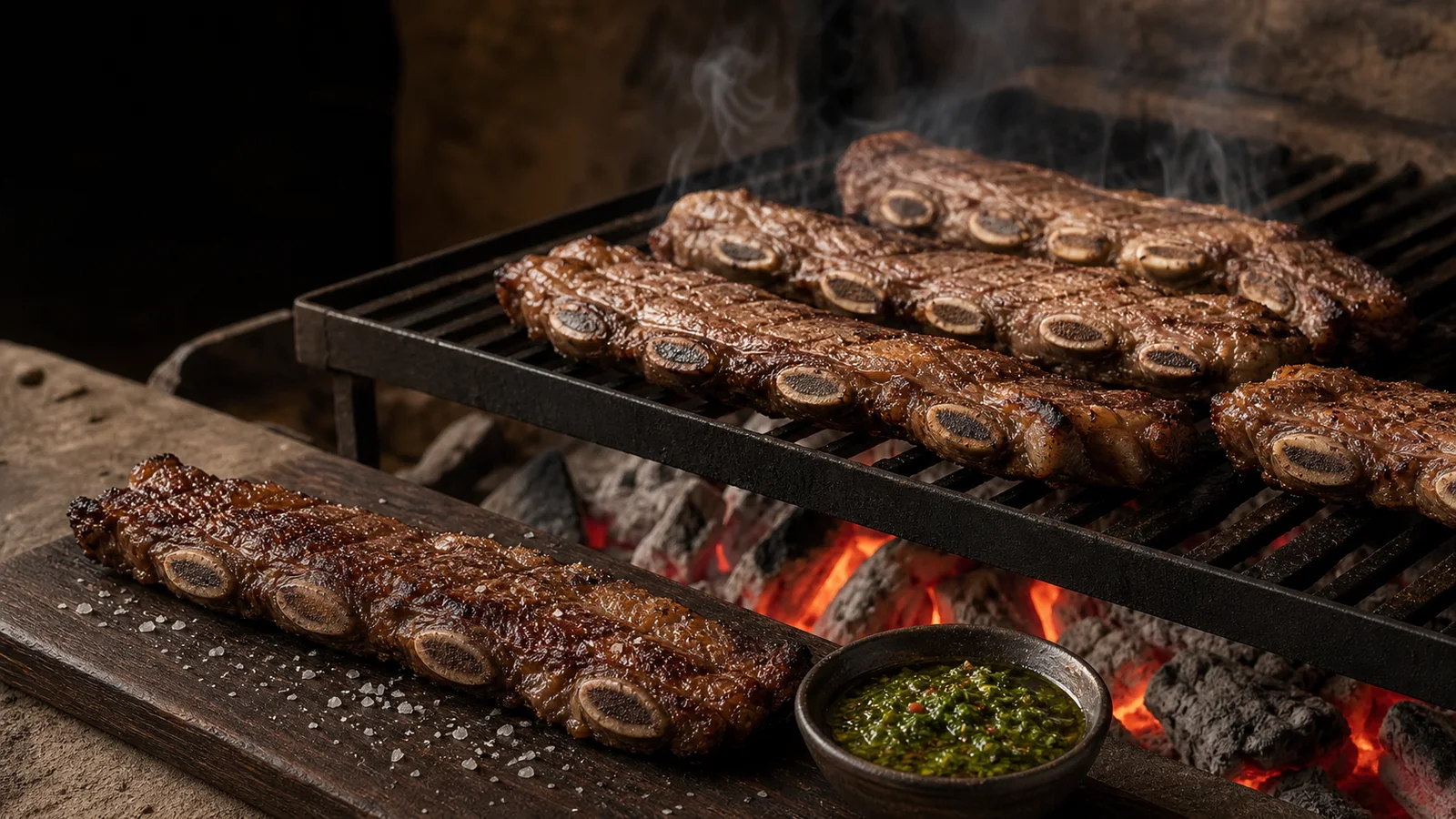
Tira de Asado: Argentine Grilled Short Ribs
Answer first: tira de asado is beef rib cut crosswise into strips so several small bone sections appear in each piece. For this quick grill method, ask for evenly cut strips 1/2 to 3/4 inch thick. Grill over managed medium-high heat, verify at least 145°F (63°C) in the meat away from bone, and rest for three minutes.
Argentina’s beef-cut system and a U.S. butcher counter use related but not identical labels. Tira de asado describes the rib strip used at the parrilla. In the United States, “flanken-style short ribs” is the clearest shopping phrase, but packages can be much thinner than this recipe requires. Korean-style flanken ribs, for example, may be only 1/4 inch thick and need different timing.
The thin strip is often called asado banderita. IPCVA, Argentina’s beef-promotion institute, recommends a finger-thick banderita as an approachable first grill cut. That is one useful style, not the only way Argentines cook the rib section. A full costillar and a thick strip require slower, separate methods.
The concise asado glossary entry explains the larger gathering. This page owns one cut, one thickness range, and one repeatable home-grill method.
What to ask the butcher for
Ask for cross-cut beef short ribs, 1/2 to 3/4 inch thick, with each long strip crossing three or four bones. Choose strips with similar thickness and visible meat between and over the bones. Even pieces finish together; irregular scraps do not.
Do not substitute English-cut short ribs without changing the recipe. Those thick blocks are cut parallel to the bone and usually need braising or a much longer low-heat cook. Do not use boneless short ribs and assume the clock stays the same.
Three pounds serves four as a main cut because bone accounts for part of the weight. At a longer asado with choripán, provoleta, and other beef, it can serve more.
Fire without flare-ups
An Argentine parrilla commonly works with a bed of embers and a grate whose distance from the heat can be managed. A two-zone charcoal or gas grill translates that control for a home cook: one side colors the ribs; the cooler side gives you somewhere to move them when rendered fat flares.
The goal is browned meat over steady heat, not soot from open flames. Keep the lid open while actively watching thin ribs unless your grill manufacturer specifies otherwise. Never spray water onto a grease flare. Move the meat, close the grill’s fuel control if appropriate, and let the flame settle.
IPCVA’s beginner guidance gives five to seven minutes per side for a thin banderita. Treat that as a planning range. USDA guidance makes temperature, not elapsed time or surface color, the safety decision. Because bone conducts heat and can distort a reading, insert a fast thermometer horizontally from the side into the thickest meat and check multiple locations.
Sauces and side dishes
Chimichurri brings herbs, garlic, vinegar, and oil. Salsa criolla adds chopped onion, peppers, tomato, and a juicy vinegar bite. Put both on the table after cooking rather than using either as a long raw-meat marinade.
For a cold side, Argentine ensalada rusa supplies soft potato, carrot, peas, and mayonnaise. Its mild richness is useful beside char, but it must remain cold during a long outdoor meal.
If this is the centerpiece of a longer meal, make Argentine flan the day before and serve it chilled after the grill is cleared.
Wine pairing
The cut is rich but thin, so the wine does not need to be the biggest red available. A fresh Malbec with dark fruit and moderate tannin can meet the browned beef. Cabernet Sauvignon or a Cabernet-led blend is another sensible route when the glass has enough fruit for the salt and char.
Sauce changes the final choice. Vinegar and raw garlic can make heavy oak and high alcohol seem sharper, so reach for freshness when chimichurri or salsa criolla is generous. The best wine with steak guide handles cut, doneness, char, and sauce; the asado wine-pairing guide handles the whole meal.
Sources and methodology
This page combines official Argentine cut and grilling context with current U.S. home food-safety rules. The 1/2- to 3/4-inch specification and two-zone workflow are our controlled recipe boundary. They should not be applied to a full rib rack or thick English-cut short ribs.
- IPCVA, 7 tips del asado para parrilleros principiantes, for the finger-thick banderita recommendation and five-to-seven-minute-per-side planning range.
- IPCVA, Asado con vacío cut nomenclature, for the official Argentine rib-section boundary and cutting context.
- Argentina.gob.ar, Asado, for tira de asado’s place among commonly served grill cuts and the broader table context.
- USDA FSIS, Grilling Food Safely, for 145°F whole-beef guidance, the three-minute rest, cross-contamination controls, no partial grilling, and outdoor holding limits.
- USDA FSIS, Food Thermometers, for side insertion in thin foods and placement away from bone, fat, and gristle.
Ingredients
- 3 pounds (1.36 kg) cross-cut beef short ribs, cut across the bones into strips 1/2 to 3/4 inch thick
- 2 teaspoons (12 g) fine sea salt
- 1 tablespoon neutral high-heat oil, for the clean grill grate
- 1/2 teaspoon freshly ground black pepper, optional
- 1/2 cup chimichurri, for serving
- 1 cup salsa criolla, for serving
Directions
- Prepare safely. Thaw the ribs completely in the refrigerator. Keep the raw meat, its tray, and its tongs separate from sauces and cooked food. Pat the ribs dry; do not rinse them. Trim only loose flaps or hard surface fat.
- Season. Sprinkle both broad sides evenly with the 2 teaspoons salt and optional pepper. Keep the ribs refrigerated while the grill heats; take them out only when the grate is ready.
- Build a two-zone grill. Heat one side to medium-high, about 450-500°F (232-260°C) at the grate, and leave the other side cooler. Scrub the grate, then oil it with folded paper towel held in long tongs. Flames should not be licking the meat.
- Grill the first side. Put the ribs on the hotter zone in one layer. Grill for 5-7 minutes, moving any strip to the cooler zone if dripping fat causes flare-ups or the surface darkens too quickly.
- Turn once and finish. Use clean-ended tongs to turn the ribs. Grill the second side for 5-7 minutes. Timing is a range, not the doneness test; thickness, bone size, grill load, and wind change it.
- Verify every strip. Remove one rib briefly from the heat. Insert a fast digital thermometer from the side into the thickest meat, with the sensing area centered and away from bone, fat, and gristle. Check more than one place and every strip. Whole-cut beef must reach at least 145°F (63°C).
- Do not partially grill. If a strip browns before reaching 145°F, move it to the cooler zone and continue cooking. Do not stop halfway, refrigerate it, and finish later. Transfer finished ribs to a clean platter, never the raw-meat tray.
- Rest and serve. Rest the ribs for at least 3 minutes. Cut between the bones with a clean knife if you want smaller portions. Serve immediately with chimichurri and salsa criolla on the side.
Wine Pairing
Tira de asado combines beef, browned fat, smoke, and salt. A fruit-led Malbec or Cabernet-based blend with moderate tannin is a more flexible start than a heavily oaked, high-alcohol bottle when sharp chimichurri or salsa criolla is present.
Serving Ideas
Allow about three-quarters of a pound of bone-in ribs per adult when this is the main cut, then adjust for children and the number of other courses. Serve with ensalada rusa, a green salad, grilled vegetables, chimichurri, and salsa criolla. If choripán comes first, reduce the rib portion rather than asking every guest to finish a full serving of each.
Storage
Refrigerate raw beef at 40°F (4.4°C) or below and follow its package date. Refrigerate cooked ribs within 2 hours, shortened to 1 hour when the air temperature is above 90°F (32.2°C). Use cooked leftovers within 3-4 days and reheat to 165°F (73.9°C). Store sauces separately. Discard cooked meat left out beyond the applicable limit.
Thin, evenly cut ribs and managed heat matter more than a heroic flame. Once the thermometer and three-minute rest are accounted for, put the sauces on the table and let the meal continue through the Argentine asado wine-pairing guide.
Editorial image created for this recipe; it illustrates thin cross-cut ribs over managed coals rather than a documented family asado.