Chardonnay vs Pinot Grigio: Choose Your White Wine
Quick Takeaways
- Chardonnay: the wider texture choice | citrus, apple or stone fruit | lean to rounded, with or without oak | seafood to creamy poultry, by style
- Pinot Grigio: a light-style starting point | lemon, pear or apple | often light and fresh; richer Gris styles exist | delicate fish or lighter pasta
- Choose a light Pinot Grigio for a discreet, refreshing glass; choose Chardonnay when you want to select more deliberately between a fresh style and a richer one.
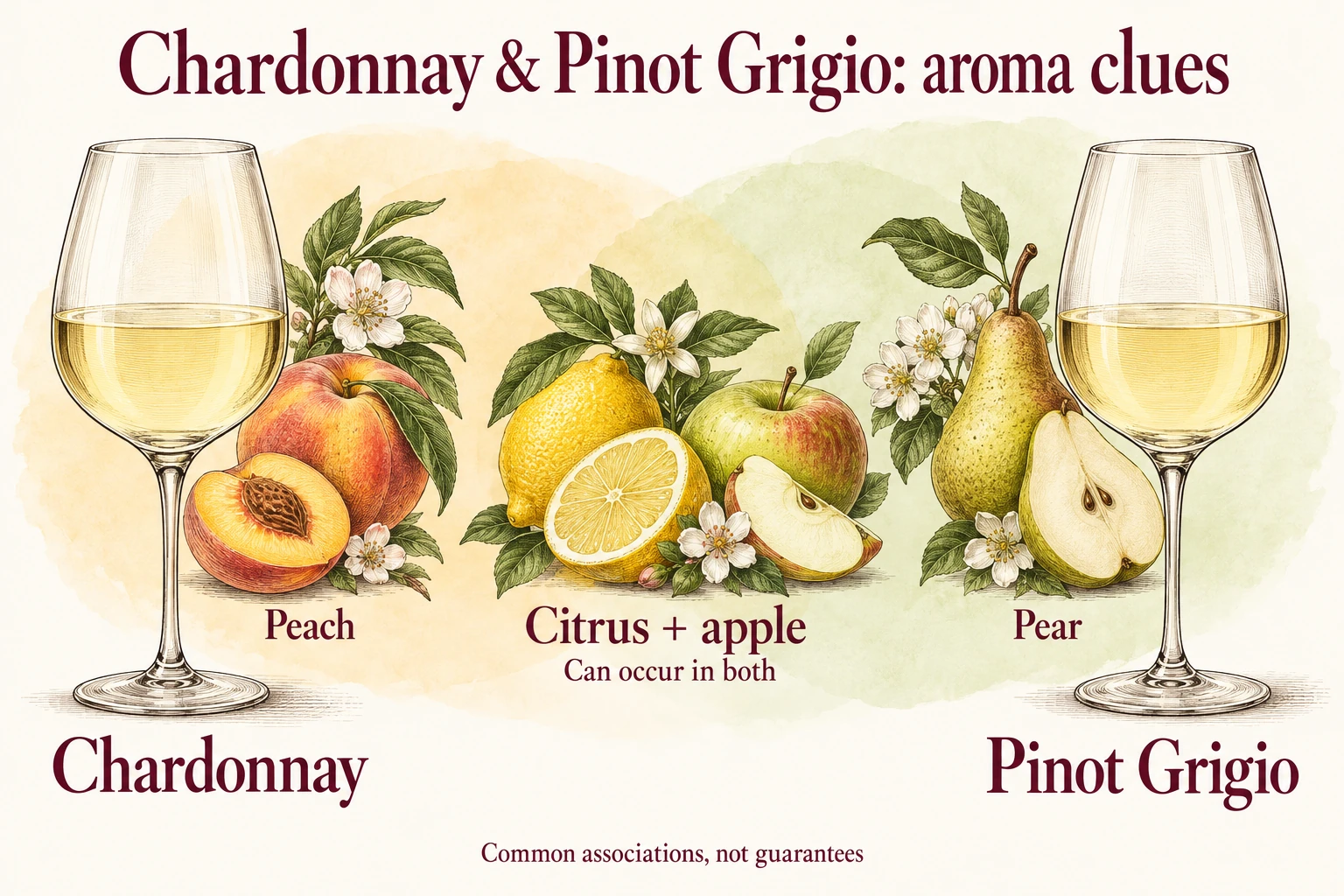
The useful difference between Chardonnay and Pinot Grigio is usually texture and winemaking, not a simple sweet-versus-dry split. A familiar light Pinot Grigio is a good starting point for a crisp, understated white. Chardonnay gives you a broad choice, from citrus-led and lean to rounded, toasty and rich.
For Chardonnay vs Pinot Grigio, or Pinot Grigio vs Chardonnay, compare styles before grape names. An unoaked Chardonnay can have more in common with a light Pinot Grigio than with a rich, barrel-influenced Chardonnay. A fuller Pinot Gris can overlap with the richer end of Chardonnay.
Start with the kind of glass you want, then check the label and the food. The comparison below focuses on still white wines; regional and producer choices can change the result.
Chardonnay vs Pinot Grigio: At a Glance
Chardonnay: Choose the texture first
Chardonnay does not commit you to butter or oak. Its usefulness is the range of styles available: a wine for a light lemony dish may be very different from one chosen for a creamy roast-chicken dinner.
What to look for:
- Flavor Profile: Citrus and apple, often peach; riper examples can suggest tropical fruit.
- Body: Light to full, depending on place and winemaking.
- Acidity: Variable; cool-climate styles can be very fresh.
- ABV: Compare the alcohol percentage on the actual labels; the grape name is not enough.
- Style Advantage: A broad choice between lean fruit-led and richer, cellar-shaped styles.
Pinot Grigio: Freshness, with a richer side
Pinot Grigio and Pinot Gris are names for the same grape. Many familiar Pinot Grigios favor a lighter, discreetly fruity style, but the name is a clue rather than a rule. Fuller, textured versions are worth knowing before you dismiss the grape as too light.
What to look for:
- Flavor Profile: Lemon, apple and pear in lighter styles; richer examples may add ripe stone fruit or spice.
- Body: Often light in familiar Grigio styles; fuller Gris and Grigio exist.
- Acidity: Medium to high, depending on the bottle.
- ABV: Compare the alcohol percentage on the actual labels; the grape name is not enough.
- Style Advantage: An easy starting point for a light white, with a richer alternative in the same grape.
Fruit overlap leaves room for texture
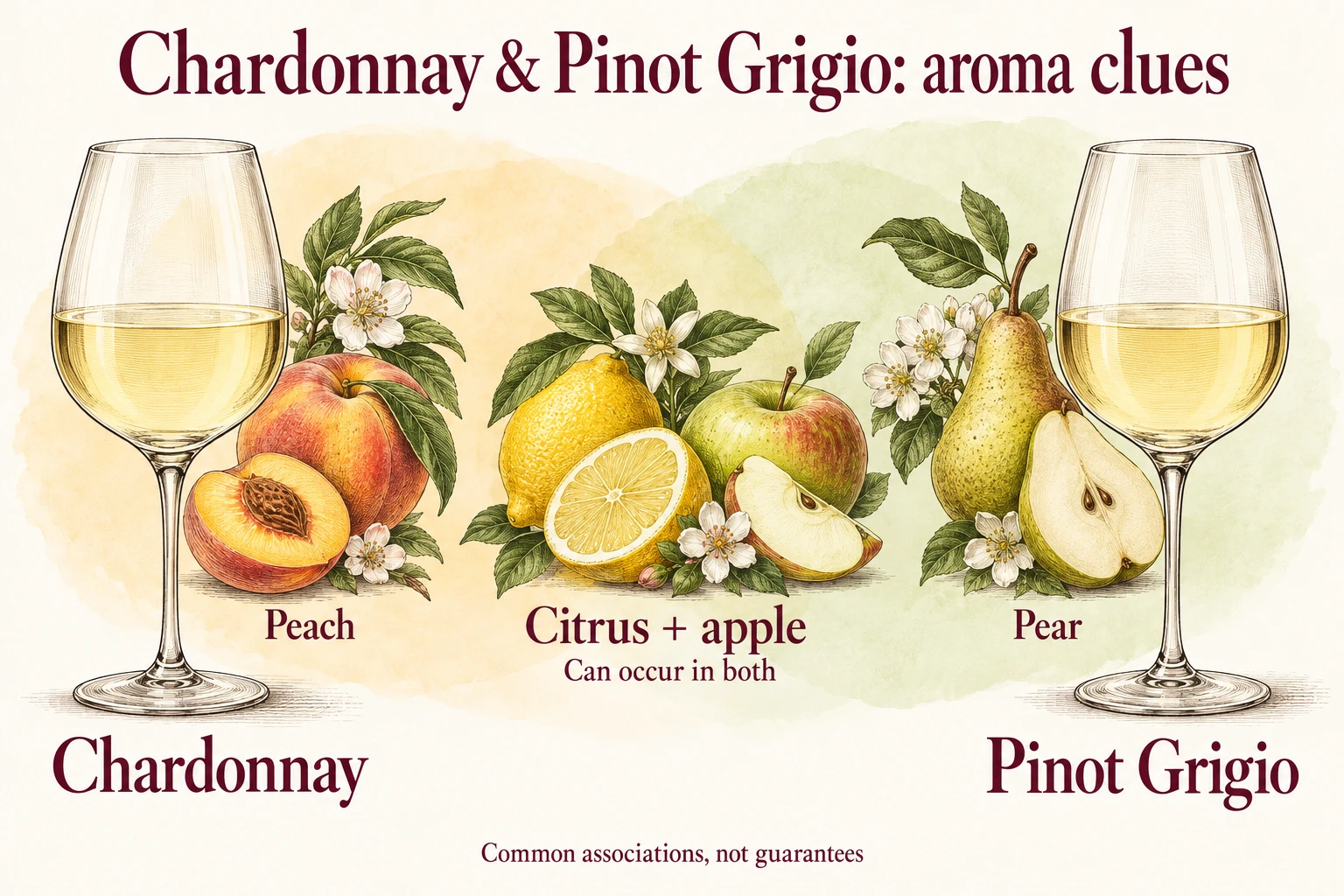
Read the illustration
Chardonnay can suggest citrus, apple and peach. Light Pinot Grigio often suggests lemon, apple and pear. These are common associations, not exclusive traits or a record of a tasting.
Key Differences: Taste, Texture and the Bottle
These are useful style tendencies, not fixed measurements for every bottle.
| Attribute | Chardonnay | Pinot Grigio |
|---|---|---|
| Fruit cues | Citrus, apple, peach; sometimes tropical | Lemon, apple, pear; richer styles vary |
| Usual starting style | Lean to rounded; a broad range | Often light and fresh |
| Richer versions | Ripe fruit, lees and/or oak can add weight | Fuller Pinot Gris or Grigio also exist |
| Acidity | Variable; cool styles can be very fresh | Medium to high, depending on style |
| Sweetness | Often dry; verify the particular bottle | Often dry; the name does not guarantee it |
| Oak choice | Both unoaked and oak-influenced styles | Often unobtrusive; wood-aged versions exist |
| Aroma emphasis | Fruit; cellar notes in some styles | Discreet fruit in many light versions |
| Label clues | Unoaked, oak, lees, winemaking notes | Grigio/Gris, region, producer description |
| Regional clues | Burgundy, California, Australia | Northern Italy, Alsace, Oregon |
| Meal starting point | Fresh for fish; rounded for cream sauce | Light for delicate fish or lighter pasta |
Body: compare a light style with a light style
If you enjoy the lighter feel of Pinot Grigio, start your Chardonnay search with words such as “fresh,” “citrus-led” and “unoaked.” If you want more presence in the glass, look for “rounded” or “textured.” Neither choice requires you to like strong oak flavors.
The reverse also matters: a broad Pinot Gris is a fairer comparison for a textured Chardonnay than a very light Pinot Grigio. Alto Adige’s own grape guide describes both fresh and fuller, wood-vinified Pinot Grigio.
Oak, butter and sweetness are different questions
Oak contact can introduce toast or vanilla. Butter-like aromas are associated especially with compounds formed during malolactic conversion, a separate cellar process. An unoaked wine is not automatically free of malolactic influence, and a stainless-steel fermentation claim does not measure sugar.
For either grape, look for an explicit sweetness description if dryness matters to you. Pear, ripe apple or peach in a tasting note describes aroma; it is not evidence of added sugar or a sweeter finish. For a deeper no-oak decision, use the unoaked Chardonnay guide.
Pinot Grigio and Pinot Gris are one grape
The Italian name often suggests a lighter style, while Pinot Gris often signals a broader one. That shorthand is useful, but the actual region and producer can overturn it. Alsace Pinot Gris is an important example of a rounded, substantial white; Italian Pinot Grigio is not confined to a single weight or method.
Ask a wine-shop staff member for “a light, dry Pinot Grigio” or “a fuller Pinot Gris” rather than expecting the grape name to answer every preference. Those requests describe what you want without turning a regional tendency into a guarantee.
A name suggests a style; it does not guarantee one
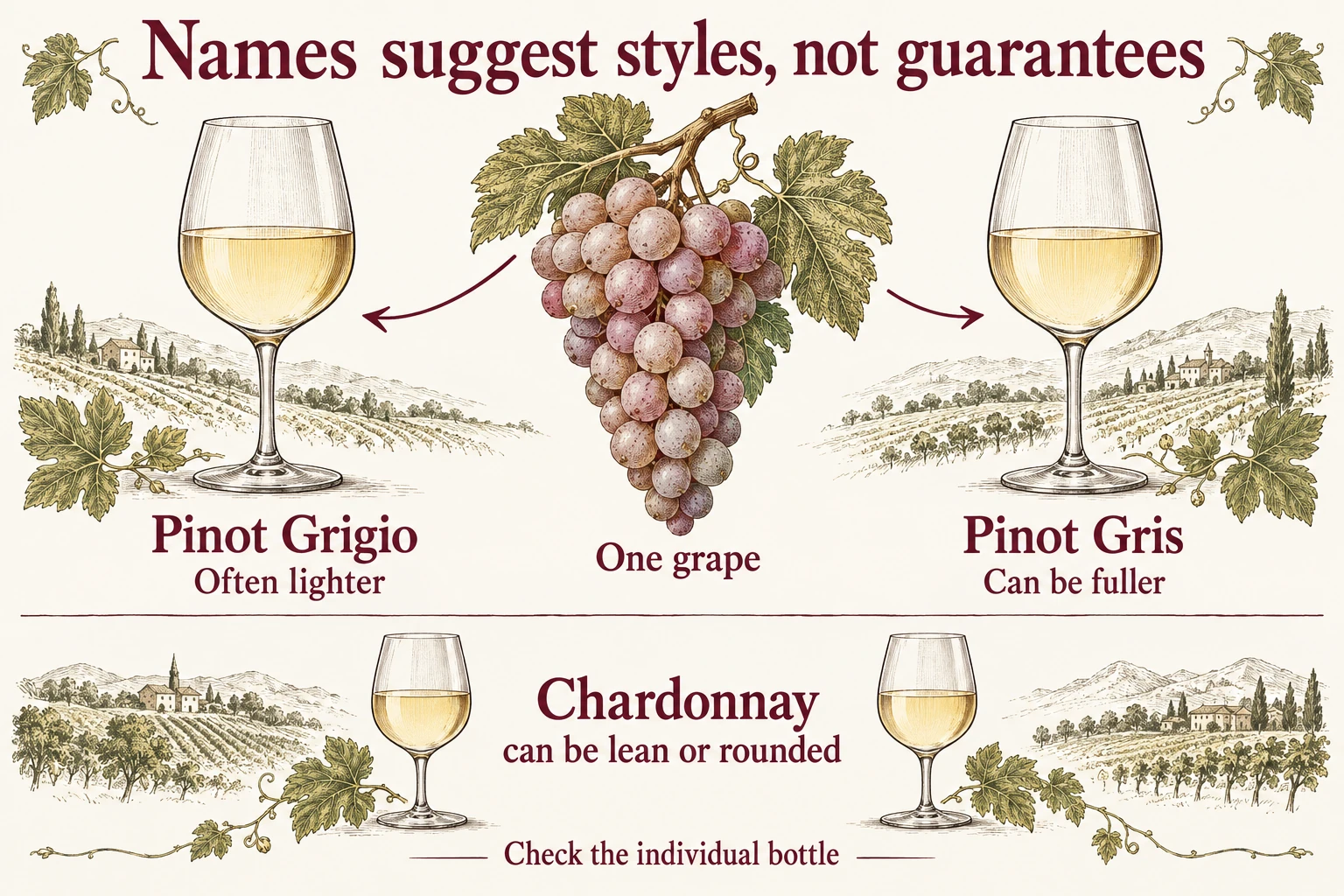
Read the illustration
Pinot Grigio and Pinot Gris name the same grape. Light Pinot Grigio, fuller Pinot Gris or Grigio, lean Chardonnay and rounded Chardonnay can overlap in body. No numeric scale or fixed ranking is implied.
Where Chardonnay and Pinot Grigio Grow
For Chardonnay, place and cellar choices work together. For Pinot Grigio, regional context is especially helpful when the same grape appears under the name Pinot Gris.
Chardonnay: Where It Grows
- Burgundy, France: Chablis is a useful fresh, dry Chardonnay reference when your usual choice is light Pinot Grigio. The wider Burgundy range makes the region and producer worth specifying.
- California, United States: For a Pinot Grigio drinker exploring Chardonnay, a coastal, fresh style may be an easier first comparison than a rich, buttery one. California produces both, so ask for the texture you prefer.
- Australia: Chardonnay from cooler places such as the Yarra Valley can offer a restrained style. Do not let an old expectation of heavy oak obscure the lighter options.
Pinot Grigio: Where It Grows
- Northern Italy: Pinot Grigio ranges beyond the familiar light style. Alto Adige alone offers fresher higher-site wines and broader examples; check the particular producer.
- Alsace, France: Usually labeled Pinot Gris. It is a useful place to explore fuller texture and more complex aroma associations, including ripe stone fruit and smoky notes.
- Oregon, United States: Pinot Gris is an established part of the region’s white-wine range. Orchard-fruit descriptions help identify alternatives to the most neutral, light styles.
Chardonnay vs Pinot Grigio: Choosing for Dinner
Chardonnay Food Pairings
Choose the Chardonnay’s weight to match the finished dish.
- Fresh, restrained Chardonnay with lemon-dressed white fish
- Rounded Chardonnay with roast chicken and a modest cream sauce
- A textured but balanced style with mushroom pasta
Why it works: A light preparation leaves room for freshness; cream and browned flavors can welcome more texture. Strong oak is an option, not a requirement for richer food. These are starting points to test against your own taste.
Pinot Grigio Food Pairings
Start with lighter Pinot Grigio when you want the dish to remain the focus.
- A light style with simply grilled fish
- A fresh style with a light vegetable pasta
- A fuller Pinot Gris with roast poultry or mushrooms
Why it works: Delicate fruit and a lighter body can sit comfortably beside less intense dishes. If the meal is richer, choosing a fuller expression may work better than insisting on the lightest version of the grape.
Pro Tip: With delicate lemon fish, either a light Pinot Grigio or a fresh Chardonnay can work. When cream or roasting changes the dish, reassess body before switching grapes.
Choose for the sauce as well as the fish
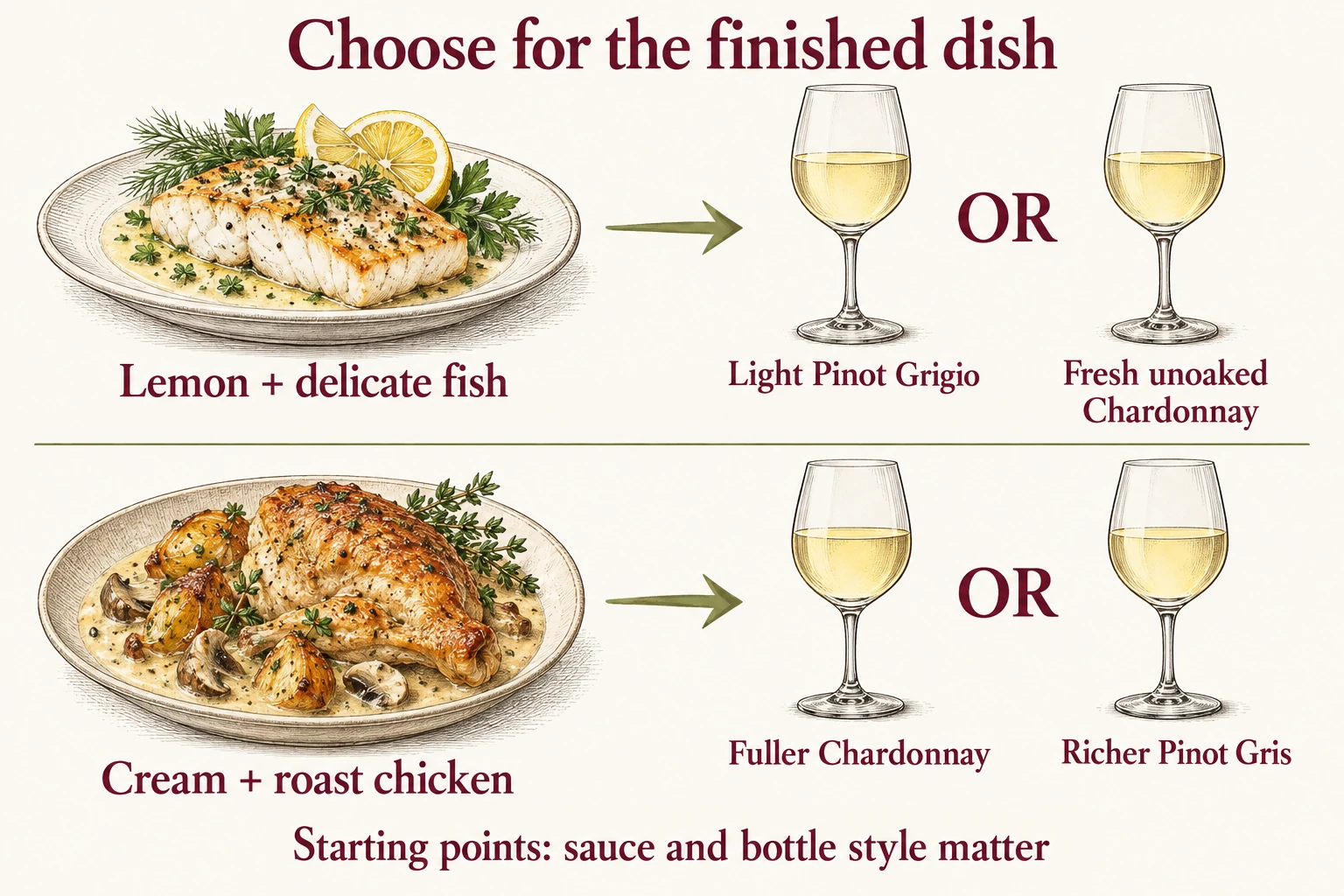
Read the illustration
Delicate lemon fish: light Pinot Grigio or fresh Chardonnay. Cream sauce or roast chicken: fuller Chardonnay, with richer Pinot Gris another option. These are pairing starting points, not rules.
For a sauce-by-sauce decision, continue to our pasta pairing guide; for a poultry dinner, use wine with chicken.
A fresh Chardonnay example from our range
Our 2024 Nine Queens Chardonnay provides one unoaked example, with citrus, white stone fruit and floral notes, plus stainless-steel fermentation. Those details do not establish residual sugar or malolactic treatment. If you want a light Pinot Grigio, choose that style instead.
For a bottle-selection decision, the recommended Chardonnay guide and unoaked Chardonnay guide go into more detail.
FAQ: Chardonnay vs Pinot Grigio
Is Chardonnay sweeter than Pinot Grigio?
Not reliably. Both are often sold as dry still whites, but sweetness varies by bottle. Fruit aromas, creamy texture and oak notes are not sugar measurements. Read the producer’s sweetness description rather than ranking the grapes.
Pinot Grigio vs Chardonnay: which is lighter?
A familiar light Pinot Grigio is a sensible starting point if lightness is your priority. It is not a universal winner: lean Chardonnay and richer Pinot Gris or Grigio create plenty of overlap. Compare the producer’s style notes.
Are Pinot Grigio and Pinot Gris the same grape?
Yes. The two names often suggest different style traditions, but neither name guarantees body, sweetness or oak treatment. Region and producer information make the distinction more useful.
Which should I choose if I dislike buttery wine?
Look for a bottle explicitly described as fresh and without a buttery character. Light Pinot Grigio and many unoaked Chardonnays are useful places to start, but “unoaked” alone does not establish the wine’s malolactic history.
Can I use either one in a recipe asking for dry white wine?
Yes, provided the actual bottle is dry and its flavors suit the recipe. Choose a restrained example rather than treating the grape name as enough information. A strongly oaky or noticeably sweet wine can change the result.
Which grape has more alcohol?
Read the two labels. Alcohol varies with the growing conditions and production choices, and an exact bottle comparison is more useful than a grape-wide range. A lighter-feeling wine is not automatically lower in alcohol.
The Final Word: How to Choose
Choose Chardonnay when:
- You want to choose between lean freshness and fuller texture.
- You enjoy citrus or stone fruit and can check how much oak influence you want.
- Your meal moves from delicate seafood to a richer cream or roast preparation.
Choose Pinot Grigio when:
- You want a light, discreetly fruity starting point.
- You are serving delicate fish or a lighter pasta dish.
- You want to explore fuller Pinot Gris as an alternative to the familiar light style.
For a quick light-white choice, start with Pinot Grigio. For a deliberate choice of texture and cellar influence, explore Chardonnay. Let the actual bottle change your mind.
Keep comparing: Chardonnay vs Sauvignon Blanc, Chardonnay vs Riesling, more wine guides.
This guide covers the Chardonnay–Pinot Grigio choice. The linked guides handle individual bottle selection and specific meals in more detail.
Sources and approach
The regional organizations and educators below explain grape styles and winemaking. Pairing suggestions apply those principles while leaving room for personal taste.