Chardonnay vs Sauvignon Blanc: Which Style Suits You?
Quick Takeaways
- Chardonnay: fruit and a wide texture range | apple, citrus or stone fruit | lean to rounded, with or without oak | seafood or creamy poultry, by style
- Sauvignon Blanc: a more herbal starting point | citrus, herbs; sometimes passion fruit | often bright and aromatic; fuller styles exist | herbs, tangy salads or seafood
- Choose Chardonnay when texture and fruit are your priorities; choose Sauvignon Blanc when you actively want a brighter herbal or pungently aromatic character.
Chardonnay and Sauvignon Blanc can both be fresh, citrus-led white wines. The more useful distinction is what sits alongside that citrus: Chardonnay often puts fruit and texture first, while Sauvignon Blanc is a stronger starting point for herbal, grassy or vividly aromatic flavors.
The answer to Chardonnay vs Sauvignon Blanc, or Sauvignon Blanc vs Chardonnay, changes when you compare individual styles. Unoaked Chardonnay can be crisp. Sauvignon Blanc can be oak-matured and rounded. Neither grape owns freshness or richness.
Use aroma preference first, then consider acidity, oak and the dish. This guide compares still white styles rather than ranking grapes or pretending every bottle tastes alike.
Chardonnay vs Sauvignon Blanc: At a Glance
Chardonnay: Start with fruit and texture
If you want apple, citrus or stone fruit without actively seeking a grassy note, Chardonnay is a sensible starting point. Then narrow the style: fresh and lean, rounded and textured, or clearly oak-influenced.
What to look for:
- Flavor Profile: Apple, citrus and stone fruit; ripe examples can show tropical fruit.
- Body: Light to full, depending on climate and cellar choices.
- Acidity: Variable; cooler styles can have pronounced freshness.
- ABV: Compare the alcohol percentage on the actual labels; the grape name is not enough.
- Style Advantage: A broad choice of texture without committing to a strongly herbal aroma.
Sauvignon Blanc: Choose the aromatic direction
Sauvignon Blanc often announces itself with citrus and green or herbal aromas. Some versions lean toward gooseberry and grass; others add ripe tropical fruit. The grape also makes broader wines, so “Sauvignon Blanc” is not a synonym for thin or austere.
What to look for:
- Flavor Profile: Citrus, gooseberry or herbs; some examples emphasize passion fruit.
- Body: Often light to medium; fuller styles also exist.
- Acidity: Often high, but climate and production can change its feel.
- ABV: Compare the alcohol percentage on the actual labels; the grape name is not enough.
- Style Advantage: A distinctive herbal or vivid fruit-led aroma that can suit tangy, green-flavored dishes.
Citrus can connect two different aroma directions
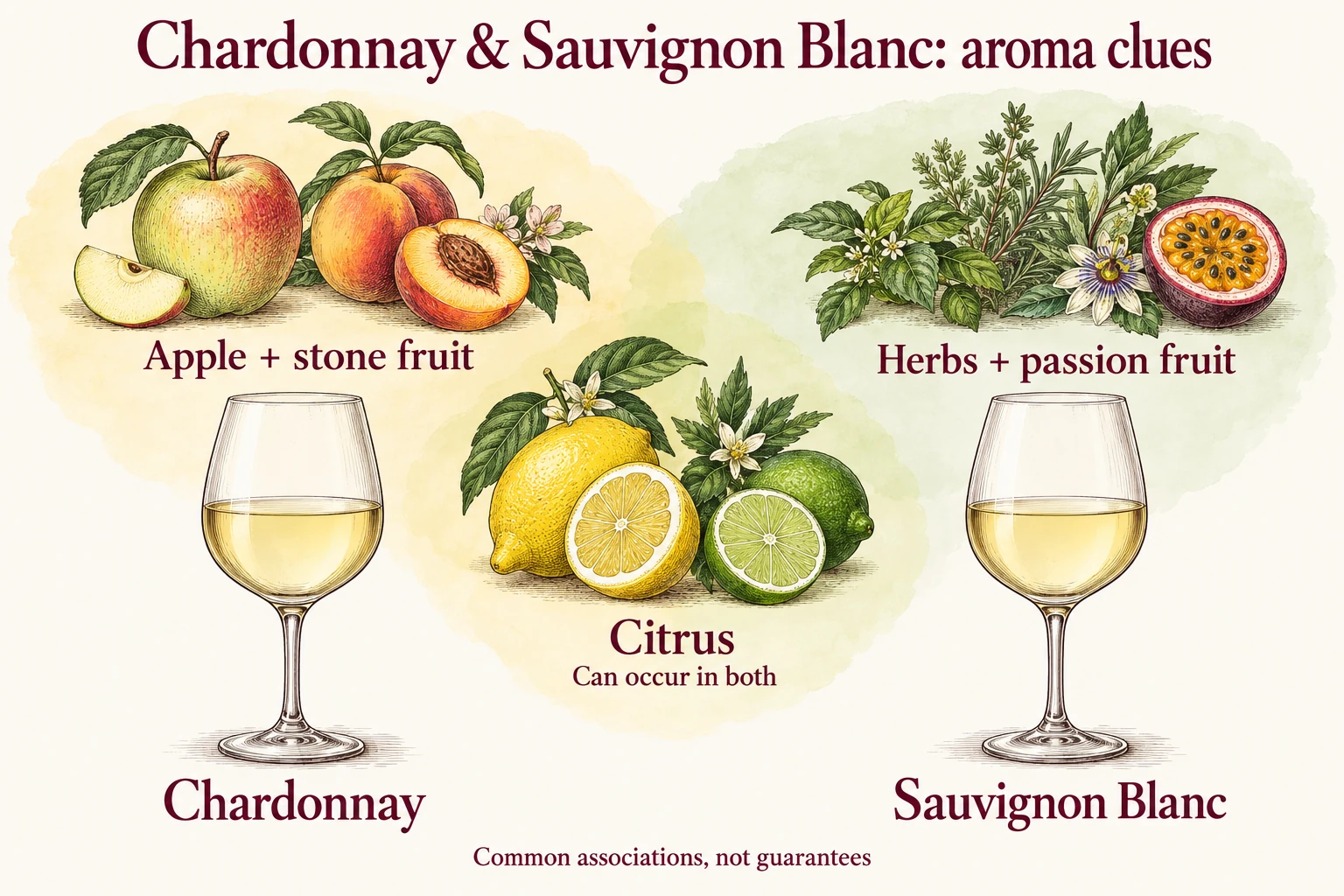
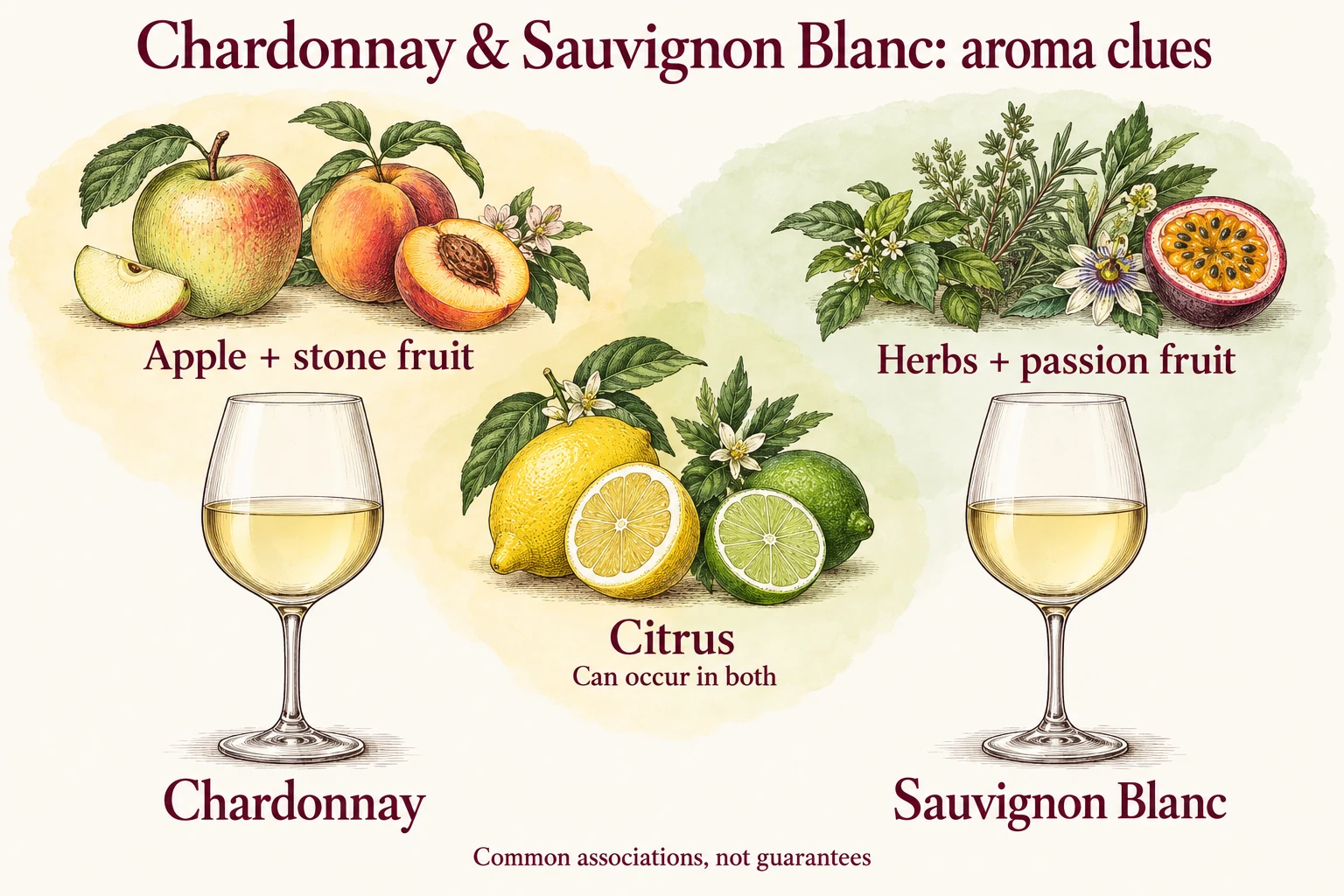
Read the illustration
Chardonnay: apple, citrus and stone fruit are useful starting associations. Sauvignon Blanc: citrus, herbs and sometimes passion fruit. Aromas overlap and vary; no individual bottle or blind tasting is represented.
Key Differences: Taste, Texture and the Bottle
These are useful style tendencies, not fixed measurements for every bottle.
| Attribute | Chardonnay | Sauvignon Blanc |
|---|---|---|
| Fruit cues | Apple, citrus, stone fruit | Citrus, gooseberry; sometimes passion fruit |
| Herbal character | Usually less central to the style | Often a distinctive feature |
| Body | Light to full; many textured versions | Often light to medium; fuller styles exist |
| Acidity | Variable; cool styles can be very fresh | Often high; variation still matters |
| Sweetness | Check the bottle, not the fruit descriptors | Check the bottle, not the fruit descriptors |
| Oak | Unoaked and oak-influenced styles | Often unobtrusive; oaked styles also exist |
| Cellar effects | Oak, lees and malolactic choices vary | Oak and lees can broaden the style |
| Climate range | Grows across cool to warm climates | Cool to moderate sites suit herbal character |
| Regional clues | Burgundy, California, Australia | Loire, Marlborough, Bordeaux |
| Meal starting point | Fresh for fish; rounded for cream sauce | Herbs, tangy salads, citrus-led seafood |
Aroma: do you enjoy green and herbal flavors?
This is often the quickest way to choose. If cut grass, green pepper or gooseberry sounds appealing, Sauvignon Blanc gives you a useful direction. If you prefer apple, citrus and stone fruit without making green aromas the focus, begin with Chardonnay.
These categories overlap. A tropical Sauvignon Blanc can still have herbal notes, and Chardonnay can be fresh and subtle. New Zealand Wine’s Sauvignon Blanc guide is helpful because it describes different regional expressions rather than one fixed flavor.
Freshness: Sauvignon Blanc is a starting point, not a certainty
Sauvignon Blanc is often a good choice for a mouthwatering style. But comparing it with a lean Chardonnay can produce a much closer contest than comparing it with a ripe, rounded Chardonnay. Climate, harvest and cellar decisions all affect that impression.
If you dislike sharpness, do not assume every Chardonnay is soft. Ask for a rounded style and check the producer’s description. If you love freshness but dislike Sauvignon Blanc’s green aromas, a fresh Chardonnay is a useful alternative.
Oak and butter are separate decisions
Oak contact can add toast or vanilla. Malolactic conversion is a separate process that changes acids and can contribute butter-like aromas. Either process can occur without the other. Lees contact can also affect texture, so “creamy” does not tell you the entire production story.
Sauvignon Blanc is not automatically unoaked: oak and lees are part of some Bordeaux and New Zealand styles. Chardonnay is not automatically buttery. The Australian Wine Research Institute’s explanation of malolactic effects makes clear that the sensory outcome depends on how the process is managed.
Oak and malolactic conversion are separate
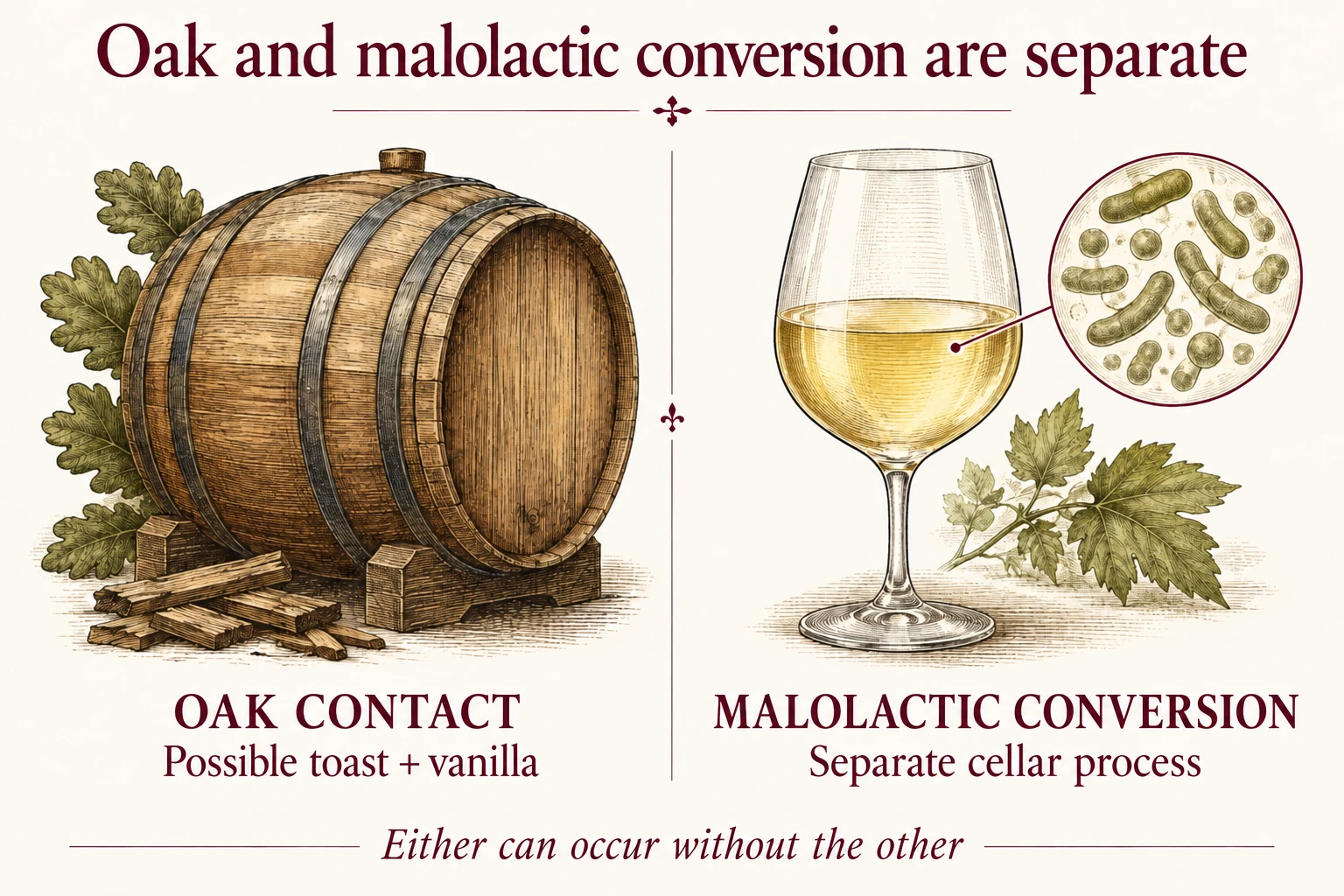
Read the illustration
Oak contact can contribute toast and vanilla. Malolactic conversion is a separate process that can change acidity and contribute buttery character. Either can occur without the other. The illustration does not describe the production of any named bottle.
Where Chardonnay and Sauvignon Blanc Grow
Chardonnay’s regional range helps explain its varied texture. Sauvignon Blanc’s familiar herbal and tropical expressions also change with place, blending and maturation.
Chardonnay: Where It Grows
- Burgundy, France: Chablis shows why fresh Chardonnay is an alternative when you like acidity but do not want Sauvignon Blanc’s herbal emphasis. Other white Burgundy styles offer more texture.
- California, United States: The range includes both leaner coastal Chardonnay and richer styles. A California label does not, on its own, tell you whether the wine will feel softer than a Sauvignon Blanc.
- Australia: Yarra Valley and Margaret River provide different interpretations of fruit, texture and freshness. Specify the oak influence you want rather than choosing the country as a shortcut.
Sauvignon Blanc: Where It Grows
- Loire Valley, France: Sancerre and Pouilly-Fumé offer dry Sauvignon Blanc with high acidity and green-fruit or herbal notes. They are useful reference points for the fresh end of the comparison.
- Marlborough, New Zealand: Expect an aromatic starting point, with variation between herbal and riper tropical expressions. A regional name still leaves room for different vineyard and cellar choices.
- Bordeaux, France: Sauvignon Blanc is often blended with Sémillon. Oak and lees can produce a broader style, so check the blend if you want to compare the grapes as directly as possible.
Chardonnay vs Sauvignon Blanc: Choosing for Dinner
Chardonnay Food Pairings
Match a fresh or rounded Chardonnay to the richness of the preparation.
- Fresh Chardonnay with simply cooked white fish
- Rounded Chardonnay with chicken in a light cream sauce
- A textured style with roast poultry and browned vegetables
Why it works: Fresh examples keep a delicate dish lively; fuller texture can suit a richer sauce. You can choose that texture without asking for strong oak, and a heavy oak signature can be distracting with subtle food.
Sauvignon Blanc Food Pairings
Use Sauvignon Blanc’s freshness and herbal direction when the food shares those features.
- An herb-heavy salad with tangy dressing
- Seafood with lemon, garlic or fresh herbs
- Goat cheese with greens, choosing a fresh style
Why it works: A bright wine can stand up to a tangy dressing, while herbal notes may complement green ingredients. This is an aroma-and-acidity starting point, not a claim that every Sauvignon Blanc matches every salad.
Pro Tip: For the same piece of fish, lemon and herbs point toward fresh Sauvignon Blanc or fresh Chardonnay. A creamy sauce makes rounded Chardonnay worth considering. Let the preparation do the deciding.
Let herbs, tang and cream guide the choice
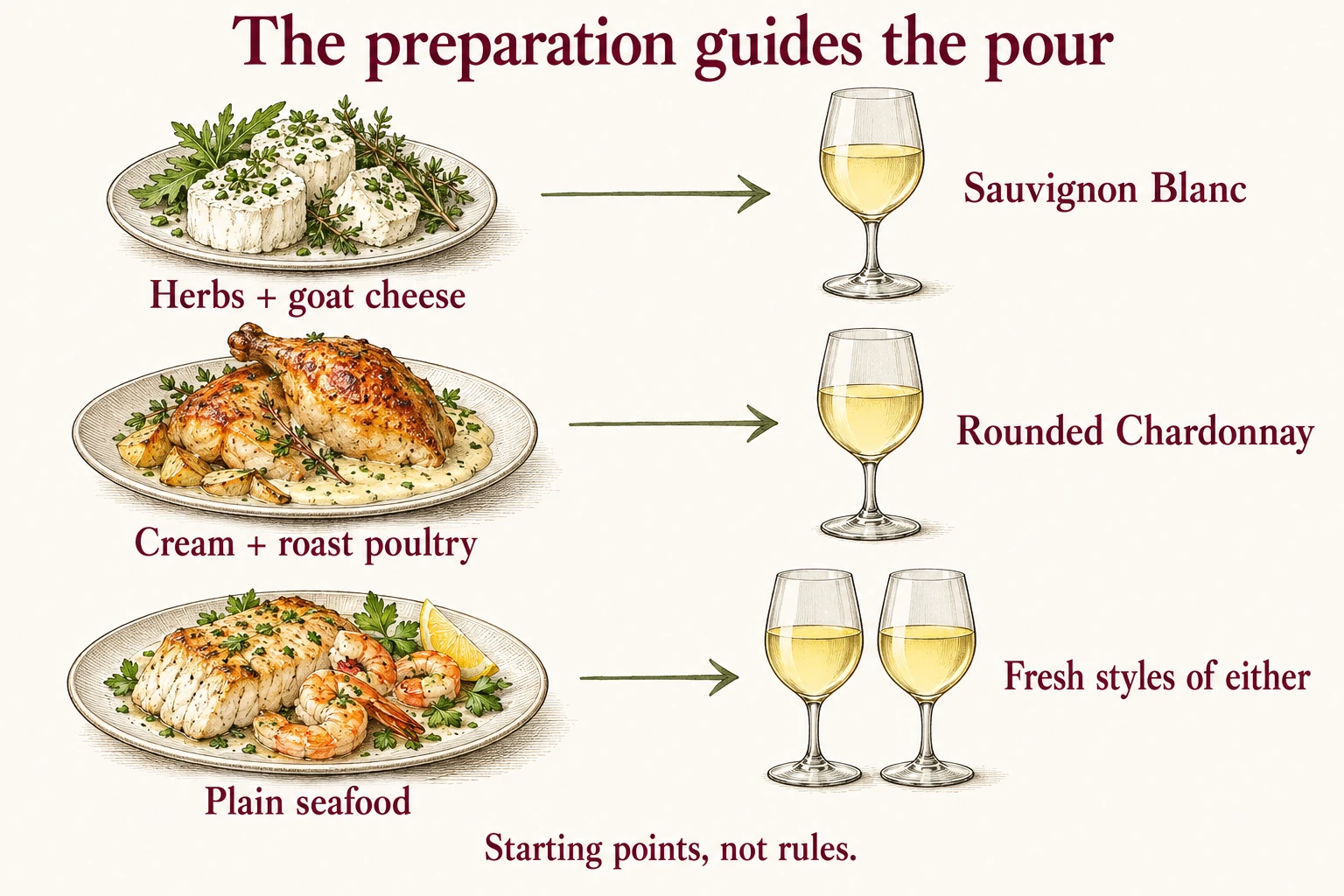
Read the illustration
Herbs, goat cheese and tangy greens: consider Sauvignon Blanc. Cream sauce or roast poultry: consider rounded Chardonnay. Plain seafood: fresh styles of either. These are starting points that depend on the finished dish and your preferences.
For a sauce-by-sauce decision, continue to our pasta pairing guide; for a poultry dinner, use wine with chicken.
A fresh Chardonnay example from our range
The citrus, white stone fruit and floral notes of our 2024 Nine Queens Chardonnay place it in the fresh, unoaked branch of this comparison. Its stainless-steel fermentation does not establish sugar or malolactic treatment. For a distinctly herbal direction, Sauvignon Blanc is the more relevant choice.
For a bottle-selection decision, the recommended Chardonnay guide and unoaked Chardonnay guide go into more detail.
FAQ: Chardonnay vs Sauvignon Blanc
Is Chardonnay sweeter than Sauvignon Blanc?
Not as a reliable grape-wide rule. Both have dry examples, and fruitiness or a buttery impression does not measure residual sugar. If sweetness is important, check the exact producer and vintage rather than using the grape or fermentation vessel as proof.
Sauvignon Blanc vs Chardonnay: which is crisper?
Sauvignon Blanc is often a useful starting point for pronounced freshness. A cool-climate, lean Chardonnay can also be very crisp. Compare actual styles if you want an answer that applies to the bottles in front of you.
Which should I try if I dislike grassy wine?
Start with a fruit-led Chardonnay. A riper Sauvignon Blanc may have less dominant green character, but tropical fruit does not guarantee that herbal notes disappear. Ask for the aroma profile you want.
Can Sauvignon Blanc be oaked?
Yes. Oak fermentation or maturation and lees contact are used in some styles. Sauvignon Blanc from Bordeaux can also be part of a blend, so read both the winemaking information and the grape composition.
Is all Chardonnay buttery?
No. The grape is made in many styles. Butter-like aromas are especially associated with diacetyl linked to malolactic conversion, and not every Chardonnay shows them. Oak and malolactic conversion should be checked separately.
Which is better with seafood?
Neither wins every seafood dish. Fresh examples of either can work with simply cooked fish. Herbal or tangy preparations may favor Sauvignon Blanc; a cream sauce may favor a rounder Chardonnay. Your preference for herbal aromas remains relevant.
The Final Word: How to Choose
Choose Chardonnay when:
- You prefer apple, citrus or stone-fruit emphasis over a distinctly herbal starting point.
- You want to select deliberately between lean and rounded texture.
- You are serving a cream or roast preparation and want a matching fuller style.
Choose Sauvignon Blanc when:
- You enjoy herbal, grassy, gooseberry or vivid tropical aromas.
- You want a fresh starting point for a tangy or herb-led dish.
- You want to explore the grape’s broader oak or lees-influenced styles as well.
Choose the aroma you enjoy, then choose the texture. Freshness exists on both sides; the right grape is the one whose particular style fits your glass and meal.
Keep comparing: Chardonnay vs Pinot Grigio, Chardonnay vs Riesling, more wine guides.
This guide covers the Chardonnay–Sauvignon Blanc choice. The linked guides handle individual bottle selection and specific meals in more detail.
Sources and approach
The regional organizations and educators below explain grape styles and winemaking. Pairing suggestions apply those principles while leaving room for personal taste.