Chardonnay vs Riesling: Read the Style, Then Choose
Quick Takeaways
- Chardonnay: choose your texture | apple, citrus or stone fruit | lean to rounded, with or without oak | fish through creamy poultry, by style
- Riesling: choose your sweetness | citrus, stone fruit and floral notes | typically high acidity; dry to sweet | lemon fish, or off-dry with chilli heat
- Choose Chardonnay when the texture or oak decision matters most; choose Riesling when you want aromatic freshness and an explicit choice between dry and sweeter styles.
Chardonnay and Riesling differ most usefully in how you choose a bottle. With Chardonnay, texture and cellar style are important: it can be lean and fruit-led or richer and oak-influenced. With Riesling, check sweetness first: the grape makes dry wines as well as noticeably sweet ones, often with lively acidity.
For Chardonnay vs Riesling, or Riesling vs Chardonnay, a dry Riesling and a fresh Chardonnay are a much closer comparison than a sweet Riesling and a rich Chardonnay. Citrus and stone-fruit aromas can appear in both. Neither peach aromas nor a ripe-fruit description tells you how sweet the wine will taste.
The aim is to find the style you want without buying the wrong sweetness level. Start with the comparison, use the label-reading steps, then let the meal refine your choice.
Chardonnay vs Riesling: At a Glance
Chardonnay: A texture-led choice
Chardonnay offers a broad range of body and cellar influence. If you want a quiet fruit-led white, seek a fresh style. If you enjoy a rounder mouthfeel or toast-like notes, look for the producer’s description of maturation and texture.
What to look for:
- Flavor Profile: Apple, citrus and stone fruit; ripe styles may suggest tropical fruit.
- Body: Light to full, depending on growing conditions and winemaking.
- Acidity: Variable; lean cool-climate styles can be very fresh.
- ABV: Compare the alcohol percentage on the actual labels; the grape name is not enough.
- Style Advantage: A choice between fresh fruit-led and richer styles, without needing to enjoy Riesling’s aromatic emphasis.
Riesling: An aromatic choice with a sweetness check
Riesling’s citrus, floral and stone-fruit range comes with a strong reputation for freshness. Dry, off-dry and sweeter styles all belong to the grape. Decide which one you want before choosing a bottle for dinner.
What to look for:
- Flavor Profile: Lemon or lime, floral notes, and peach or other stone fruit, depending on style.
- Body: Often light to medium; richer and sweeter styles can feel fuller.
- Acidity: Typically high, including in sweeter styles.
- ABV: Compare the alcohol percentage on the actual labels; the grape name is not enough.
- Style Advantage: Aromatic freshness plus an intentional choice of sweetness for your taste or meal.
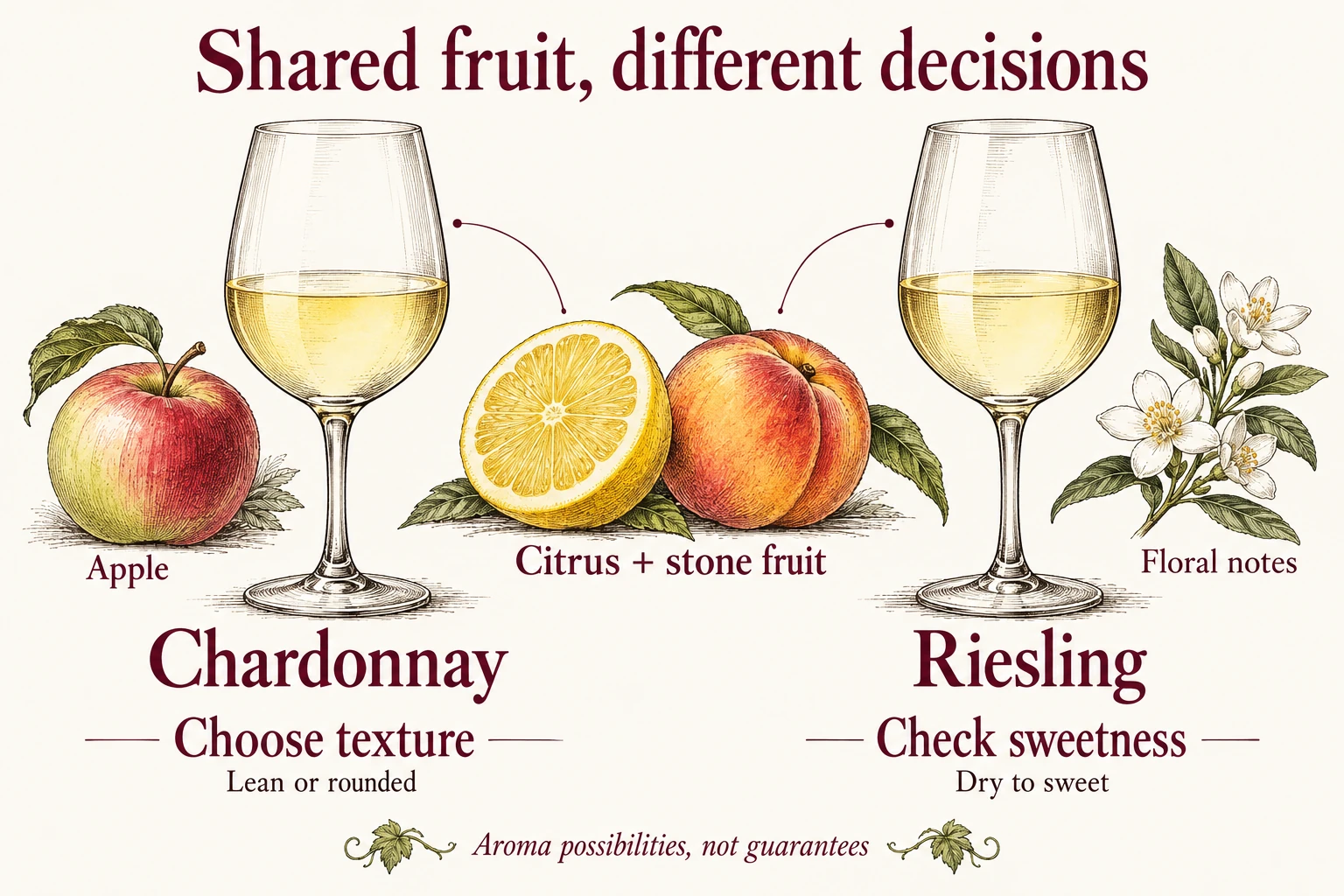
Shared fruit, different decisions
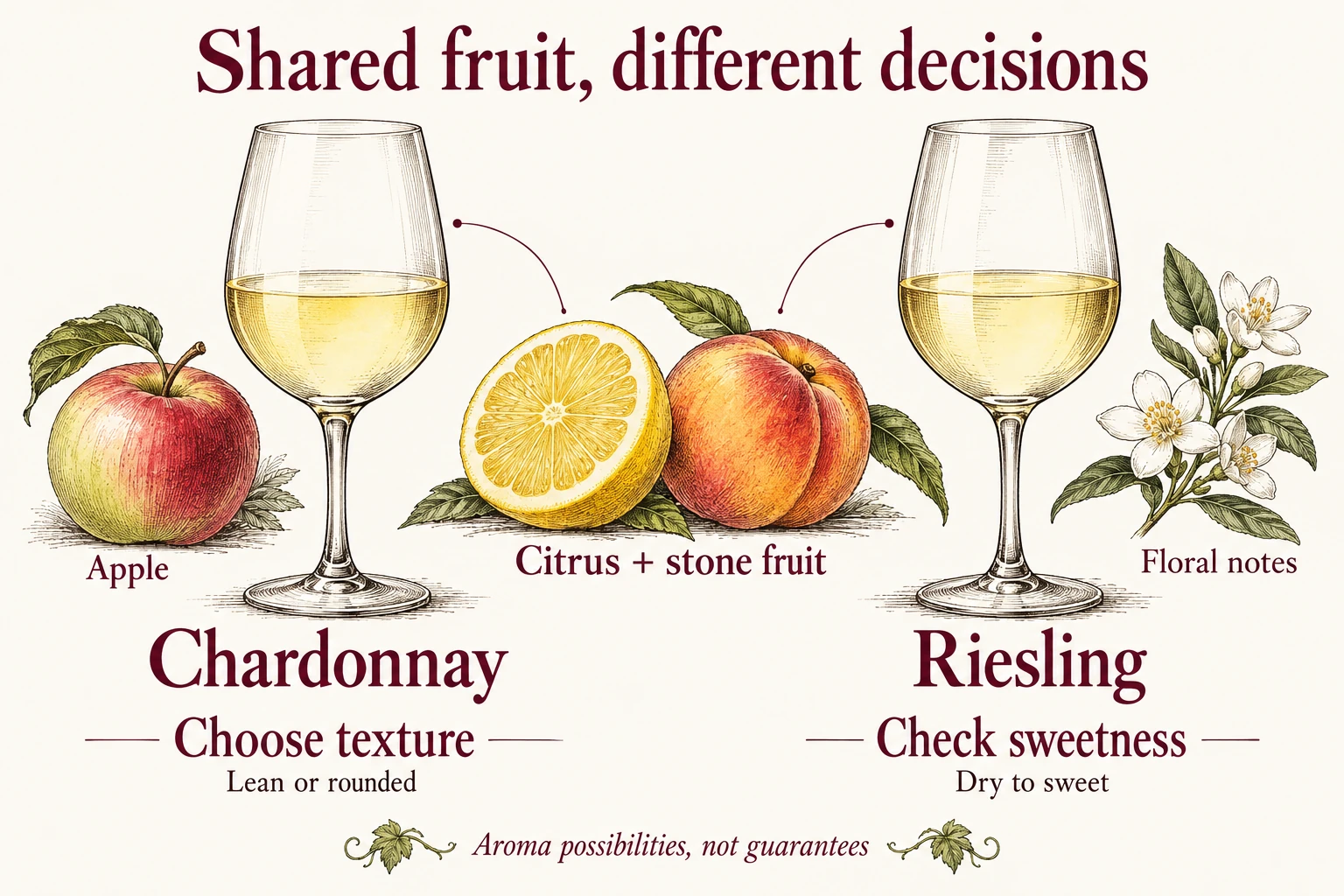
Read the illustration
Chardonnay can show apple, citrus and stone fruit, with lean or rounded styles. Riesling can show citrus, stone fruit and floral aromas; choose its sweetness level explicitly. These are overlapping possibilities, not guaranteed tasting notes.
Key Differences: Taste, Texture and the Bottle
These are useful style tendencies, not fixed measurements for every bottle.
| Attribute | Chardonnay | Riesling |
|---|---|---|
| Fruit cues | Apple, citrus, stone fruit | Citrus, peach or other stone fruit |
| Aromatic emphasis | Often fruit and cellar-shaped texture | Often pronounced fruit and floral notes |
| Body | Light to full, depending on style | Often light to medium; richer styles exist |
| Acidity | Variable; cool styles can be very fresh | Typically high, even in sweeter styles |
| Sweetness choice | Check the producer’s description | Dry, off-dry and sweet styles |
| Oak | Both unoaked and oak-influenced styles | New-oak flavor is less usual |
| First label check | Texture and oak; confirm sweetness | Sweetness description; then region and style |
| Regional clues | Burgundy, California, Australia | Germany, Alsace, Clare and Eden Valleys |
| Cream or roast dishes | A rounded style is a useful starting point | Dry, fuller styles may also work |
| Chilli heat | Check style, alcohol and your preference | Consider off-dry if you want to soften heat |
Sweetness: dry Riesling is a real option
Do not eliminate Riesling simply because you dislike sweet wine. Dry Riesling is an established style, including in Germany and Australia. Conversely, do not assume a Riesling is dry because it tastes fresh: acidity and sweetness can be present together.
A fruit description answers a different question. Citrus, peach or blossom tells you what the aroma resembles. To choose sweetness, use the producer’s description or technical information for the actual vintage. “Stainless steel” does not tell you how much sugar remains.
Aroma and acidity: the dry-to-dry comparison
If you want dry wine with clear floral or citrus aromas and a mouthwatering finish, dry Riesling is a strong starting point. If you prefer to choose among quieter fruit-led, rounded or oak-influenced styles, start with Chardonnay. A lean Chardonnay can still be sharply refreshing.
Wine Australia’s Riesling guide describes the familiar citrus-led, high-acid Australian style, while New Zealand Wine’s Chardonnay guide illustrates how body and freshness vary within Chardonnay. Compare similarly dry bottles to discover which aroma direction you prefer.
Texture and oak: richness does not mean sugar
A rounded Chardonnay may owe its texture to several factors, including fruit ripeness and cellar choices. Oak can contribute toast or vanilla; malolactic conversion is a separate process that can contribute butter-like aromas. None of those descriptions is a sweetness measurement.
Riesling is less often chosen for a new-oak signature, but that does not make every Riesling light or simple. Its richer expressions can have substantial flavor and texture. Decide whether you want a toasty style, an aromatic style or a sweeter style rather than treating all richness as the same thing.
Read a Riesling label in three steps
- Find an explicit sweetness clue. “Dry” or the German word “trocken” indicates a dry direction. “Halbtrocken” indicates an off-dry style. “Feinherb” often suggests some sweetness, but it is not a precise legal sweetness category.
- Do not stop at Kabinett or Spätlese. These terms describe grape-ripeness categories; on their own they do not settle the finished wine’s sweetness.
- Check the producer’s vintage information. If the label is unclear, ask whether the bottle is dry, off-dry or sweet. Use a residual-sugar figure only when it is actually provided, and remember that acidity affects the impression.
The German Wine Institute explains the ripeness categories, and WSET explains the sweetness terms. You do not need to memorize the whole classification to ask for the right glass.
Find the sweetness clue before choosing
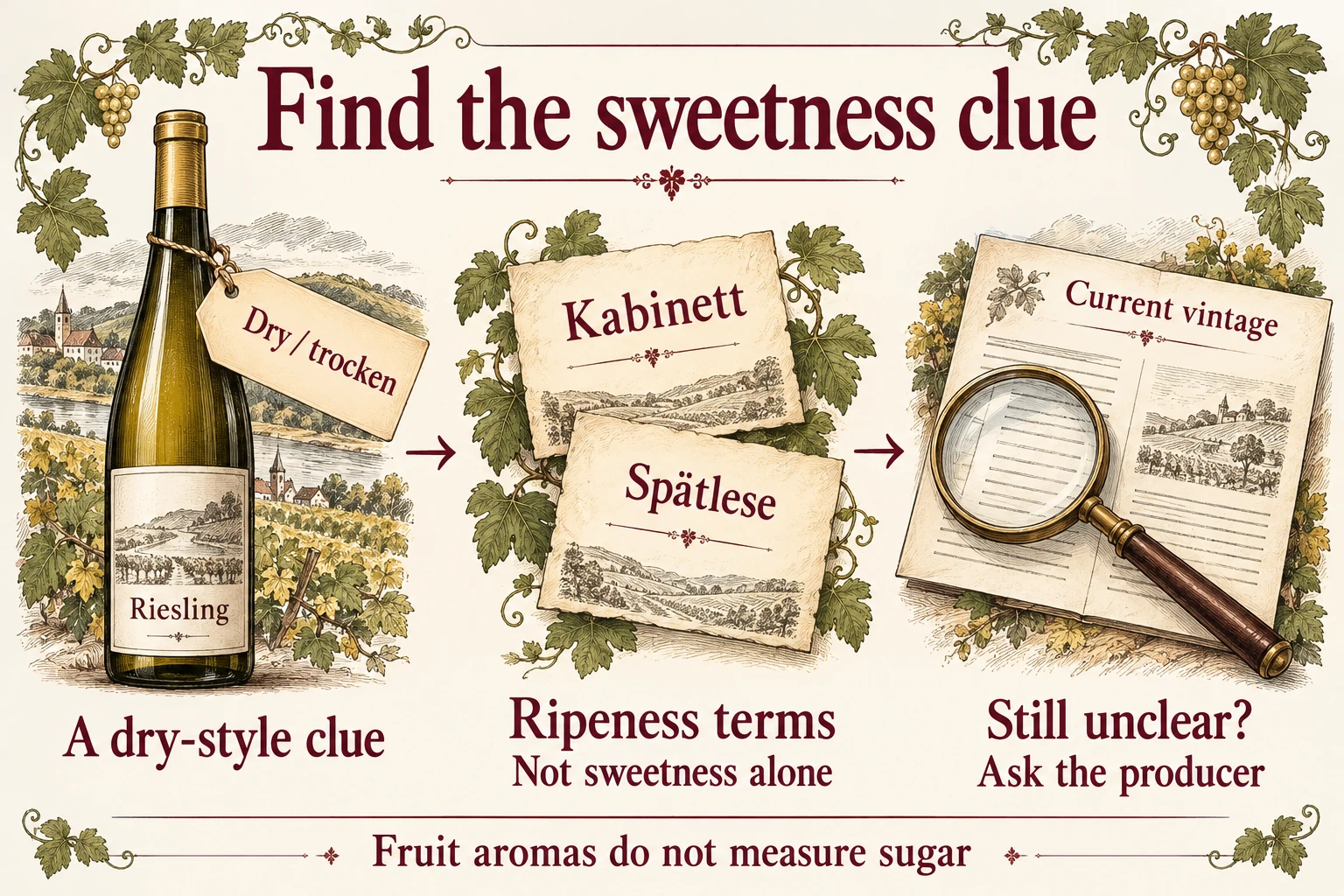
Read the illustration
Dry or trocken is an explicit dry-style clue. Kabinett or Spätlese alone does not establish finished-wine sweetness. If the label is unclear, check the producer’s current-vintage description. Fruit aromas do not measure residual sugar.
Where Chardonnay and Riesling Grow
Chardonnay’s home regions provide clues about fruit and texture. Riesling regions are helpful too, but the explicit sweetness description remains the more important first check.
Chardonnay: Where It Grows
- Burgundy, France: Dry, crisp Chablis is a useful Chardonnay counterpart to dry Riesling. Moving to a richer Chardonnay changes the texture comparison even though the grape stays the same.
- California, United States: Citrus-led coastal and riper, rounded Chardonnay styles both exist. If you want a dry-to-dry comparison with Riesling, establish sweetness separately from those fruit and texture clues.
- Australia: Cooler-climate Chardonnay offers a different route to freshness from the country’s familiar dry Riesling styles. Compare fruit and texture as well as the country on the label.
Riesling: Where It Grows
- Germany: The grape’s home offers dry through sweet wines. Mosel, Rheingau and other regional names provide context; a sweetness term or producer note makes the dinner choice clearer.
- Alsace, France: A useful source of aromatic Riesling with citrus, floral notes and freshness. Read the bottle’s style information rather than assuming a regional name resolves every sweetness question.
- Clare and Eden Valleys, Australia: Useful starting points for dry, citrus-led Riesling. Lime or lemon notes and lively acidity are common regional associations; sweeter Australian examples also exist.
Chardonnay vs Riesling: Choosing for Dinner
Chardonnay Food Pairings
Use Chardonnay’s range of texture to follow the richness of the plate.
- Fresh Chardonnay with white fish and lemon
- Rounded Chardonnay with roast chicken
- A textured Chardonnay with a light cream or mushroom sauce
Why it works: A lean style can keep a delicate dish fresh, while a rounder one can sit beside cream or browned flavors. Choose the amount of oak you enjoy rather than assuming rich food needs a strongly oaky wine.
Riesling Food Pairings
Choose the sweetness level for the preparation, especially when chilli or a sweet element matters.
- Dry Riesling with citrus-led fish or a tangy salad
- A dry, more substantial style with roast poultry
- Off-dry Riesling with a chilli-led dish when you prefer to soften the heat
Why it works: Riesling’s acidity can suit tangy food. Some sweetness can be a useful counterpoint to chilli heat, but people experience heat differently and the wine’s alcohol also matters. An off-dry recommendation is a starting point, not a universal answer for spicy food.
Pro Tip: For lemon fish, compare fresh dry versions of both grapes. For cream or roasting, consider a rounder Chardonnay. For chilli heat you want to soften, try an off-dry Riesling and check its alcohol as well.
The preparation chooses the branch
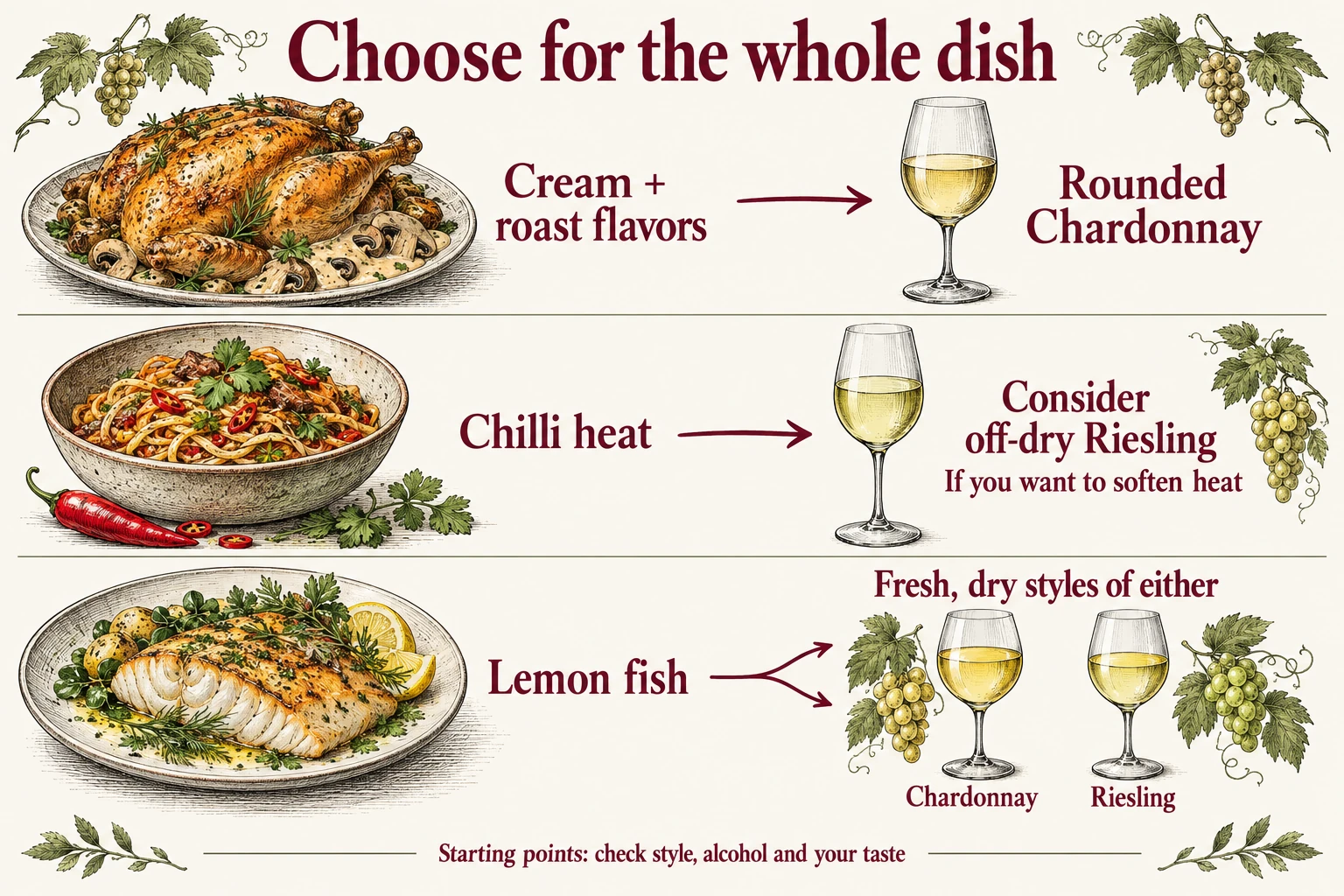
Read the illustration
Cream or roast flavors: consider rounded Chardonnay. Chilli heat you want to soften: consider off-dry Riesling and check alcohol. Lemon fish: compare fresh dry styles of either. These are preference-based starting points, not universal rules.
For a sauce-by-sauce decision, continue to our pasta pairing guide; for a poultry dinner, use wine with chicken.
A fresh Chardonnay example from our range
Our 2024 Nine Queens Chardonnay illustrates the unoaked branch, with citrus, white stone fruit and floral notes. Its stainless-steel fermentation does not establish residual sugar or malolactic treatment. If your preference is an explicitly dry or off-dry Riesling, choose a Riesling carrying that description.
For a bottle-selection decision, the recommended Chardonnay guide and unoaked Chardonnay guide go into more detail.
FAQ: Chardonnay vs Riesling
Is Riesling always sweeter than Chardonnay?
No. Riesling ranges from dry to sweet. A dry Riesling may suit someone who dislikes sweetness, while a noticeably sweet one may not. Compare the actual bottles; neither the grape name nor a peach aroma supplies a residual-sugar measurement.
Riesling vs Chardonnay: which should I choose if I like dry wine?
Both are options. Choose an explicitly dry Riesling for aromatic citrus or floral character and typically lively acidity. Choose a Chardonnay with a confirmed dry style when your priority is selecting fruit, texture or oak influence.
Does trocken mean dry?
Yes, it is a German dry-wine term. It is a more useful sweetness clue than a fruit descriptor. “Kabinett” or “Spätlese” alone describes a different aspect of the wine, so look for an additional sweetness term or producer information.
Is Riesling better with spicy food?
Off-dry Riesling can be a helpful choice when you want some sweetness to balance chilli heat. It is not a guarantee: the dish, the alcohol level and your sensitivity all matter. A dry Riesling and a sweet Riesling can behave differently at the same meal.
Which has less alcohol?
There is no dependable answer for every bottle. Some sweeter Rieslings have relatively low alcohol because sugar remains after fermentation, but dry and fuller Rieslings are different choices. Read the labels instead of using grape, sweetness or body alone as a calculation.
Will an unoaked Chardonnay taste like Riesling?
It may share citrus or stone-fruit notes and a fresh feel, but it is not an exact substitute. Riesling often has a more aromatic floral or citrus direction, and its sweetness range requires a separate check. Unoaked describes oak treatment, not sugar or malolactic conversion.
The Final Word: How to Choose
Choose Chardonnay when:
- You want to select lean or rounded texture before anything else.
- You enjoy apple, citrus or stone fruit and want control over the oak influence.
- Your plate has cream or browned flavors that suit a fuller style.
Choose Riesling when:
- You want aromatic citrus, floral or stone-fruit character with lively freshness.
- You can choose explicitly between dry, off-dry and sweet styles.
- You want to explore an off-dry option alongside chilli heat.
For dry wine, either grape can work. Chardonnay gives you a broad texture decision; Riesling asks you to make the sweetness decision clearly. Read the bottle, then choose for the experience you actually want.
Keep comparing: Chardonnay vs Pinot Grigio, Chardonnay vs Sauvignon Blanc, more wine guides.
This guide covers the Chardonnay–Riesling choice. The linked guides handle individual bottle selection and specific meals in more detail.
Sources and approach
The regional organizations and educators below explain grape styles and winemaking. Pairing suggestions apply those principles while leaving room for personal taste.