Pairing guide
Wine With Burgers: Match the Patty, Fat, Cheese, and Toppings
The burger is a system: patty, browning, fat, bun, cheese, sauce, pickles, and heat. Change one of those and the best bottle can change with it.
The short answer: For a classic beef burger, start with a fruit-present red that has enough acidity and structure for browned beef and fat: Malbec, Cabernet Sauvignon, Syrah/Shiraz, Grenache, Zinfandel, Sangiovese, or a red blend. Then let the toppings refine the choice. Pinot Noir suits mushroom and Swiss; dry Lambrusco refreshes a salty cheeseburger; rosé or Sauvignon Blanc suits chicken and veggie burgers; off-dry or juicy wine is safer when barbecue sauce, hot sauce, or sweet toppings dominate.
Read the whole burger
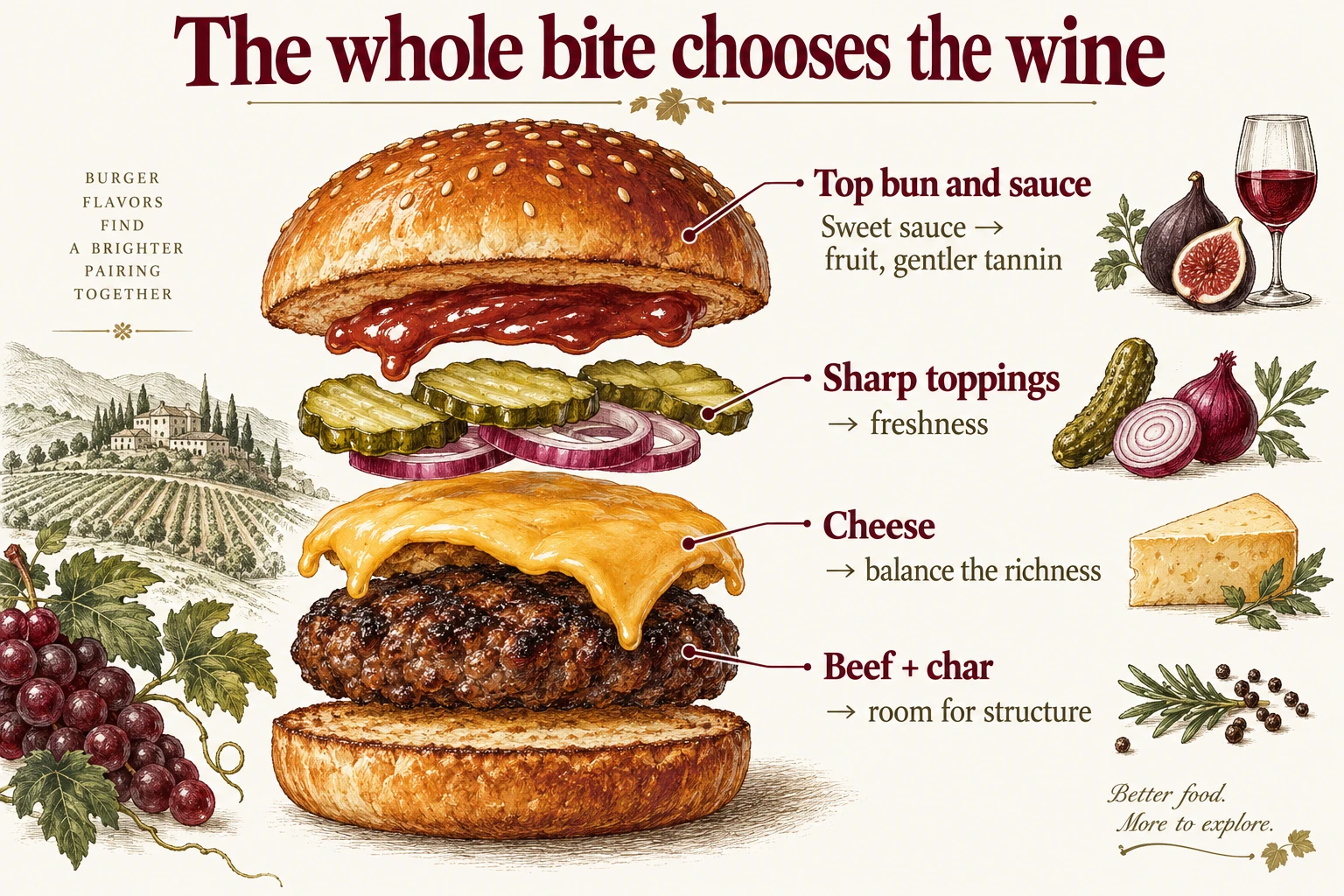
Read the illustration
An exploded burger separates bun and sweet sauce, pickles and onion, cheese, and charred patty. Sweetness calls for fruit and gentler tannin; sharp toppings for freshness; cheese for balanced richness; beef and char allow more structure.
A burger is not just ground beef. Its flavor and texture come from several layers:
- The patty: beef, turkey, chicken, lamb, pork, fish, bean, mushroom, or plant-based.
- The fat level: lean, standard, or especially rich.
- The surface: steamed, pan-seared, smashed, grilled, charred, or smoked.
- The cheese: none, American, Cheddar, Swiss, blue, goat, or something else.
- The sauce: ketchup, mustard, mayonnaise, barbecue, aioli, hot sauce, or sweet relish.
- The toppings: raw onion, caramelized onion, mushrooms, bacon, pickles, jalapeños, avocado.
- The bun: plain, brioche, potato, pretzel, seeded, or no bun.
The best wine matches the combined bite. Beef gives a structured red permission to enter; a sweet brioche bun, barbecue sauce, raw onion, and jalapeños can take that permission away.
Why fruit and acidity matter
Burger pairings often need obvious fruit so the wine remains generous beside salt, char, condiments, and fat. Acidity keeps the combination lively. Tannin can provide structure, but it does not literally scrub fat from the mouth, and more tannin is not automatically better. The sensory question is whether the next sip still tastes balanced after the bite.
Wine-pairing chart for burgers
| Burger | Start with | Why | Watch for |
|---|---|---|---|
| Classic beef burger | Malbec, Cabernet, Syrah, Grenache, Sangiovese | Fruit and structure meet browned beef | Sweet ketchup, raw onion, and pickles may favor more freshness |
| Cheeseburger | Malbec, Merlot, Sangiovese, dry Lambrusco | Fruit and acidity stay present beside salt and richness | Multiple cheeses can make a heavy wine tiring |
| Bacon cheeseburger | Syrah, Zinfandel, Grenache blend, sparkling red | Smoke and fruit suit bacon; freshness helps with salt and fat | Sweet bacon or sauce can make dry tannic wine feel severe |
| Mushroom Swiss burger | Pinot Noir, Merlot, mature light red | Earthy, savory notes connect with mushrooms | Umami can reduce perceived fruit in a firm red |
| Barbecue burger | Zinfandel, Grenache, fruit-led Malbec, off-dry rosé | Ripe fruit meets smoke and tang | Sugar and chile may demand less tannin and alcohol |
| Blue-cheese burger | Syrah, Cabernet, sweet fortified wine in small pours | Intensity meets salt and pungency | Dry high-tannin wine can become bitter; sweetness may work better |
| Spicy jalapeño burger | Off-dry Riesling, rosé, juicy Grenache, Lambrusco | Fruit, chill, and possible sweetness calm heat | High alcohol and heavy oak can amplify warmth |
| Turkey burger | Pinot Noir, dry rosé, Sauvignon Blanc, Chardonnay | Moderate weight fits a leaner patty | Barbecue or chile sauce can become the real pairing |
| Chicken burger | Sauvignon Blanc, Chardonnay, rosé, Pinot Noir | Style can follow grilled, fried, or herb preparation | Fried coating favors bubbles; hot sauce favors off-dry white |
| Veggie or bean burger | Cabernet Franc, Pinot Noir, rosé, orange wine | Herbs, earthiness, and char can support several styles | Plant patties vary widely in fat, smoke, and sweetness |
| Lamb burger | Syrah, Malbec, Grenache, Cabernet blend | Savory depth and herbs welcome red-fruit or dark-fruit structure | Feta, yogurt, mint, and chile may favor freshness |
| Tuna or salmon burger | Pinot Noir, dry rosé, crisp white | Moderate body and freshness stay proportionate to fish | Wasabi, pickles, or spicy mayo may redirect toward aromatic white |
Start with the patty
Beef burgers
Beef is the broadest red-wine invitation, especially when the patty is well browned or grilled. A lean thin patty needs less wine than a thick, rich blend of chuck, brisket, and short rib. A smashburger adds intense crust but may also be thin, salty, cheesy, and condiment-heavy; acidity and fruit can matter more than sheer body.
Use the best-wine-with-steak guide only as a neighboring reference. Steak is usually a simpler plate with no bun and fewer condiments. A burger’s toppings create a more complicated pairing.
Turkey and chicken burgers
Lean poultry patties are easy to overpower. Pinot Noir, dry rosé, Sauvignon Blanc, and moderate Chardonnay are useful. Grilling adds char; frying adds a coating; barbecue and hot sauce can change everything. The fuller guide to wine with chicken explains those preparation effects.
Lamb burgers
Lamb can carry Syrah, Malbec, Grenache, or Cabernet-led blends, especially with char and savory herbs. Feta, yogurt, cucumber, mint, and lemon pull the burger toward freshness, so a juicy lighter red or dry rosé may be more precise than the biggest bottle. Use the dedicated lamb pairing guide for the broader cut-and-sauce logic.
Veggie and plant-based burgers
“Veggie burger” describes black bean, lentil, beet, mushroom, grain, vegetable, and engineered plant-based patties with radically different fat and flavor. Match the dominant ingredients:
- Mushroom and lentil: Pinot Noir, Cabernet Franc, mature light red.
- Black bean and chile: juicy Grenache, rosé, off-dry aromatic white.
- Beet: Pinot Noir, Gamay, rosé.
- Herb and vegetable: Sauvignon Blanc, dry rosé, orange wine.
- High-fat smoked plant patty: treat its richness like a beef burger, then follow the toppings.
Fish burgers
Salmon and tuna can work with Pinot Noir, rosé, and crisp white wine. Fried fish points toward sparkling wine or a fresh white. Spicy mayo, wasabi, pickles, and slaw often matter more than the fish itself. For salmon beyond the bun, use the salmon wine-pairing guide.
The topping override
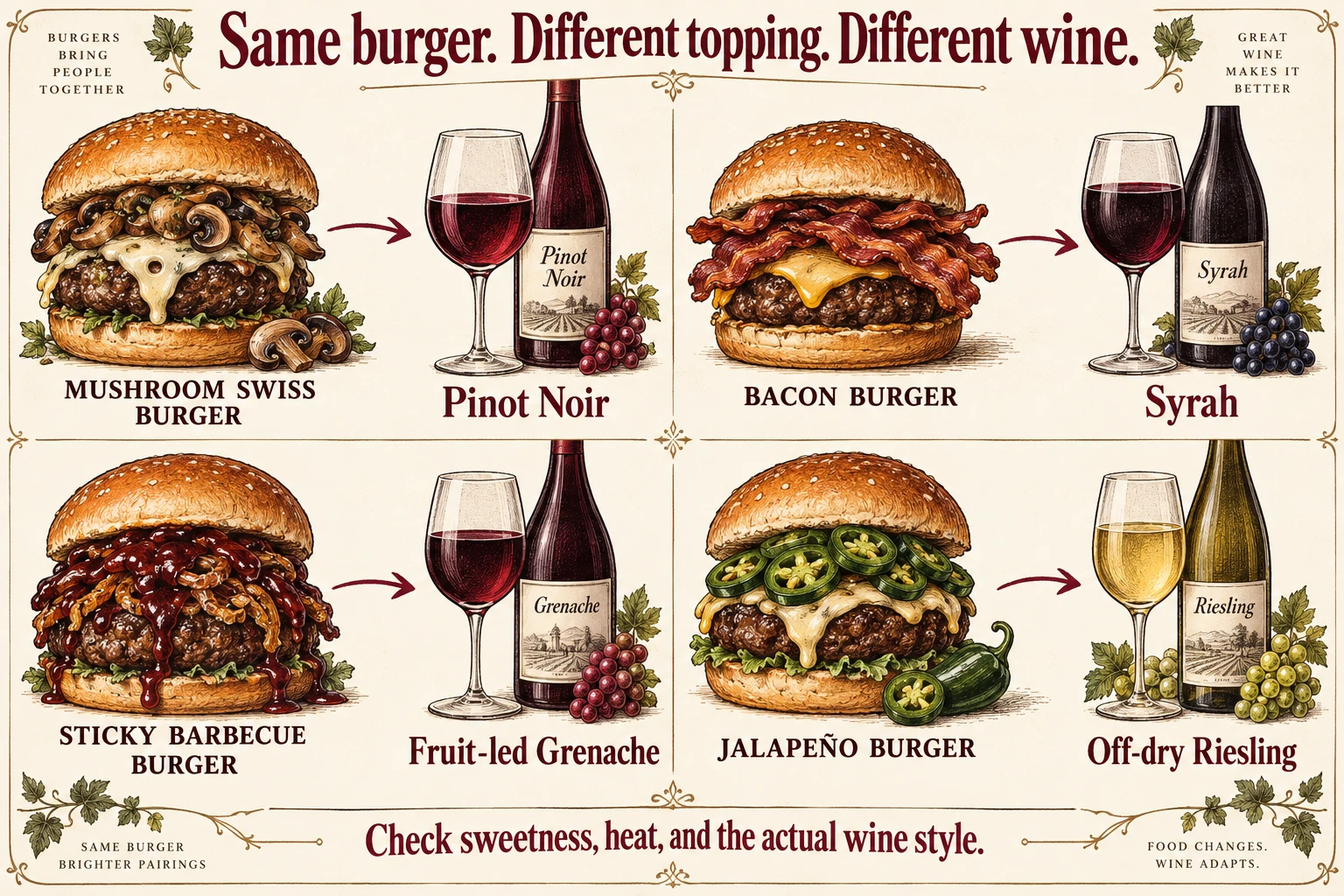
Read the illustration
Mushroom and Swiss point toward Pinot Noir; smoky bacon toward Syrah; sweet barbecue sauce toward fruit-led Grenache; jalapeño heat toward off-dry Riesling with modest alcohol. Actual sauce strength and bottle style matter.
Cheese
American cheese and mild Cheddar add salt and creaminess without overwhelming fruit-led reds. Malbec, Merlot, Sangiovese, Grenache, and dry Lambrusco remain useful.
Sharp aged Cheddar adds intensity and tang. Cabernet, Syrah, mature red blends, or Lambrusco can keep pace, but extra acidity is still welcome.
Swiss cheese and mushrooms shift toward nutty and earthy flavors. Pinot Noir and supple Merlot become more natural than a very oaky, tannic red.
Blue cheese is pungent and salty. A powerful red may work, but the classic cheese logic also opens a sweeter route. If the burger includes blue cheese plus sweet onion or jam, a small pour of sweet fortified wine may be more coherent than dry Cabernet.
For the broader mechanics, use the wine and cheese pairing guide.
Onion
Raw onion is sharp and sulfurous and can make red wine seem harsher. Pickled onion adds acid. Caramelized onion adds sweetness. These are three different pairings:
- Raw: fresher, fruitier red; rosé; or crisp white.
- Pickled: high-acid red, rosé, or white.
- Caramelized: fruit-led red with gentle tannin; watch actual sugar.
Bacon, smoke, and char
Smoke can connect with Syrah, Zinfandel, Malbec, Rioja, or an oak-influenced red blend. Salt and fat can make a fresh wine especially welcome. When bacon is maple-cured or the sauce is sweet, fruit and modest tannin become more important than smoke-matching.
Ketchup, barbecue sauce, and relish
Ketchup combines tomato, acid, and sugar. Barbecue sauce may add smoke, molasses, chile, and vinegar. Sweet relish adds sugar and acid. Each can make a dry, firm red seem less fruity. Choose a fruit-forward red, Lambrusco, rosé, or off-dry white as sweetness rises.
Mustard, pickles, and slaw
These toppings bring acidity, salt, and sometimes sweetness. Sangiovese, Barbera, Cabernet Franc, rosé, and fresh whites can work better than a low-acid, oak-heavy red. Creamy slaw adds richness; vinegar slaw pushes harder toward freshness.
Jalapeños, hot sauce, and chile
Capsaicin can intensify perceived alcohol and drying sensations. Use a chilled juicy red, dry-to-off-dry rosé, Lambrusco, or off-dry Riesling. “Bold food needs bold wine” fails when both forms of heat stack.
Egg and avocado
A fried egg adds richness; avocado adds creamy texture and green flavor. Freshness becomes valuable. Sparkling wine, rosé, Pinot Noir, and medium-bodied high-acid reds often feel better than maximum tannin.
Which red wine with a beef burger?
Malbec
Malbec’s dark fruit and frequently generous texture make it a natural beef-burger candidate. A fresh unoaked style can suit a simple smashburger or grilled patty; a more structured, oak-matured version can handle bacon, char, aged Cheddar, and a thick patty. Sweet-hot sauce may make the more powerful bottle feel harder. Read the Malbec guide before treating the grape as one fixed style.
Cabernet Sauvignon
Cabernet brings dark fruit, acidity, and potentially firm tannin. It makes the most sense with a rich beef patty, strong browning, and savory toppings. A thin fast-food-style burger with ketchup and pickles may be more enjoyable with something fruitier and less stern.
Syrah or Shiraz
Pepper, dark fruit, and savory or smoky character can echo grilled beef and bacon. High alcohol can become tiring with jalapeños or hot sauce. Choose by actual style rather than the regional name alone.
Grenache and GSM blends
Grenache offers red fruit, spice, and often supple tannin, which makes it useful for burgers with barbecue sauce, caramelized onion, or herbs. Warm-region alcohol remains the key caution.
Sangiovese and Barbera
Fresh acidity and red fruit suit burgers with tomato, pickles, mustard, Italian seasoning, or Parmesan. These wines are especially useful when the condiments feel brighter than the patty feels heavy.
Pinot Noir
Pinot Noir is not the default for a thick fatty beef burger, but it shines with mushroom-Swiss, turkey, chicken, salmon, and lighter patties. A richer Pinot can handle more beef than a delicate one.
Merlot
Merlot can provide plum fruit and a round texture for classic cheeseburgers, caramelized onion, and mushrooms. It is a useful route for guests who want a smooth red wine rather than a firmly tannic Cabernet.
Lambrusco
Dry or off-dry Lambrusco brings bubbles, acidity, dark or red fruit, and chill. It contrasts with fat and salt instead of matching burger weight with more weight. Verify sweetness, because styles vary.
One bottle for burger night
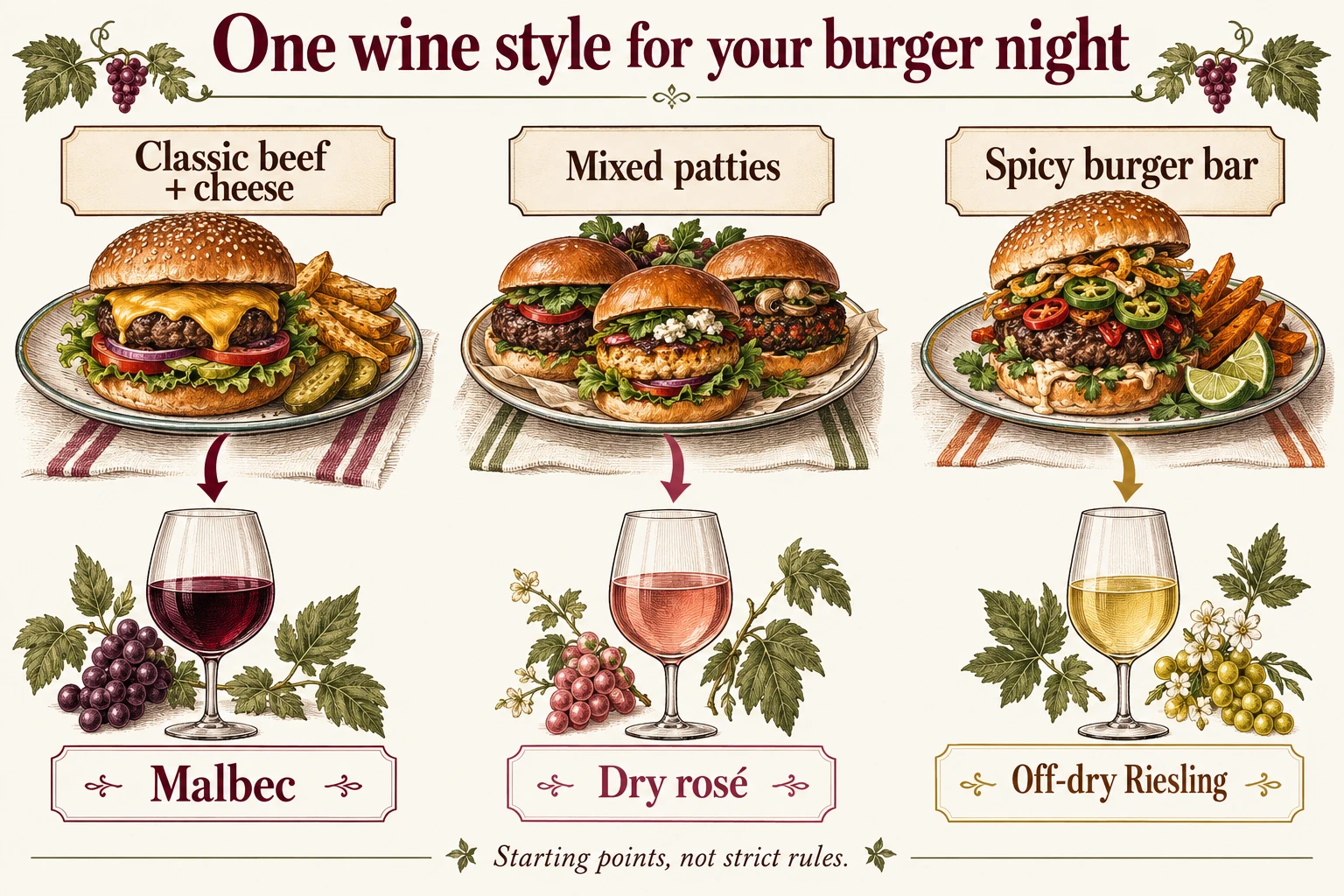
Read the illustration
Classic beef and cheese can suit Malbec. Mixed beef, poultry and veggie patties can suit dry rosé. A spicy burger bar can suit off-dry Riesling. These are flexible starting choices, not fixed rules.
Mostly classic beef and cheeseburgers
Choose Malbec, Sangiovese, Grenache blend, or dry Lambrusco. Malbec emphasizes dark fruit and body; Sangiovese emphasizes freshness; Grenache emphasizes ripe red fruit; Lambrusco emphasizes contrast.
Mixed beef, turkey, and veggie patties
Choose Pinot Noir, dry rosé, Cabernet Franc, or a chilled lighter red. These compromise styles cover more patties without overwhelming the leanest.
Many toppings and sauces
Choose a fruit-forward, high-acid red with moderate tannin, or dry-to-off-dry rosé. Avoid a subtle bottle that disappears and a severe bottle that fights every condiment.
A spicy burger bar
Choose off-dry Riesling, Lambrusco, or rosé. Keep alcohol and serving temperature in mind.
Common burger-pairing mistakes
Matching only the beef
Cheese, sauce, pickles, onions, and bun can occupy more of each bite than the patty. Taste the assembled burger.
Assuming more fat always needs more tannin
Fat level is useful for estimating weight, but acidity, fruit, salt, sweetness, and preference also matter. Contrast through bubbles or freshness can outperform a massive red.
Ignoring the bun
Brioche and potato buns can add sweetness; pretzel buns add salt and density. A lettuce wrap removes sweetness and starch. The container changes the pairing.
Serving casual food with a wine that needs silence
Burger night rewards generous, clear flavors. A fragile old bottle or subtle low-fruit wine may be lost beside char and condiments.
Letting red wine get hot beside the grill
Warm red wine shows more alcohol and less freshness. Keep it in the shade or cool it briefly. Slightly cool reds often feel excellent with burgers.
Treating veggie burgers as one category
Mushroom, black bean, beet, and plant-based meat substitutes do not taste alike. Read ingredients and match fat, smoke, spice, and toppings.
The final burger-wine checklist
- What is the patty made from?
- How rich is it?
- Is it grilled, smashed, fried, smoked, or gently cooked?
- Which cheese leads?
- Is the sauce sweet, hot, smoky, creamy, or acidic?
- Are raw onion or pickles likely to sharpen the match?
- Does the bun add sweetness or salt?
- Would fruit, acidity, bubbles, or tannin solve the complete bite?
Questions people ask
What is the best wine with a burger?
For a classic beef burger, Malbec, Cabernet Sauvignon, Syrah, Grenache, Sangiovese, or a red blend are strong starting points. Choose by richness and toppings. For a mixed group, dry Lambrusco, Pinot Noir, or dry rosé can be more flexible.
Does Malbec go with burgers?
Yes. Fruit-led Malbec suits classic beef, Cheddar, char, and savory toppings. A more structured oak-matured style fits a thicker, richer burger. Sticky barbecue sauce, hot sauce, or jalapeños may favor a juicier, cooler, or slightly sweeter wine.
What wine goes with cheeseburgers?
Try Malbec, Merlot, Sangiovese, Grenache, or dry Lambrusco. Sharp Cheddar can support more structure; Swiss and mushrooms favor Pinot Noir; blue cheese may welcome Syrah or a sweet-wine contrast.
What wine goes with bacon burgers?
Syrah, Zinfandel, Grenache blends, fruit-led Malbec, or Lambrusco. Smoke supports savory red wine, while salt and fat reward freshness. Maple bacon or sweet barbecue sauce requires more fruit and less severe tannin.
What wine goes with turkey burgers?
Pinot Noir, dry rosé, Sauvignon Blanc, or Chardonnay. Let seasoning and sauce decide: barbecue points fruitier, herbs point fresher, and chile points toward off-dry aromatic wine.
What wine goes with veggie burgers?
Pinot Noir or Cabernet Franc for mushroom and lentil; rosé or Grenache for black bean and spice; Sauvignon Blanc or orange wine for herb-heavy vegetable patties. Match the actual ingredients and fat level.
Can white wine go with burgers?
Yes. Sauvignon Blanc suits herb-heavy chicken and veggie burgers; Chardonnay suits chicken, turkey, or mushroom; Riesling suits sweet-hot and spicy burgers; sparkling wine suits fried chicken or fish burgers.
Should red wine be chilled with burgers?
Many lighter, fruit-led reds benefit from a slight chill, especially outdoors. Cooling can emphasize freshness and reduce the impression of alcohol. Do not over-chill structured reds, which can mute aroma and emphasize firmness.
Related guides
- Best wine with BBQ ribs
- Best wine with steak
- What wine goes with chicken
- Wine and cheese pairings
- How to choose a smooth red wine
- The complete Malbec guide
- How to choose a red blend
- Argentine steak with chimichurri
Sources
- Decanter, wine with burgers, for the multi-patty and topping-led framework.
- Food & Wine, wines for burgers, for its focus on patty richness.
- Wine Folly, burger and wine pairings, for burger-style distinctions.
- Eater, sommelier advice for burgers, for condiment-led and casual-value framing.