Pairing guide
Wine Pairing With Pork Tenderloin: Match the Sauce and Seasoning
Pork tenderloin is lean, mild, and easy to overpower. The best bottle protects that delicacy while answering whatever the cook puts around it.
The short answer: The best wine pairing with pork tenderloin is usually a light-to-medium-bodied red or a fresh, medium-bodied white that will not overwhelm the lean cut. Start with Pinot Noir, Grenache, Gamay, Chardonnay, Chenin Blanc, or dry Riesling. Then follow the preparation: Sauvignon Blanc for citrus and herbs, Chardonnay for cream or gentle roasting, Pinot Noir for mushrooms, off-dry Riesling for fruit glaze or chile, and Syrah or Grenache for smoke and warm spice.
Tenderloin is not pork loin or a pork chop
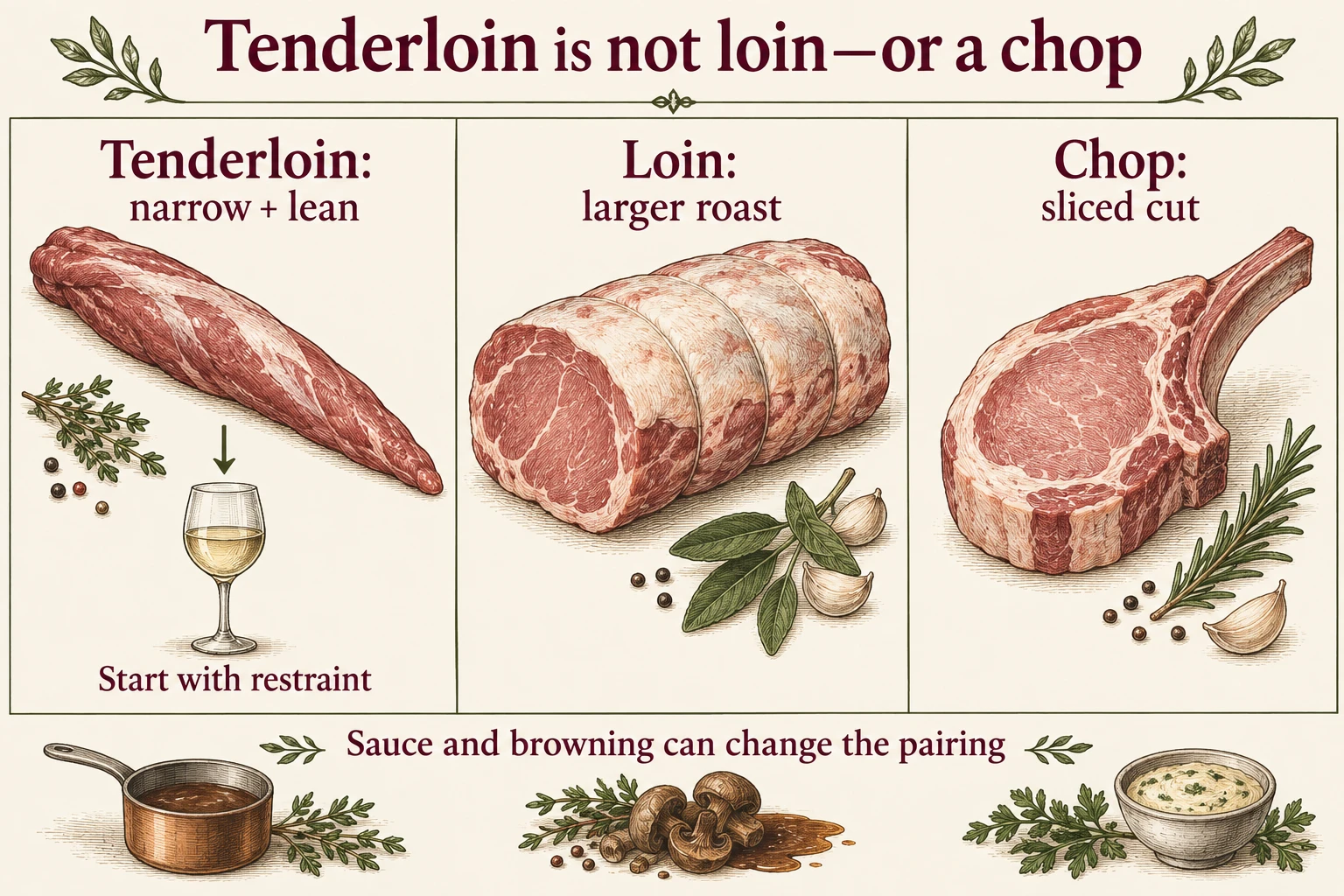
Read the illustration
Tenderloin is narrow and lean; loin is a larger roast; a chop is a sliced cut that may include bone and varying fat. Tenderloin often needs a restrained wine unless sauce, browning, or smoke adds intensity.
Pork tenderloin is a narrow, very tender, comparatively lean muscle. Pork loin is larger and can be sold as a roast or cut into chops. A bone-in rib chop, fatty blade chop, loin roast, smoked ribs, and tenderloin do not have the same richness or surface-to-center ratio.
That distinction matters because tenderloin’s subtle flavor is easy to bury. A dark, heavily oaked, firmly tannic wine that works with smoked ribs or a marbled chop may make tenderloin seem bland. Start with restraint, then add wine intensity only when browning, filling, crust, sauce, or smoke justifies it.
For chops, use the separate pork-chop pairing guide. For sticky or smoked ribs, use the BBQ-rib wine guide. This page owns tenderloin roasted whole, seared and finished in the oven, grilled, stuffed, sauced, sliced into medallions, or served cold.
Wine-pairing chart for pork tenderloin
| Preparation | Red-wine route | White-wine route | Why | Main caution |
|---|---|---|---|---|
| Simple herb roast | Pinot Noir, Gamay, Grenache | Chardonnay, Chenin Blanc | Moderate weight preserves the meat’s delicacy | Heavy oak can dominate light herbs |
| Garlic and rosemary | Merlot, Pinot Noir, Grenache | Sauvignon Blanc, Chardonnay | Fruit and herbal freshness meet aromatic seasoning | Very grassy white may dominate mild meat |
| Mustard-cream sauce | Pinot Noir, supple Merlot | Chardonnay, Chenin Blanc | Freshness and moderate body remain clear beside cream and tang | Low-acid rich wine can feel tiring |
| Mushroom sauce | Pinot Noir, mature light red, Merlot | Chardonnay, white Rhône blend | Earthy and savory notes welcome gentle red or textured white | Firm tannin may lose fruit beside umami |
| Apple or pear glaze | Gamay, light Grenache | Off-dry Riesling, Chenin Blanc | Fruit and possible sweetness meet orchard flavors | Bone-dry tannic red may seem hard |
| Cherry or raspberry sauce | Pinot Noir, Gamay | Dry rosé, off-dry Riesling | Red fruit can echo the sauce without too much weight | Check actual sauce sweetness |
| Fennel and orange | Sangiovese, Pinot Noir | Vermentino, Sauvignon Blanc, dry Riesling | Acidity, herbs, and citrus create a fresh bridge | Excess oak can obscure fennel and orange |
| Smoky paprika or pepper rub | Syrah, Grenache, fruit-led Malbec | Viognier, white Rhône blend | Fruit and spice meet a stronger crust | Chile heat makes alcohol and tannin more obvious |
| Asian-style sweet or spicy marinade | Juicy low-tannin red, chilled Gamay | Off-dry Riesling, Gewürztraminer | Aroma and possible sweetness suit heat and glaze | Soy, sugar, and chile need to be tasted together |
| Cold slices or picnic service | Gamay, Pinot Noir | Dry rosé, sparkling wine | Light, refreshing styles suit chilled lean meat | Condiments can become the dominant pairing |
Red or white wine with pork tenderloin?
Both colors work because tenderloin sits between familiar white- and red-wine categories. Choose by the plate rather than by a rule about pork.
Choose white when…
- The seasoning centers on lemon, orange, fresh herbs, or garlic.
- The sauce is creamy, buttery, mustard-based, or made with white wine.
- The pork is gently roasted and the sides are light.
- The glaze or marinade includes fruit, sugar, or chile and an off-dry wine would help.
- The meal is served outdoors, chilled, or with crisp salad.
Choose red when…
- The tenderloin is deeply browned, seared, grilled, or wrapped in savory crust.
- Mushrooms, lentils, bacon, or dark pan sauce add savory depth.
- Red-fruit sauce creates a natural bridge to a fruit-led red.
- Guests strongly prefer red and a light-to-medium-bodied option can remain proportionate.
Choose rosé or sparkling when…
- The dish combines herbs, salt, salad, and outdoor serving.
- Cold tenderloin is served with mustard, pickles, or fruit.
- The plate includes a crisp coating or fried element.
- The sauces vary and no single red or white direction can cover them all.
The main wine styles
Pinot Noir
Pinot Noir is the most flexible red starting point. Red fruit, freshness, and commonly moderate tannin fit herb-roasted tenderloin, mushrooms, red-fruit sauce, and a gentle sear. A delicate Pinot can be lost beside bacon, smoke, or a dark reduction; a ripe oak-heavy Pinot can still overpower the meat. Use the style comparison of Malbec and Pinot Noir if your table is deciding between elegance and more dark-fruited weight.
Gamay and Beaujolais
Gamay offers bright fruit, high drinkability, and generally modest tannin. It works with simple roast, mustard, herbs, cold slices, and fruit sauce. Cru Beaujolais can bring more depth without abandoning freshness.
Grenache
Grenache can provide strawberry, raspberry, spice, and a supple texture. It fits grilled tenderloin, rosemary, warm spice, and fruit glazes. Warm-region examples may carry noticeable alcohol, which becomes important beside chile.
Merlot
Supple Merlot can work with garlic, rosemary, mushrooms, and creamy pan sauce. Choose a fruit-present medium-bodied example rather than assuming every Merlot is automatically soft. The smooth-red guide explains the label clues.
Sangiovese
Sangiovese is useful when tomato, orange peel, fennel, rosemary, or Italian seasoning appears. Fresh acidity and red fruit can keep a savory plate lively. Firm examples may need more sauce and browning than a simple roast provides.
Syrah and Malbec
These are conditional choices for smoky rubs, black pepper, bacon wrapping, grilling, or deeply browned crust. Fruit-led versions with restrained tannin are safer than dense, heavily oak-shaped styles. The meat is lean; do not add power simply because the wine is available.
Chardonnay
Chardonnay covers simple roasting through cream sauce. Fresh unoaked Chardonnay suits herbs, mustard, lemon, and gently browned pork. Fuller barrel-influenced Chardonnay can handle cream, butter, and mushrooms if acidity remains clear. The Chardonnay guide helps identify the style.
Riesling
Dry Riesling fits citrus, herbs, and lean roast. Off-dry Riesling is one of the best choices for apple, pear, sweet glaze, chile, or Asian-style seasoning. The grape name does not guarantee sweetness, so verify the bottle.
Sauvignon Blanc, Chenin Blanc, and aromatic whites
Sauvignon Blanc suits fresh herbs, citrus, and green vegetables. Chenin Blanc bridges freshness and texture and can handle mustard, cream, apples, and roast flavors depending on sweetness. Viognier and Gewürztraminer can suit aromatic spice, but their alcohol and perfume need to remain proportionate.
Let the sauce make the final decision
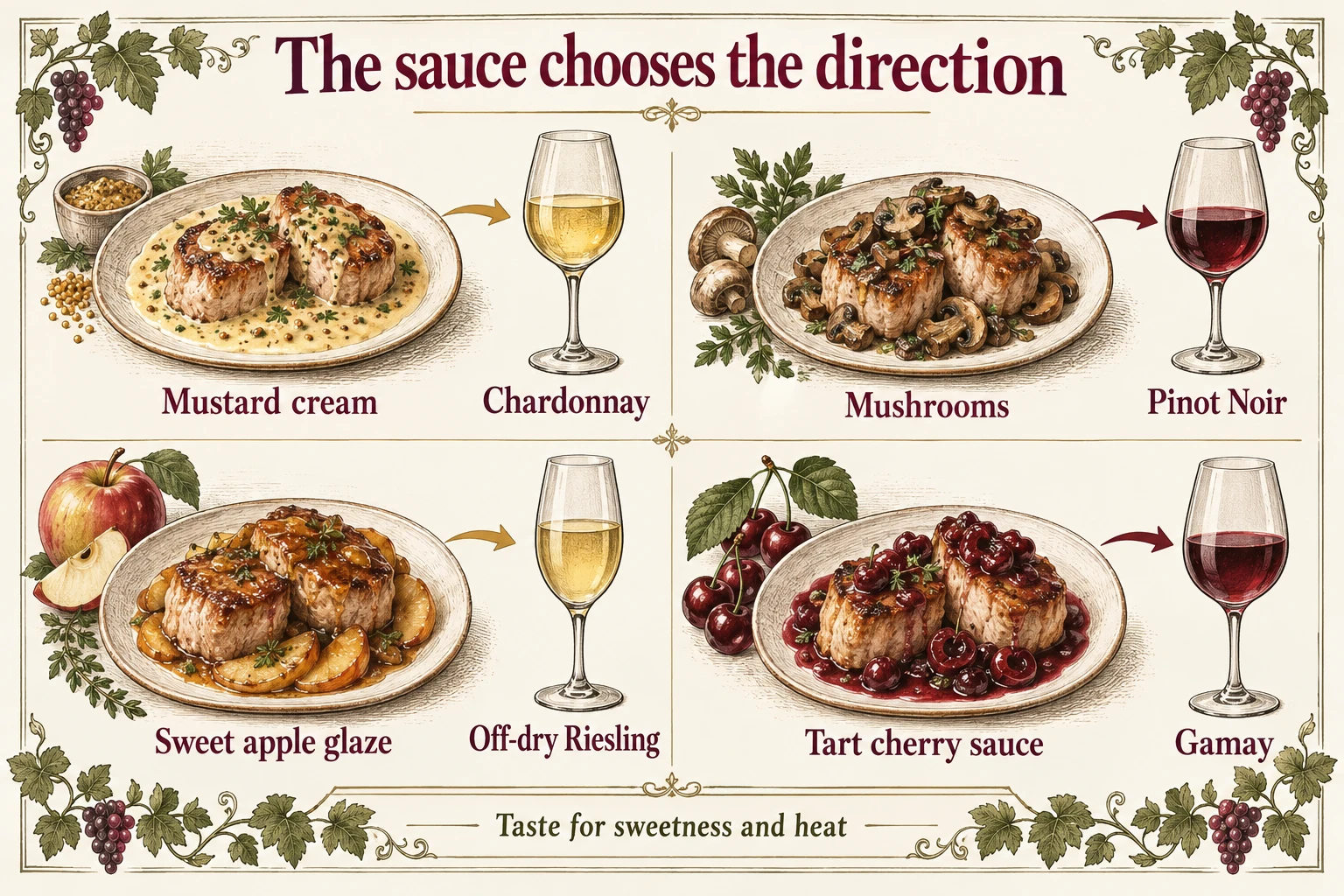
Read the illustration
Cream or mustard can suit Chardonnay; mushrooms can suit Pinot Noir; sweet apple glaze can suit off-dry Riesling; tart red-fruit sauce can suit Gamay. Taste the sauce for sweetness and heat before choosing.
Cream sauce
Use Chardonnay, Chenin Blanc, white Rhône blend, or supple Pinot Noir. The wine needs enough body to remain present and enough acidity to keep the meal from feeling flat. “Cream requires oak” is too simple; prominent oak can add heaviness without useful freshness.
Mushroom sauce
Use Pinot Noir, Merlot with restraint, mature light red, Chardonnay, or textured white. Mushrooms add umami, which can alter perceived fruit, bitterness, and tannic dryness. Taste the wine after the sauce, not only beside an unsauced slice.
Mustard sauce
Sharp mustard favors freshness: Chardonnay without excessive oak, Chenin Blanc, dry Riesling, or Pinot Noir. Creamy mustard sauce can support more texture. Honey mustard adds sweetness and may require an off-dry wine.
Apple, pear, or stone-fruit sauce
Taste for sugar. Tart fruit with little added sugar may work with dry Chenin, Chardonnay, Gamay, or Pinot Noir. Sweet compote or glaze is friendlier with off-dry Riesling, fruit-led rosé, or a gentle red with obvious fruit.
Cherry, raspberry, or balsamic reduction
Pinot Noir and Gamay can echo red fruit. Grenache adds riper fruit and spice. A balsamic reduction may contain meaningful sweetness and acidity; the wine needs fruit and freshness, not simply tannin.
Tomato and pepper sauce
Sangiovese, Barbera, Grenache, rosé, or another fresh red is useful. Tomato shifts the dish away from generic pork pairing and toward the logic in the pasta sauce guide.
Herbs, spice, smoke, and citrus
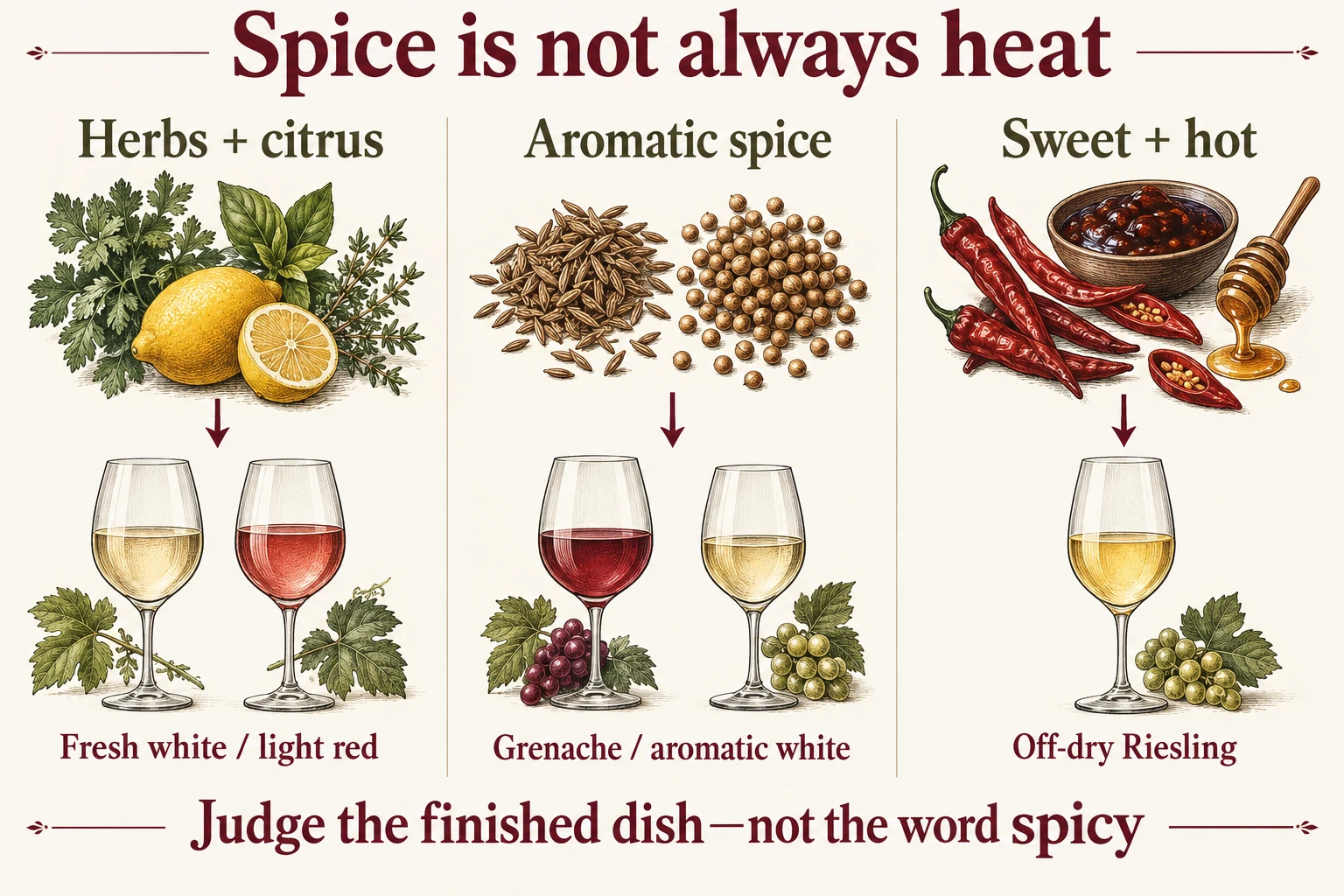
Read the illustration
Rosemary and citrus favor fresh styles; cumin and coriander can suit Grenache or aromatic whites; genuinely hot chile or sweet-hot glaze can favor off-dry Riesling with restrained alcohol. Aromatic spice does not automatically mean heat.
Rosemary, sage, and thyme
These herbs can connect with Pinot Noir, Grenache, Merlot, Chardonnay, and Sauvignon Blanc. Dried herbs with deep browning allow more savory red character; fresh herbs and lemon favor freshness.
Fennel and orange
Use Sangiovese, Pinot Noir, Vermentino, Sauvignon Blanc, or dry Riesling. Citrus and anise-like fennel reward wines with clarity and acidity. Strong vanilla oak is likely to blur the most distinctive flavors.
Paprika, cumin, coriander, and warm spice
Grenache, Syrah with restraint, Viognier, and aromatic whites can work. Warm aromatic spice is not identical to chile heat. If capsaicin is low, a dry wine can be excellent. If heat rises, lower alcohol impact, gentle tannin, and possible sweetness become more useful.
Smoke, bacon, and hard grilling
These give tenderloin permission for Syrah, fruit-led Malbec, Grenache blends, or an oak-influenced red. The salt and fat of bacon also make acidity welcome. Maple bacon or sweet barbecue rub can reverse the decision toward fruitier or off-dry wine.
Soy, ginger, sesame, and chile
The sauce needs to be tasted as a whole. Soy adds salt and umami; sugar adds sweetness; ginger adds aromatic heat; chile adds capsaicin; sesame adds richness. Off-dry Riesling is the safest broad route. Dry rosé and chilled juicy reds work when sweetness and heat are modest.
One bottle for pork tenderloin
For simple roast with herbs
Choose Pinot Noir or balanced Chardonnay. They cover both red- and white-wine preferences without adding too much intensity.
For a sauce buffet or uncertain recipe
Choose dry rosé, Chenin Blanc, or Gamay. These styles tolerate herbs, mustard, fruit, and chilled leftovers better than a highly specialized bottle.
For mushroom or cream sauce
Choose Chardonnay with freshness or Pinot Noir with gentle tannin. If one bottle must cover both sauces, a textured Chenin Blanc is worth considering.
For fruit glaze or spice
Choose dry-to-off-dry Riesling. Verify sweetness and alcohol. It can cover apples, citrus, ginger, and moderate chile better than many dry reds.
Common pork-tenderloin pairing mistakes
Confusing tenderloin with a richer cut
Advice for ribs, shoulder, or a marbled chop may recommend more tannin, smoke, and oak than tenderloin can support.
Buying by protein alone
Tenderloin is a quiet center. Sauce and seasoning supply most of the pairing information.
Treating any fruit sauce as dry
Fresh tart cherries and sweet cherry preserves do different things to wine. Taste for added sugar.
Assuming red wine must be more serious
White, rosé, and sparkling wine can be more precise with this lean cut. The goal is balance, not hierarchy.
Letting oak cover fresh herbs and citrus
Garlic, fennel, orange, lemon, sage, and thyme can disappear beneath strong vanilla and toast. Use oak deliberately.
Overlooking serving temperature
Hot red wine can seem alcoholic; over-cold white can seem neutral. Slight adjustments matter with a subtle dish.
The final tenderloin-wine checklist
- Is it truly tenderloin rather than loin, chop, or ribs?
- How deeply browned, grilled, or smoked is the exterior?
- What sauce reaches every bite?
- Is the sauce sweet, hot, creamy, earthy, or acidic?
- Do herbs and citrus need to remain visible?
- Does the wine’s body match a lean cut?
- Is tannin gentle enough?
- Would white, rosé, or sparkling provide better refreshment than red?
Questions people ask
What is the best red wine with pork tenderloin?
Pinot Noir is the most flexible starting point. Gamay, Grenache, supple Merlot, and Sangiovese also work depending on sauce. Syrah and Malbec are better reserved for smoke, pepper, bacon, or a deeply browned preparation.
What is the best white wine with pork tenderloin?
Balanced Chardonnay works broadly, especially with herbs, mustard, cream, or mushrooms. Dry Riesling and Sauvignon Blanc suit citrus and fresh herbs. Off-dry Riesling is best when fruit glaze, sweetness, or chile appears.
Does Malbec pair with pork tenderloin?
It can when the tenderloin is grilled, smoky, peppery, bacon-wrapped, or served with a dark savory sauce. Choose a fruit-led style with moderate tannin. A powerful oak-heavy Malbec may overwhelm a simple herb roast.
What wine goes with pork tenderloin and apples?
Off-dry Riesling or Chenin Blanc is the safest choice when the apples are sweet. Gamay, Pinot Noir, or dry Chenin can work when the fruit is tart and minimally sweetened.
What wine goes with mushroom pork tenderloin?
Pinot Noir, supple Merlot, Chardonnay, or a textured white blend. Mushrooms add savory depth and umami, so choose visible fruit and restrained tannin.
What wine goes with pork tenderloin in mustard sauce?
Chardonnay, Chenin Blanc, dry Riesling, or Pinot Noir. Sharp mustard favors freshness; cream allows more body; honey mustard may require a little wine sweetness.
Is Pinot Noir or Chardonnay better with pork tenderloin?
Pinot Noir is better when roasting, mushrooms, red-fruit sauce, or savory browning leads. Chardonnay is better when cream, butter, mustard, citrus, or fresh herbs lead. Neither is universally better.
Can sparkling wine go with pork tenderloin?
Yes, especially with cold slices, picnic service, a crisp coating, salty appetizers, or a range of condiments. Sparkling wine is a versatile contrast rather than a fallback.
Related guides
- Wine pairing with pork chops
- Best wine with BBQ ribs
- What wine goes with chicken
- How to choose a smooth red wine
- Recommended Chardonnay styles
- Malbec versus Pinot Noir
- Best wine with pasta sauce
Sources
- Firstleaf, wine with roast pork tenderloin, for the preparation-by-preparation red and white framework.
- IntoWine, pork tenderloin wine recommendations, for the lean-cut and restrained-wine approach.
- International Wine & Food Society, meat pairing guide, for sauce-specific pork pairings.
- Cooking Chat, pork tenderloin with mushrooms, for the mushroom-sauce case.